
Symptom or signal
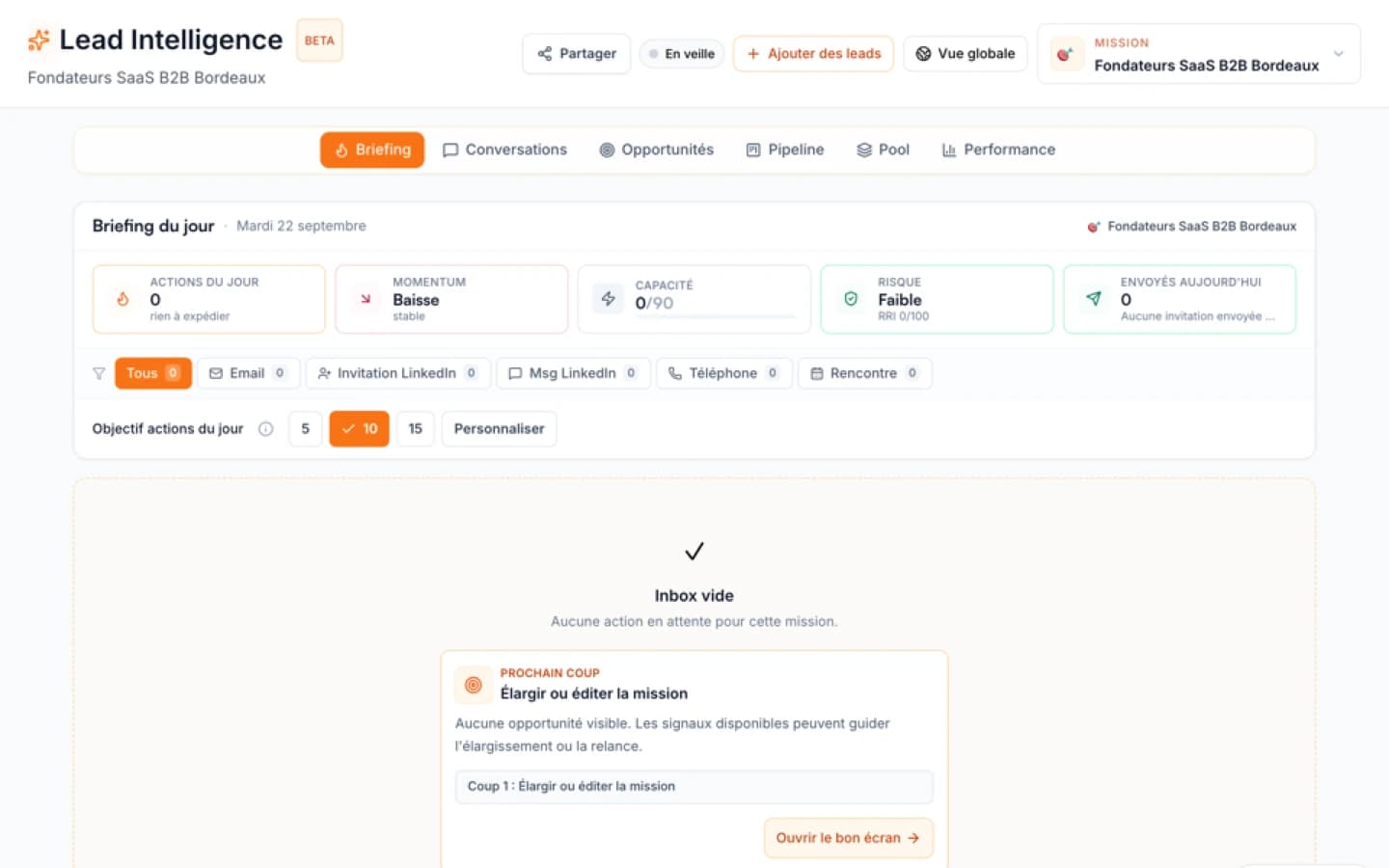
Early stage founders in the traction phase face a critical paradox: they are drowning in data but starving for actionable context. When trying to scale sales outreach, the primary obstacle is not a lack of contacts, but the inability to determine who to contact, why now, and with what message. This challenge is intensified by the sheer volume of generic data available on the market. While massive database providers have scaled aggressively, with Apollo reaching an Annual Recurring Revenue (ARR) of 150 million dollars in May 2025 according to Apollo’s history page, with a valuation of 1.6 billion dollars in August 2023 (Apollo announcement), raw data volume does not solve the prioritization problem. Even though Apollo had raised approximately 250 million dollars in total funding by August 2023, as announced by Apollo, founders still struggle to extract genuine intent from bulk lists. Furthermore, bulk exporting is often restricted, as even unlimited email plans remain subject to a Fair Use Policy with credit limits according to the Apollo pricing page. This operational friction contributes directly to the hidden challenges of building a business, mirroring the 5 startup founder disappointments highlighted by FollowTribes. These hurdles often compound existing organizational struggles, such as the 6 management problems in startups identified by Ignition Program. When founders spend their limited hours manually filtering outdated profiles, they lose the momentum required to secure early traction. To break through this noise, founders need to transition from bulk prospecting to targeted context. Ember addresses this through Lead Intelligence, which reduces noise by focusing attention on opportunities that deserve action now. Instead of spending days sorting through unverified spreadsheets, when founders have a usable targeting context, the first prioritized leads can appear in about 30 minutes. This approach ensures that founders know who to contact, why now, and which action to take, providing a clear next action that includes who to contact, why now, which channel, and which angle. By prioritizing the conversations that deserve attention now, founders can protect their time and focus on building relationships that drive real growth.
To place this decision in context, the Knowledge guides for founders brings together deeper guidance on the same field.
What changed
For larger organizations, the Organization Plan requires a minimum of 3 seats and costs $119 per seat per month, billed annually, according to the Apollo Pricing Page. The paid plans (Basic at $49, Professional at $79, Organization at $119, per seat per month billed annually) grant 30,000, 48,000 and 72,000 credits per seat per year up front, as outlined on the Apollo Pricing Page. However, navigating these databases consumes credits: the free plan provides only 900 credits per seat per year, credited each month.
Facts and sources
Early-stage founders in the traction phase face critical operational and strategic hurdles that prevent them from identifying who to contact, why now, and with what message. These growth challenges are often structural. For instance, the operational hurdles of scaling and delegation are discussed in the guide on 6 management problems in startups and our solutions. Founders also navigate hidden emotional and strategic challenges, as outlined in the article on 5 disappointments of startup leaders.
To explore this point further, How can a bootstrapped founder generate B2B leads without buying an expensive contact list? details a step directly related to this decision.
Why the common explanation is incomplete
The common explanation for why early stage founders struggle to secure meetings is that they simply lack a large enough database of prospects. This perspective suggests that sales is purely a numbers game, and that the solution is to purchase massive lists of contacts and blast them with generic sequences. While this volume first approach is highly popular, it fails to address the core bottleneck of the traction phase: the absence of actionable context. Established database platforms are undeniably powerful for raw data retrieval. For example, Apollo is a highly successful Software as a Service (SaaS) platform with an Annual Recurring Revenue (ARR) of 150 million dollars in May 2025 according to Apollo’s history page, with a valuation of 1.6 billion dollars in August 2023 (Apollo announcement). They excel at compiling vast directories of business professionals. Yet, even when founders gain access to these massive directories, they quickly hit operational limits. For instance, unlimited plans on such platforms remain subject to a Fair Use Policy, which enforces specific email credit limits, as detailed on the Apollo Pricing Page. More importantly, a larger list does not translate to better conversions. The belief that more data equals more sales is a common misconception that leads to what industry experts identify as the hidden disappointments of startup leadership. As noted in an analysis of executive challenges by Follow Tribes, founders often face harsh realities when trying to scale operations based on superficial assumptions. When a startup is in its early traction phase, the founder is typically juggling product development, fundraising, and hiring. Adding thousands of cold contacts to their plate only worsens the operational friction. This struggle aligns with the classic organizational hurdles that startups face as they attempt to delegate and scale, as discussed in the guide on startup management by Ignition Program. Without a clear understanding of who is ready to buy, why they are ready today, and what specific angle will resonate with their current situation, founders waste valuable hours chasing cold leads. The problem is never a lack of names: it is the lack of a precise, context driven trigger that turns a cold record into a warm conversation.
The real problem
The real problem for early stage founders is not a lack of data, but the overwhelming noise generated by raw contact databases. When trying to scale operations, founders face structural challenges that go far beyond simple list building. For instance, the operational hurdles of scaling and delegation often manifest as organizational friction, as outlined in the guide on 6 management problems in start-ups. At the same time, founders must navigate personal and professional friction, including the 5 disappointments of startup leaders that rarely get discussed in public.
In the middle of these management pressures, outreach becomes a guessing game. Founders are forced to manually parse through hundreds of profiles to find a single relevant lead. This manual process is highly inefficient because traditional databases only provide static contact information. They do not tell you why a prospect is ready to buy today, which channel they prefer, or what specific angle will resonate with their current business challenges.
This lack of context leads to distinct points of failure: First, founders waste time on cold outreach to companies that have no immediate need, ignoring the signals that indicate actual readiness. Second, they send generic, templated messages because they lack the deep context required to personalize at scale. Third, they struggle to coordinate their sales efforts with their broader business strategy, treating prospecting as an isolated task rather than an extension of their core value proposition.
Without a system to filter out the noise and prioritize high-intent opportunities, the traction phase stalls. Founders find themselves trapped in a cycle of high volume and low conversion, unable to identify the precise conversations that deserve their attention.
This approach also connects with What evidence should a pre-seed startup founder check before choosing Lead Intelligence?, which clarifies the next choice.
How the mechanism works
To solve the fundamental challenge of identifying the right prospects and the right timing, the mechanism must shift from volume accumulation to contextual relevance. Traditional outbound methods rely heavily on massive databases. For example, Apollo is a well funded Software as a Service (SaaS) company at an advanced stage with an Annual Recurring Revenue (ARR) of 150 million dollars in May 2025 according to Apollo’s history page. However, even on such platforms, unlimited plans remain subject to a Fair Use Policy with specific email credit limits, as detailed on the Apollo Pricing Page. This reliance on raw volume often exacerbates the noise that early stage founders must filter through while managing the operational hurdles of scaling and delegation, which are common pain points outlined in the Ignition Program guide on startup management. Instead of forcing founders to sift through thousands of cold profiles, Lead Intelligence introduces an experience that prioritizes conversations based on real time signals and opportunity readiness. The mechanism begins by leveraging the startup's existing business context, such as its Ideal Customer Profile (ICP) and core offer. It then filters the market to find accounts that match these parameters, reducing noise by focusing attention on opportunities that deserve action now. Whether a founder starts with a small or a large number of contacts, the system operates independently of volume, meaning there is no minimum threshold required to generate meaningful insights. Once the targeting context is established, the system processes the data rapidly. With usable targeting context, the first prioritized leads can appear in about 30 minutes. This speed is critical for early stage teams who cannot afford to wait days for actionable data while navigating the hidden disappointments of startup leadership, a reality discussed in the analysis of founder challenges by Follow Tribes. The output of this mechanism is not just another list of names, but a clear next action that specifies who to contact, why now, which channel to use, and which angle to take. By making the priority explainable through clear signals and company movements, Lead Intelligence helps founders move past the friction of manual prospecting. This allows business teams to focus their limited energy on high value conversations that are actually ready to convert, turning raw market data into structured, defensible sales actions.
Concrete examples
To understand why early stage founders struggle to identify who to contact, why to reach out at a specific moment, and what message to send, we can look at how these challenges unfold in real operational scenarios. First, founders often fall into the volume trap by relying on massive, unrefined databases. For example, Apollo is a highly funded Software as a Service (SaaS) company with an Annual Recurring Revenue (ARR) of 150 million dollars in May 2025 as reported by Apollo’s history page. While such platforms offer vast amounts of data, their unlimited plans remain subject to a Fair Use Policy with specific credit limits, as detailed on the Apollo pricing page. For an early stage founder, navigating these massive lists without context leads to generic outreach. The sheer volume makes it nearly impossible to determine the precise timing or the unique angle that would resonate with a prospect. Second, as a startup gains traction, the founder's attention is heavily divided by internal scaling issues. Managing a growing team introduces complex organizational friction, and the guide on Ignition Program outlines 6 management problems in startups that often distract leaders from consistent market outreach. At the same time, founders frequently encounter hidden personal and professional setbacks during this transition, a reality explored in the article on Follow Tribes which highlights 5 unexpected disappointments of startup leadership. When internal operations are demanding, a founder cannot afford to spend hours manually researching prospects to find a relevant hook. To resolve this tension, founders must transition from raw data accumulation to contextual prioritization. This is where Lead Intelligence changes the approach. Instead of forcing founders to sift through noisy databases, Lead Intelligence reduces noise by focusing attention on opportunities that deserve action now. It proposes the next action and channel that fit the lead situation, allowing founders to know who to contact, why now, and which action to take. When a founder has a usable targeting context, the first prioritized leads can appear in about 30 minutes, turning what used to be a manual, overwhelming research process into a clear, actionable workflow.
In practice, How should a B2B sales team score and prioritise leads in 2026 without a marketing team, a CRM admin, or a scoring tool? completes this framework with another angle on the same topic.
When to use this diagnosis
As a founder of a traction-stage startup, you face setbacks that rarely get discussed, such as those described in leadership accounts: management difficulties, information noise that drowns out the real priorities, and uncertainty about the right person to contact at the right time. The "when to use" diagnosis addresses exactly these blockers. It tells you who to contact, why now, through which channel, and with what angle, replacing a generic list of options with a path consistent with your project. Concretely, the tool reduces noise by focusing your attention on opportunities that deserve immediate action, and proposes the next action and the channel suited to each lead's situation. For example, if you are choosing between several prospects, the system prepares and then imports valid contacts from an Excel or CSV file into the Pool, with a local score measuring the completed file's readiness before import. After the cost is confirmed, a wave can enrich the selected contacts and shows its progress in batches. This way, with a usable targeting context, the first prioritized leads can appear quickly. To illustrate a market alternative, Apollo, a well-funded SaaS company with significant market traction, reported an Annual Recurring Revenue (ARR) of 150 million dollars in May 2025 according to Apollo’s history page, and its unlimited plans remain subject to a Fair Use Policy with credit limits, as shown on its pricing page. This diagnosis therefore lets you know who to contact, why now, and which action to take, without getting lost in a generic list of options.
When not to use it
An early stage founder should not focus on contextual lead prioritization when the business is facing more fundamental, structural crises. If a startup has not yet validated its core value proposition or defined its Ideal Customer Profile (ICP), attempting to determine who to contact and why now is premature. Without a clear strategic direction, any outbound effort will result in wasted resources. Similarly, when a startup operates in a broad, low-touch market where success depends entirely on raw volume rather than tailored relationships, traditional database tools are often the better choice. For instance, a well funded Software as a Service (SaaS) platform like Apollo, which achieved an Annual Recurring Revenue (ARR) of 150 million dollars in May 2025 according to Apollo’s history page, is highly efficient for broad market coverage. If your strategy relies on sending thousands of automated emails under a standard fair use policy, as outlined on the Apollo pricing page, a high-volume database is perfectly sufficient. Additionally, sales targeting tools cannot solve internal organizational breakdowns. Early stage founders frequently struggle with severe operational and leadership challenges. Startups often face 6 management problems as detailed by Ignition Program, including delegation and team alignment issues. When internal execution is broken, generating new leads only accelerates operational friction. Founders also grapple with 5 disappointments that nobody talks about, as outlined by Follow Tribes, which can lead to personal burnout and strategic misalignment. If the primary bottleneck is founder exhaustion or team dysfunction, resolving who to contact will not save the business. In these scenarios, founders must first stabilize their internal operations and management structures before investing in sophisticated outreach strategies.
Before deciding, Apollo vs Ember Lead Intelligence for Founder Conversion helps connect this method with adjacent priorities.
Next step
To transition from the noise of generic prospecting to a highly targeted, high-converting workflow, early-stage founders must shift their focus from sheer volume to precise timing and context. Relying solely on massive databases often leads to operational friction. For example, according to data published by Apollo’s history page, Apollo is a highly successful platform in this space, reaching an Annual Recurring Revenue (ARR) of 150 million dollars in May 2025. Yet, as noted on the Apollo pricing page, even unlimited email plans on such platforms remain subject to a Fair Use Policy with specific credit limits. This restriction highlights that success in modern outbound sales cannot rely on endless, uncalibrated volume. The most effective next step is to implement a system that prioritizes accounts based on real-time organizational changes and buying signals. Instead of spending hours guessing which prospects are ready to buy, founders can leverage Lead Intelligence within Ember to systematically know who to contact, why now, and which action to take. By analyzing available project context, this capability proposes the next action and channel that fit the lead situation. This approach provides a clear next action, defining exactly who to contact, why now, which channel to use, and which angle to take. Moving forward with this context-driven strategy allows early-stage teams to stop wasting credits on cold, unresponsive lists and start engaging in conversations that are highly relevant to the prospect's current situation.
Sources and methodology
This analysis is grounded in direct market research and verified operational data. To ensure the highest editorial standards, we analyzed primary resources concerning early-stage startup management and founder setbacks. These documents include the startup management guide by Ignition Program and the founder experience analysis by Follow Tribes. To contextualize the sales technology landscape, we also evaluated leading market providers. According to financial data published by Apollo’s history page, Apollo has achieved an annual recurring revenue of 150 million dollars in May 2025, with a valuation of 1.6 billion dollars in August 2023 (Apollo announcement). Additionally, we reviewed the Apollo pricing page to verify that unlimited email plans remain subject to a Fair Use Policy with specific credit limits. This rigorous approach ensures that our strategic recommendations are based on verified market realities rather than generic assumptions.
Sources
FAQ
Free diagnostic
Test your sales file
Drop an Excel or CSV and check its readiness without sending its rows to Ember.