
Symptom or signal
For early stage bootstrapped founders, the transition from building a product to executing outbound sales is often marked by specific, painful signals. You might find your team spending hours manually compiling spreadsheets, sending generic cold emails that receive zero replies, or struggling to identify which companies actually have an active need for your solution. When you need to build a broad database of contacts, traditional platforms are often sufficient. However, even their unlimited plans remain subject to a fair use policy that limits email credits, as documented on the Apollo Pricing Page. More importantly, a massive, unfiltered list of contacts does not tell you who is ready to buy today. The real symptom of a failing outbound strategy is noise: when you cannot explain why you are reaching out to a specific person on a specific day, you are wasting valuable runway. Before you can determine who to contact, why now, and with what message, you must shift from high volume scraping to high context prioritization. This shift requires understanding the active signals within your target market. Ember addresses this challenge directly through its Lead Intelligence capability, which reduces noise by focusing attention on opportunities that deserve action now. Instead of forcing you to sift through thousands of cold profiles, the system finds accounts from your mission Ideal Customer Profile (ICP) and active signals, then verifies useful sources to ensure accuracy. With usable targeting context, the first prioritized leads can appear in about 30 minutes. This approach makes the priority explainable from context, signals, and opportunity readiness, allowing you to know who to contact, why now, and which action to take. By turning raw data into a clear next action, founders can prioritize the conversations that deserve attention now and protect their most limited resource: time.
To place this decision in context, the Knowledge guides for founders brings together deeper guidance on the same field.
What changed
The outbound sales landscape has undergone a fundamental shift. In the past, early stage bootstrapped founders could rely on brute-force volume, exporting thousands of contacts from legacy databases and sending generic email sequences. Today, this approach is not only ineffective but also financially unsustainable for a self-funded company.
A database can help map a broad market, but the total cost depends on plan, seats and credit use. Apollo states that its plans have credit limits and that its unlimited plans have a fair use policy. Check the current terms for the exact plan before choosing a provider. Apollo pricing.
Apollo uses credits for some contact, export and enrichment actions. The number charged varies by action and plan, so a founder should estimate the volume actually needed before committing to a database subscription. Apollo credit guide.
Furthermore, email deliverability algorithms and spam filters have become highly sophisticated. Sending bulk, unsegmented emails now risks permanently damaging your domain reputation. This means that before you even decide who to contact, you must have a clear signal that justifies the outreach.
This is where the paradigm has shifted from volume to intelligence. Instead of manually filtering spreadsheets or guessing who might be interested, founders need to recognize the exact signals that indicate a prospect is ready to buy. Without these signals, you are wasting time and money.
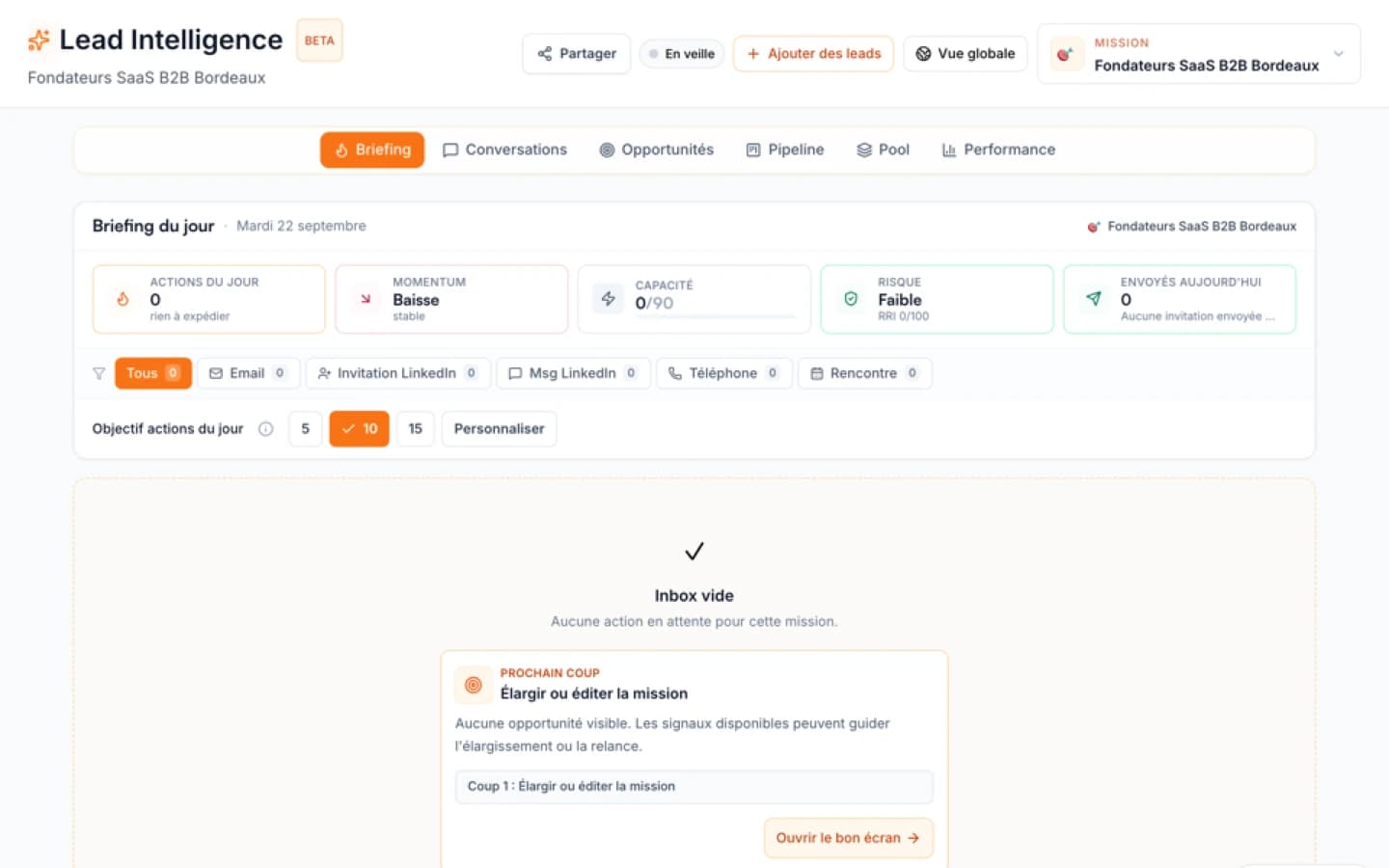
To solve this, Ember introduces Lead Intelligence, a capability designed to help founders and sales teams prioritize opportunities with their context. Instead of forcing you to navigate complex credit structures or guess your next move, Lead Intelligence provides a clear next action, helping you know whom to contact, why now and what to check before sending a message.
Facts and sources
The practical question is whether each account matches the target customer and whether the source behind its signal is current. Apollo describes its own credit limits and fair use policy; Lead Intelligence searches accounts from a mission’s customer profile and signals, then checks useful sources. Apollo pricing, Lead Intelligence.
To explore this point further, Apollo vs Ember Lead Intelligence for Founder Conversion details a step directly related to this decision.
Why the common explanation is incomplete
The common explanation for outbound sales failure usually points to a lack of volume or poor email copywriting. Founders are told to simply buy larger lists, set up more cold domains, and increase their daily sending limits. This explanation is incomplete because it treats sales as a pure probability game while ignoring the high operational and reputational costs of noisy, unprioritized outreach. For an early stage bootstrapped founder, running high volume campaigns without deep context is a fast path to burned domains and wasted hours. Traditional database providers are highly effective when a team needs a broad directory to search for generic contacts. For instance, platforms like Apollo offer extensive databases, though it is important to note that even their unlimited plans remain subject to a fair use policy with specific email credit limits, as outlined on the Apollo pricing page. However, simply having access to millions of records does not tell a founder who is actually ready to buy today. The real bottleneck is not contact volume, it is the lack of timing and context. Before asking who to contact, why now, and what message to send, a bootstrapped founder must look for internal and external signals of readiness. Relying on static lists leads to generic messaging that prospects ignore. Instead of chasing raw numbers, founders need to understand the underlying context of their Ideal Customer Profile (ICP) and detect changes across target companies. This is where a more targeted approach becomes necessary. By focusing on opportunities that deserve action now, founders can drastically reduce noise and protect their limited resources. Rather than waiting days for complex setups, establishing a usable targeting context allows the first prioritized leads to appear in about 30 minutes. This shift from brute force volume to contextual priority ensures that every sales conversation is backed by an explainable reason, making outbound efforts both precise and sustainable for a growing business.
The real problem
For an early stage bootstrapped founder, the most dangerous signal is not a lack of leads, but the silent accumulation of wasted time. When outbound campaigns stall, founders often assume they simply need more data. They turn to legacy platforms promising endless contacts, only to find that these databases protect their assets with strict limitations. For instance, even unlimited plans on major platforms like Apollo are governed by restrictive rules, as detailed on the Apollo Pricing Page, where unlimited email credits remain subject to a Fair Use Policy. While these legacy databases are perfectly adequate for broad market mapping and general research, they fail to provide the immediate, context-driven insights required for active sales decisions.
This reliance on raw volume masks the real problem: a complete absence of timing and context. Before a founder can determine who to contact, why now, and with what message, they must recognize three critical warning signals in their current process.
First, the spreadsheet stagnation signal occurs when the team spends hours manually compiling and cleaning lists instead of speaking to qualified prospects. When a founder spends more time formatting columns than analyzing buyer intent, the sales process is broken.
Second, the generic response signal is characterized by a drop in engagement. Sending hundreds of templated emails without a clear trigger event leads directly to spam folders and domain damage. If the only common denominator among target accounts is a shared industry tag, the outreach lacks the necessary precision.
Third, the disconnect between the core strategy and outbound execution is a silent killer. Often, the Ideal Customer Profile (ICP) defined in the business plan does not match the actual list of contacts being imported. Without a unified context that connects the company's core offer to market signals, every outbound effort becomes a shot in the dark. Instead of chasing sheer volume, bootstrapped founders must pivot toward identifying genuine opportunities based on actual organizational changes and verified signals.
This approach also connects with Bootstrapped founder outreach: who, why now, what to say, which clarifies the next choice.
How the mechanism works
Bootstrapped founders often fall into the trap of high-volume outbound, relying on legacy platforms to break through the noise. However, even when platforms offer massive scale, they come with hidden constraints. For example, unlimited email credit plans on platforms like Apollo remain subject to a strict Fair Use Policy with specific credit limits, as documented on the Apollo Pricing Page. This structural limitation forces early stage companies to move away from spam-heavy tactics and focus instead on high-intent signals.
Before deciding who to contact, why now, and with what message, a founder must look for signals of opportunity readiness, such as leadership changes, technology shifts, or public growth milestones. The mechanism to capture these signals relies on turning raw market data into structured, actionable context. Ember addresses this through Lead Intelligence, which finds accounts from the mission Ideal Customer Profile (ICP) and active signals, then verifies useful sources to validate the opportunity.
This approach reduces noise by focusing attention on opportunities that deserve action now. Instead of guessing which lead to pursue, the mechanism makes the priority explainable from context, signals, and opportunity readiness. Founders no longer waste hours parsing spreadsheets. They can immediately know who to contact, why now, and which action to take.
By translating complex market signals into a clear next action, the system defines who to contact, why now, which channel to use, and which angle to take. This allows bootstrapped teams to prioritize the conversations that deserve attention now without wasting their limited runway. To ensure complete transparency, the first value actually produced by the mission is made visible, showing the contacts analyzed, the signals detected, and the priority actions actually recorded. This immediate feedback loop helps founders validate their outbound strategy.
Concrete examples
To illustrate how this works in practice, consider an early stage founder trying to sell a new Business to Business (B2B) software solution. Instead of exporting thousands of cold contacts and hoping for a tiny response rate, the founder must look for specific buying signals before launching any outreach. A concrete example of a critical signal is a sudden shift in a prospect company's internal priorities. For instance, when a target account hires a new department head or starts using a complementary technology, their readiness to discuss new solutions increases dramatically. Without a system to filter these events, founders waste hours reaching out to accounts that are completely cold. This is where legacy data providers fall short. While platforms like Apollo offer massive databases, their unlimited email credit plans remain subject to a Fair Use Policy with credit limits, as documented on the Apollo pricing page. This constraint means bootstrapped founders cannot afford to waste their outreach credits on unverified or out of date contacts. Instead of relying on brute force volume, founders need to focus on opportunity readiness. Lead Intelligence addresses this by reducing noise and focusing attention on opportunities that deserve action now. The system finds accounts from the mission Ideal Customer Profile (ICP) and signals, then verifies useful sources to ensure the data is accurate. This approach makes the priority explainable from context, signals, and opportunity readiness, rather than leaving the founder to guess why a lead was selected. With usable targeting context, the first prioritized leads can appear in about 30 minutes. This rapid turnaround allows founders to know who to contact, why now, and which action to take. By making the first value actually produced by the mission visible, including the contacts analysed, signals detected, and priority actions, Lead Intelligence helps founders prioritize the conversations that deserve attention now. This shifts the focus from mindless emailing to highly relevant, context driven conversations that actually move decisions forward.
In practice, How to decide who to contact, why now, and what to say completes this framework with another angle on the same topic.
When to use this diagnosis
An early stage founder should run this diagnosis the moment outbound sales activities begin to feel like an expensive guessing game. For bootstrapped teams, the most critical warning sign is when credit based pricing turns every prospecting action into a stressful, metered decision. In traditional setups, exporting contacts, enriching records, and verifying emails each consume valuable credits. When trying to scale outreach, this credit math does not multiply linearly because wasted exports, bounced emails, and redundant enrichment compound the total cost. This specific financial friction is a primary reason why buyers actively search for alternatives, as documented by industry analyses on Factors.ai and Coldreach. Incumbent platforms are excellent when a company has a dedicated sales operations team and a large budget to absorb these recurring losses. However, for a bootstrapped startup, this high volume approach quickly drains limited capital. Even when platforms advertise unlimited plans, those options are often constrained. For example, unlimited email credits on Apollo are still framed by a Fair Use Policy with credit limits, as shown on the Apollo Pricing Page. This diagnosis becomes necessary when you observe three specific operational red flags. First, your team spends more time cleaning lists and managing credit balances than actually speaking to prospects. Second, your outbound campaigns suffer from low response rates because you are targeting accounts based on static lists rather than active buying signals. Third, you lack a clear reason to reach out to a specific contact at this exact moment, leading to generic emails that get ignored. Instead of burning resources on blind volume, founders need a system that identifies active opportunities. This is where Lead Intelligence from Ember changes the dynamic. Rather than forcing you to guess, it helps founders and sales teams know who to contact, why now, and which action to take. By analyzing active signals, it provides a clear next action, showing exactly who to contact, why now, which channel to use, and which angle to take. This shifts your outbound strategy from a metered credit drain to a precise, signal driven conversation.
When not to use it
Before asking who to contact, why now, and with what message, early stage founders must recognize when this signal-based approach is premature. If you are in the earliest days of ideation and have not yet defined a basic Ideal Customer Profile (ICP), attempting to prioritize leads will only lead to frustration. Without a clear target market hypothesis, there are no meaningful signals to monitor, and any attempt to filter opportunities will lack the necessary foundation.
Additionally, if your current strategy relies on massive, unsegmented cold outreach where personalization is not a priority, traditional database providers are often sufficient. For teams that want to build a broad directory and have the resources to handle high bounce rates, legacy platforms are a reasonable choice. However, founders should note that even unlimited email credit plans on legacy platforms like Apollo remain subject to a strict fair use policy, as outlined on the Apollo Pricing Page.
You should also avoid launching a targeted prospecting mission if your core value proposition is still changing daily. Lead Intelligence is designed to reduce noise and focus your attention on opportunities that deserve action now, but it requires a stable business context to do so. If you cannot yet define what makes a company a good fit, it is better to focus on foundational customer discovery before trying to identify high-priority sales conversations.
Before deciding, Lead Intelligence for bootstrapped founders: who and why now helps connect this method with adjacent priorities.
Next step
For early stage founders, the immediate next step is to transition from broad, untargeted outreach to a highly contextual, signal-based approach. Instead of scraping thousands of cold contacts and risking domain reputation, bootstrapped teams must establish a clear strategy that connects their business goals to specific, actionable opportunities. Traditional platforms can help with raw database searches, but they often leave founders with the burden of manual filtering, and even unlimited plans are subject to strict limits, such as those detailed on the Apollo pricing page.
To build a sustainable outreach engine without wasting precious resources, founders should focus on defining their core narrative and identifying high-intent signals. According to the Qubit Capital Startup Outreach Guide, successful outreach relies on precise mapping and discovery rather than sheer volume, reminding founders that they ultimately only need to find the right partners who align with their specific stage.
This is where structuring your workspace becomes essential. By utilizing Ember, founders can align their business foundation with their commercial execution. Through the Lead Intelligence capability, the system analyzes your Ideal Customer Profile (ICP) and active market signals to propose the next action and channel that fit each specific lead situation. This replaces the noise of generic lists with a clear recommendation on who to contact, why now, and which angle to use.
At the same time, if your immediate priority is securing capital or structuring your roadmap, the Ember Fund Your Growth capability helps you build a coherent funding strategy. It replaces generic options with a tailored funding path and automatically turns gaps in your business plan into prioritized next actions. By resolving these strategic gaps first, you ensure that when you do reach out to prospects or partners, your message is backed by a thoroughly validated business case. The next logical decision is to stop guessing and start running targeted, contextual missions that protect your time and capital.
Sources and methodology
This article compares the warning signs in a founder’s prospecting process with the published terms of Apollo and the described capabilities of Lead Intelligence. Check the current plan terms and the source behind each lead before acting.
To maintain strict objectivity, we cross referenced these insights with the actual pricing and product terms of established market solutions. For instance, we analyzed the pricing structures of platforms like Apollo, where even unlimited email plans remain subject to a fair use policy with specific credit limits, as detailed on the Apollo pricing page. Finally, the Ember capabilities mentioned, such as Lead Intelligence, find accounts from the mission Ideal Customer Profile (ICP) and signals, then verify useful sources.
Sources
FAQ
Free diagnostic
Test your sales file
Drop an Excel or CSV and check its readiness without sending its rows to Ember.