
Symptom or signal
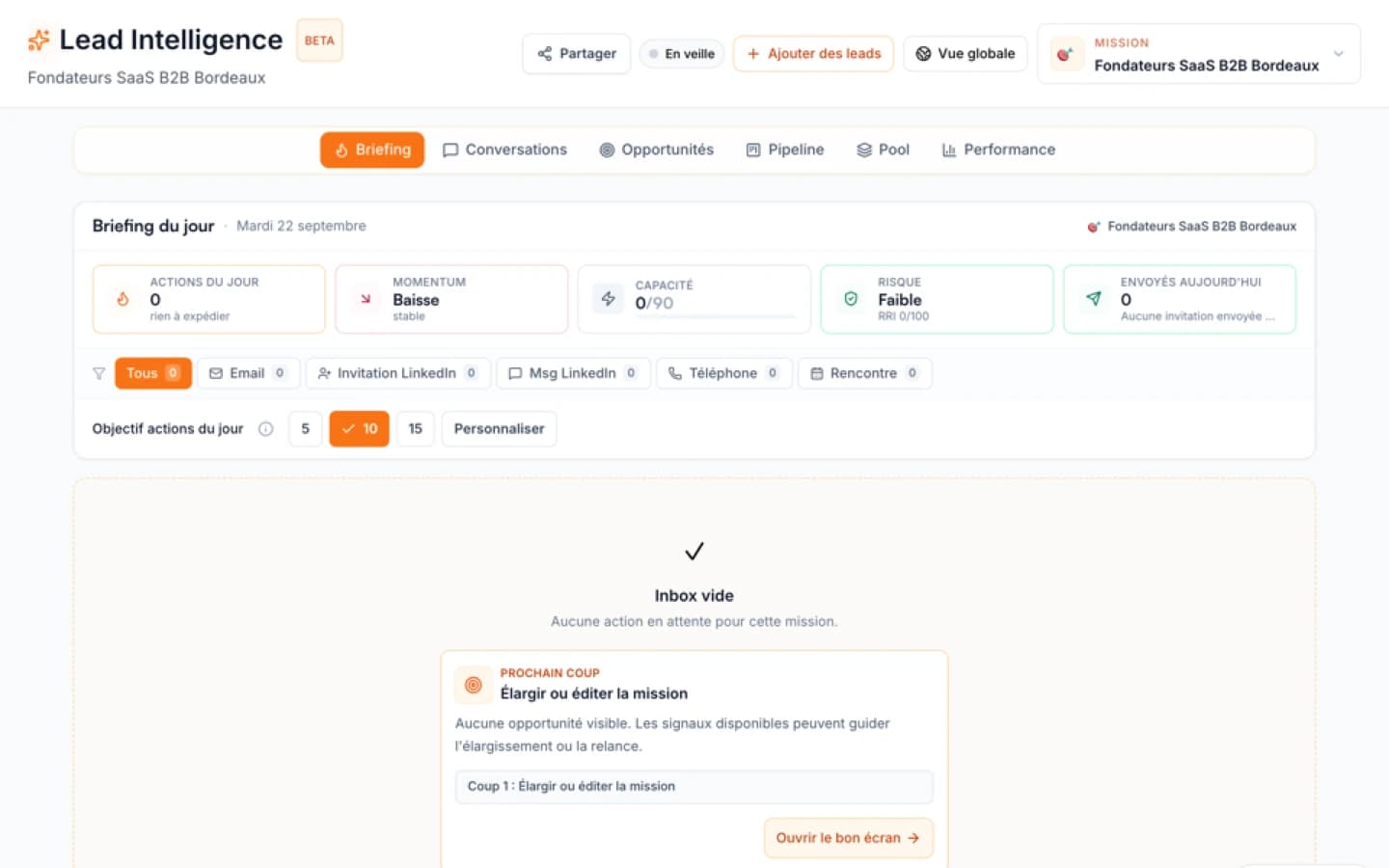
For an early-stage founder, the search for the first customers is often a battle against noise. When resources are tight, you cannot afford to spend weeks chasing cold leads or managing bloated databases. You need to know exactly who to contact, why now, and what message will resonate. Many bootstrapped teams naturally turn to established sales platforms to kickstart their outreach. A founder focused on rapid execution might choose Apollo because it provides immediate volume, a large contact database, and automated email sequences. This approach has made Apollo a highly successful player in the sales intelligence space, reaching $150 million in annual recurring revenue in May 2025, according to data on Apollo’s history page. However, high-volume prospecting has its limits. Even on unlimited plans, users must navigate email credit restrictions governed by a Fair Use Policy, as detailed on the Apollo pricing page. For a small team, sheer volume often creates more distraction than traction. Instead of sending thousands of generic messages that risk damaging your domain reputation, the key is to prioritize the conversations that deserve attention now. Ember addresses this challenge directly through Lead Intelligence. By grounding your outreach in your specific business context, Lead Intelligence reduces noise by focusing your attention on opportunities that deserve action now. Once you establish a usable targeting context, the first prioritized leads can appear in about thirty minutes. Instead of leaving you to guess the best approach, the system proposes the next action and channel that fit the lead situation. This allows you to know who to contact, why now, and which action to take, giving you a clear next action that outlines who to contact, why now, which channel to use, and which angle to take. By focusing on highly relevant signals rather than raw volume, early-stage founders can protect their time and build meaningful relationships from day one.
To place this decision in context, the Knowledge guides for founders bring together deeper guidance on the same field.
What changed
For founders who prioritize immediate volume and rapid outbound activity, established databases like Apollo are highly effective. Apollo, which has reached $150 million in annual recurring revenue according to Apollo’s history page, allows teams to build large contact lists and automate sequences on day one. Their pricing structure accommodates different budgets, with plans that include structured credit allocations, as shown on the Apollo pricing page. However, these unlimited plans remain subject to a fair use policy, as the same page states.
For an early-stage founder, the strategic choice between bootstrapping and fundraising dictates how carefully resources must be deployed, a point Aboubacar Konate summarizes in his analysis Bootstrapping vs. Fundraising: What Early-Stage Founders Must Really Understand: every euro spent must make sense, which creates focus. When funding is self-generated, every dollar spent on unverified contacts or generic outreach is a dollar taken away from product development.
The real shift in modern outbound is moving from raw volume to contextual relevance. Instead of burning through credits on unverified leads, founders need to know who to contact, why now, and which action to take. This is where Ember shifts the paradigm. Rather than forcing founders to manage complex credit systems and massive databases, Ember Lead Intelligence focuses on precision. It provides a clear next action, identifying who to contact, why now, which channel to use, and which angle to take, ensuring that every outreach effort is backed by genuine context.
Facts and sources
To provide reliable guidance for early-stage founders navigating the noise of outbound sales, this analysis relies on rigorous data collection. When evaluating outbound tools, founders must look past superficial promises to understand functional limits. This comparison rests on sourced facts covering multiple tools, each backed by a public URL measured on a given date. For example, while high-volume platforms offer immediate reach, their unlimited plans are not without restrictions. As documented on the official Apollo Pricing page, unlimited email credits remain subject to a Fair Use Policy with specific email credit limits. For bootstrapped founders who need to avoid wasting resources on generic lists, Ember offers a different approach through Lead Intelligence. Instead of manual scraping, Lead Intelligence finds accounts from the mission's Ideal Customer Profile (ICP) and signals, then verifies useful sources, as detailed on the Ember Lead Intelligence documentation. This capability is designed to reduce noise by focusing attention on opportunities that deserve action now. By understanding the context of each lead, it helps founders prioritize the conversations that deserve immediate attention, letting them know who to contact, why now, and which action to take.
To explore this point further, Lead Intelligence for bootstrapped founders: who and why now details a step directly related to this decision.
Why the common explanation is incomplete
The belief that sales success is purely a numbers game leads many early-stage founders to rely entirely on massive contact databases. While having access to millions of profiles is useful, this volume-first approach often creates more noise than actual revenue. For a bootstrapped team with limited hours, a list of thousands of cold contacts is not an asset, but rather a queue of manual work.
Large platforms have built highly successful businesses by providing this raw data. For instance, Apollo has scaled rapidly to reach $150 million in annual recurring revenue, according to data from Apollo’s history page. Yet, simply exporting hundreds of leads does not tell a founder who to contact today, why they should care, or what message will resonate. Furthermore, even when founders attempt high-volume campaigns, they quickly encounter operational constraints. For example, as detailed on the Apollo pricing page, even unlimited plans are subject to a fair use policy that places limits on email credits.
The real bottleneck for a bootstrapped founder is not the quantity of email addresses, but the lack of actionable context. Sending generic messages to an unsegmented list dilutes your brand and wastes precious time on accounts that have no immediate need. To break through the noise, founders must shift from list-building to true intelligence, identifying the specific signals that indicate a prospect is ready to engage right now.
The real problem
Stacking up thousands of raw contacts is a liability, not an asset.
The real problem is that raw volume does not translate into meaningful conversations. When early-stage founders rely solely on massive databases, they end up managing bloated spreadsheets instead of building relationships. Even when platforms promise unlimited access, those unlimited email credits remain subject to a fair use policy with specific credit limits, as detailed on the Apollo pricing page. This means that, even from a purely practical standpoint, the brute-force approach of sending generic messages to long lists of cold profiles has structural limits and diminishing returns.
For a bootstrapped business, every hour spent on manual filtering is an hour lost on product development or customer success. Founders do not need more names. They need to know who to contact, why now, and which action to take. Without this context, outbound sales becomes a repetitive guessing game that damages domain reputation and yields low conversion rates.
To break out of this cycle, the focus must shift from raw quantity to relevance. Reducing noise means directing limited energy toward opportunities that deserve action today. A founder needs a system that proposes the next action and channel consistent with each lead's unique situation. By identifying who to contact, why now, which channel to use, and which angle to take, bootstrapped teams can run highly targeted campaigns that respect their time and build real traction.
This approach also connects with How to build a B2B prospect list with zero customers and no brand, which clarifies the next choice.
How the mechanism works
To solve the challenge of knowing who to contact, why now, and with what message, early-stage founders need a mechanism that filters out the noise of mass databases. Traditional outbound platforms are designed for high-volume outreach. For example, Apollo, which reached $150 million in annual recurring revenue in May 2025, as documented by Apollo’s history page, excels at providing a massive B2B contact database and automated email sequences. However, managing these massive databases requires significant time, and even the so-called unlimited plans on these platforms are subject to a fair use policy with credit limits, as shown on the Apollo pricing page. For a bootstrapped founder, this volume-first approach often means wasted hours filtering cold lists. Ember's Lead Intelligence capability shifts the mechanism from raw volume to contextual prioritization. Instead of forcing founders to manually parse thousands of rows, the system reduces noise by focusing attention on opportunities that deserve action now. By analyzing the specific context of your business and your Ideal Customer Profile (ICP), it helps prioritize the conversations that deserve immediate attention. Once you establish a usable targeting context, the first prioritized leads can appear in about thirty minutes, letting you launch highly targeted outreach without delay. This mechanism does not just deliver a list of names. It provides a clear next action, showing you exactly who to contact, why now, which channel to use, and which angle to take. By evaluating real-time signals and company situations, the platform proposes the next action and channel that fit the lead's situation. This ensures that early-stage founders can spend their limited time on high-intent conversations, knowing who to contact, why now, and which action to take, in order to build meaningful business relationships.
Concrete examples
Consider a bootstrapped Software as a Service (SaaS) founder who needs to land their first ten enterprise customers. In a traditional high-volume setup, this founder might pull a list of a thousand target accounts from a database. But such massive databases often generate a lot of noise and management overhead. For example, Apollo, which reached $150 million in annual recurring revenue in May 2025 according to Apollo’s history page, offers a large volume of contacts, but its unlimited plans remain subject to a Fair Use Policy with email credit limits, as shown on the Apollo pricing page. For a small team, managing these limits and sorting through thousands of cold profiles is highly inefficient. Instead of chasing raw volume, the founder can use Lead Intelligence to prioritize the conversations that deserve attention now. With a usable targeting context, the first prioritized leads can appear in about thirty minutes. This approach reduces noise by focusing attention on opportunities that deserve action now, rather than forcing the founder to sift through unverified lists. For example, instead of sending a generic sequence to every product manager in a database, Lead Intelligence proposes the next action and channel that fit the lead's situation. It gives a clear next action, helping the founder know who to contact, why now, through which channel, and with which angle. If a target B2B account has recently changed its technology stack or posted a relevant job opening, the system picks up this change. The founder receives a specific recommendation, such as sending a personalized LinkedIn message about their integration capabilities, rather than a generic cold email. This ensures the founder knows who to contact, why now, and which action to take, without wasting precious time. A similar context-driven approach applies when the bootstrapped founder needs to secure non-dilutive funding to extend their runway. Rather than scrolling through a generic list of options, the founder can use Fund Your Growth, which replaces a generic list of options with a funding path consistent with the project. The entrepreneur can approve, reject, or edit proposals before they enter the file, keeping full control over their financial strategy. By focusing on context rather than raw volume, the founder can make highly strategic decisions in both sales and finance.
In practice, B2B prospecting list: target a job title, not a company size completes this framework with another angle on the same topic.
When to use this diagnosis
For early-stage founders, deciding when to shift from broad prospecting to a targeted approach is a strategic turning point. A bootstrapped startup has to manage tight resources: every hour and every dollar spent on sales must produce a result. When the goal is to quickly build a large contact list, a volume-oriented tool like Apollo can be enough. Apollo has proven its market fit, reaching $150 million in annual recurring revenue according to Apollo’s history page. But this approach carries clear tradeoffs for a bootstrapped team: credit-based pricing turns every export, enrichment, or email verification into a metered decision, which can drive up costs. Even the so-called unlimited plans are subject to a fair use policy that imposes credit limits, as documented on the Apollo pricing page. This diagnosis becomes relevant when raw volume is no longer enough and a contextual, precise approach is needed. It matters most when you need to know who to contact, why now, and which action to take, rather than sending hundreds of cold emails. Ember gives you a clear next action: who to contact, why now, through which channel, and with which angle, as shown in the Ember Lead Intelligence documentation.
When not to use it
A highly targeted, context-driven approach is not the right fit for every sales strategy. If your primary goal is to maximize raw outbound volume or quickly build a massive contact list without immediate concern for deep contextual relevance, traditional database platforms are often more suitable. For example, a founder or sales manager highly focused on speed and immediate scale will find a good fit in Apollo. The platform offers immediate volume through a massive contact database, a browser extension for rapid prospecting, and automated email sequences that let teams launch outbound activity the same day. This high-volume model has driven massive market adoption. Apollo reached $150 million in annual recurring revenue in May 2025, as documented by Apollo’s history page. However, founders taking this high-volume route should stay aware of operational constraints. Even when signing up for unlimited tiers, these plans remain subject to a fair use policy that limits email credits, as detailed on the Apollo pricing page. If your business model relies on sending thousands of generic, automated cold emails every week to a broad audience, investing time in deep context analysis will only slow down your execution. In such scenarios, a broad database tool is the logical choice. A context-first solution like Lead Intelligence is designed specifically for those who need to reduce noise and prioritize the few conversations that deserve immediate, tailored attention.
Before deciding, How Can a B2B Founder in the Founder-Led Sales Phase Decide Who to Contact, Why Now, and With What Message? helps connect this method with adjacent priorities.
Next step
For early-stage founders who cannot afford to waste time on generic, low-yield outreach, the path forward requires shifting from raw volume to contextual precision. Instead of sending mass cold emails that get ignored, a bootstrapped founder must focus on high-intent opportunities where they can answer the critical questions of who to contact, why now, and with what message.
This is where a targeted, context-driven approach changes the game. While traditional databases are useful for building broad lists, they often lack the situational context that makes an outreach attempt feel personal and timely. For instance, even when using platforms that offer unlimited plans, those options remain subject to a Fair Use Policy with email credit limits, as detailed on the Apollo Pricing page. For a small team, the bottleneck is rarely the quantity of emails they can send, but rather the relevance of each interaction.
To build a sustainable sales engine, founders need a system that translates raw market signals into structured priorities. By focusing on deep account intelligence rather than wide-net prospecting, you can identify the exact triggers that make a prospect receptive to your solution today.
Ember addresses this challenge directly through Lead Intelligence. The platform helps founders and sales teams cut through the noise by focusing attention on opportunities that deserve action now, as outlined on the Ember Lead Intelligence page. Instead of leaving you to guess your next move, Lead Intelligence proposes the next action and channel that fit the lead's situation. This means you always know who to contact, why now, which channel to use, and which angle to take, so you can run a highly efficient, personalized outreach strategy that respects your resources.
Sources and methodology
To give early-stage founders reliable, actionable guidance on how to identify who to contact, why to reach out now, and what message to send, this analysis relies on a rigorous research methodology. We combine verified market data with direct product capabilities so that every recommendation is grounded in reality. Sources include analyses from Founders Network, JPMorgan, and LinkedIn.
Sources
FAQ
Free diagnostic
Test your sales file
Drop an Excel or CSV and check its readiness without sending its rows to Ember.