
Claim to verify
For an early stage founder, choosing a sales intelligence tool before securing pre-seed funding requires verifying concrete evidence of readiness. According to a validation checklist by Preuve AI, a startup is ready for pre-seed when it can demonstrate five key elements: a validated problem, credible market sizing, a mapped competitive landscape, demand signals, and a Go-To-Market (GTM) plan. In fact, data from more than 6,000 startup scans shows that the average viability score is 56.3/100, and only 17.5% score 70 or higher, with a missing GTM plan being the top killer of early stage projects, as detailed on the Preuve AI Blog. Founders must also understand the distinct requirements of their current stage. Shaun Gold notes that building a startup requires learning the fundamental difference between pre-seed and seed funding, warning founders against overestimating their valuation before they have established real traction, as discussed on LinkedIn. Traditional data enrichment platforms are built for established sales teams with large budgets and existing databases. For example, platforms like Clay are popular with teams that already have large budgets and existing databases.
To place this decision in context, the Knowledge guides for sales brings together deeper guidance on the same field.
Methodology
To establish a rigorous framework for early stage founders evaluating sales intelligence tools, this methodology synthesizes data from multiple validated sources. This analysis draws on seed intent analysis from Ember's weekly aggregate, Apollo.io revenue data from Apollo’s history page, and the official Ember product page for Lead Intelligence. By combining these insights, founders can assess whether their startup is truly ready to deploy outbound systems or if they need to focus on foundational validation first.
The readiness bar for early stage companies is exceptionally high. According to the Preuve AI Validation Checklist (2026), data from more than 6,000 startup scans shows that the average viability score is only 56.3 out of 100, with just 17.5% scoring 70 or higher.
To explore this point further, Apollo vs Ember Lead Intelligence for Founder Conversion details a step directly related to this decision.
Evidence
Before selecting a sales intelligence tool, an early stage founder must first verify their own readiness for pre-seed fundraising. According to the Preuve AI pre-seed validation checklist, which analyzes data from over 6,000 startup scans where the average viability score is 56.3 out of 100 and only 17.5% score 70 or higher, a startup is ready for pre-seed when it can demonstrate five key elements: a validated problem, credible market sizing, a mapped competitive landscape, demand signals, and a go-to-market (GTM) plan. The top killer of these early stage projects is a missing go-to-market plan.
Demonstration and examples
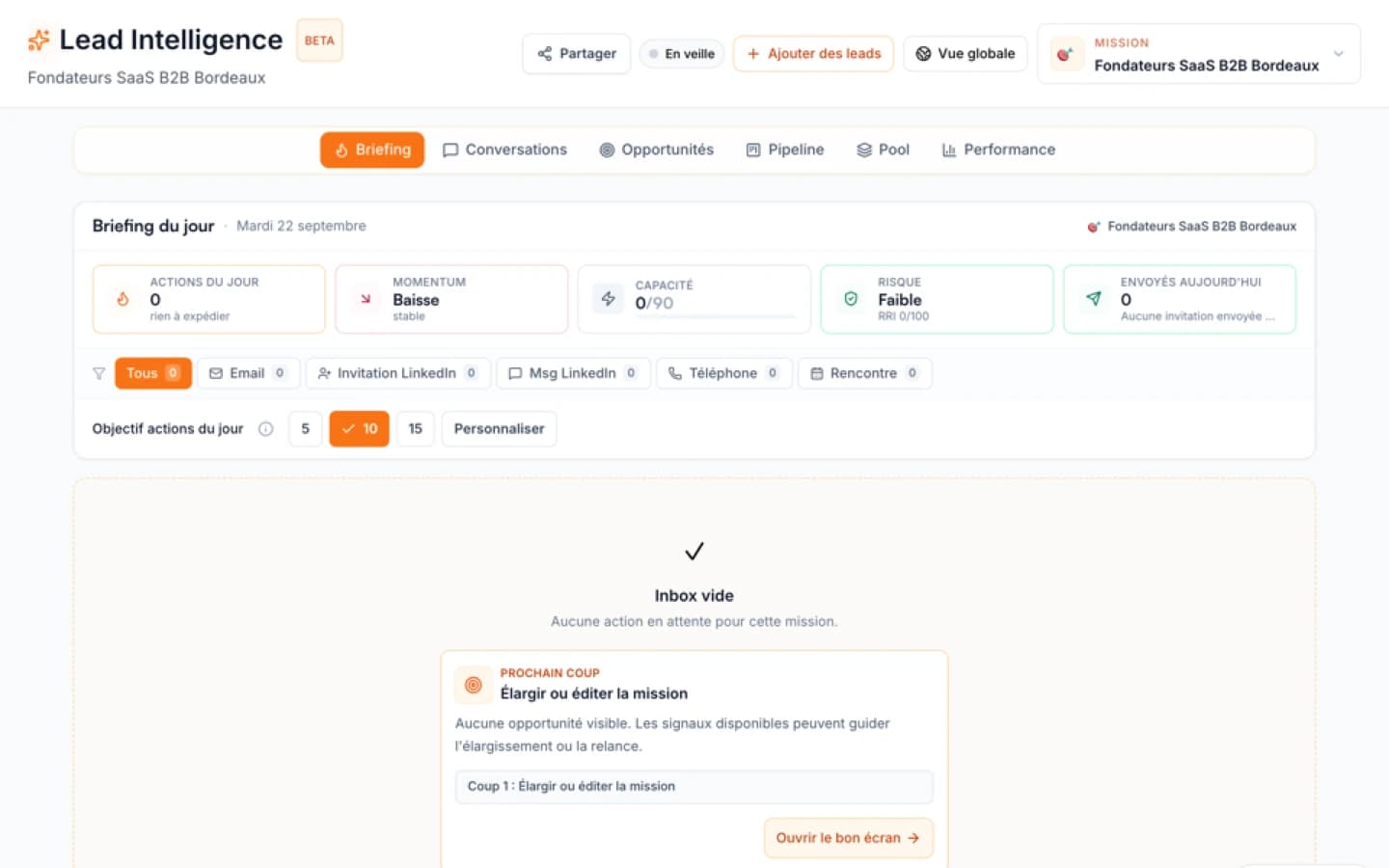
To successfully navigate the early stages of building a company, founders must secure concrete validation before investing heavily in outbound sales tools. According to research on startup readiness, a missing go-to-market plan is the primary reason early stage ventures fail to secure initial backing. Data from more than 6,000 startup scans shows that the average viability score for early stage companies is only 56.3 out of 100 and a mere 17.5% of startups score 70 or higher, as detailed in the Preuve AI Validation Checklist. This lack of structured market engagement highlights why choosing the right sales intelligence approach is critical. For teams that already have a dedicated sales operations resource and require highly customized data workflows, established platforms are often the best fit. For example, Clay provides an Official Sales Navigator datapoint integration for lead discovery and connection insights which is highly effective for technical teams who want to build complex, multi-step enrichment pipelines. However, pre-seed founders rarely have the time or data volume to justify complex engineering setups. At this stage, the priority is not scraping thousands of cold profiles but initiating high-quality conversations to validate core business assumptions. This is where Lead Intelligence offers a more direct path. Whether an early stage team starts with a handful of contacts or several thousand contacts, Lead Intelligence finds and prioritizes the contacts itself with no minimum contact threshold, as documented on the Ember Lead Intelligence page. Instead of leaving founders to decipher raw data, the system directly proposes the next action and channel that fit the lead situation, as explained on the Ember Lead Intelligence page. This contextual guidance helps founders focus on building relationships rather than managing databases. By establishing this systematic approach to market discovery, early stage teams can gather the real-world traction signals required to clearly distinguish their pre-seed progress from later seed-stage milestones, a critical boundary discussed by Shaun Gold on LinkedIn.
This approach also connects with How a traction-stage startup founder should contact investors?, which clarifies the next choice.
Observed results
For early stage founders, the transition from validating an idea to launching outbound campaigns requires clear proof of readiness. Before investing valuable resources into any sales intelligence tool, a pre-seed founder must verify that their business foundations are solid. According to a validation checklist by Preuve, a startup is ready for pre-seed fundraising when it can demonstrate five key elements: a validated problem, credible market sizing, a mapped competitive landscape, demand signals, and a clear go-to-market plan (Preuve). The risk of launching outbound efforts prematurely is high. Data from more than 6,000 startup scans shows that the average viability score is only 56.3 out of 100 and a mere 17.5% of early stage ventures score 70 or higher (Preuve). The primary killer of these early projects is a missing go-to-market strategy. Without this strategic foundation, founders often struggle to identify who to target, leading to wasted effort and high noise. When a founder is ready to transition to active prospecting, they must evaluate how tools handle early stage constraints. Traditional platforms often require massive databases or minimum contact thresholds to be effective. However, Lead Intelligence by Ember is designed to operate without these volume constraints. Lead Intelligence finds and prioritizes the contacts itself whether the team starts with 10, 100, or 1,000 contacts, meaning there is no minimum contact threshold required to begin (Ember). This allows founders to run highly targeted, high conviction outreach campaigns even with a very small initial list. Furthermore, the tool proposes the next action and channel that fit the specific lead situation, helping founders understand a changing context, choose the next priority, and take action (Ember). While other platforms, such as Clay, offer official LinkedIn Sales Navigator datapoint integrations for lead discovery and connection insights (Clay), Ember focuses on translating project context directly into actionable sales priorities. By verifying these capabilities, pre-seed founders can ensure they are choosing a system that aligns with their current validation stage rather than paying for empty database volume.
Limitations
While Lead Intelligence helps early stage founders prioritize contacts and suggests the next action and channel that fit the lead situation, founders must understand its technical boundaries before integrating it into their workflow. Unlike legacy systems that promise automatic, silent integrations, Ember does not automatically synchronize every Customer Relationship Management (CRM) platform. The initial version of its provider diagnostic operates behind flags that are disabled by default, uses a temporary or dedicated Application Programming Interface (API) token, and synchronizes no CRM. To protect sensitive credentials, the API connection is never silently transferred and must be manually entered in the Ember account after signing in. For founders starting with local files, the raw Comma-Separated Values (CSV) or Excel file and its rows do not cross the network or leave the browser before sign-in. Instead, the parsed draft remains local in the browser temporarily, allowing the founder to resume their work without performing a second upload. A key advantage for pre-seed startups is that Lead Intelligence does not require massive lists to be effective. It finds and prioritizes contacts whether the team starts with a handful of contacts or several thousand contacts, carrying no minimum contact threshold as detailed on the Ember Lead Intelligence page. However, founders must align their expectations with the tool's honest reporting. The performance proof shown after a mission relies strictly on persisted, actual results. It never invents examples or promises future gains, meaning it will report honestly when no signal is found. Furthermore, the bridge between Ember's modules is highly conditional. For founders using Fund Your Growth to build their business plan and funding strategy, the product bridges to Lead Intelligence only activate once the required project context is fully validated. This prevents founders from launching premature sales campaigns before their core business assumptions and Ideal Customer Profile (ICP) are structured. This structured discipline is critical, especially since data from more than 6,000 startup scans analyzed by Preuve AI shows that the average viability score for early stage ventures is only 56.3 out of 100, with a missing go-to-market plan acting as a primary killer.
In practice, Lead Intelligence for traction-stage startup founders completes this framework with another angle on the same topic.
Decision criteria
Before selecting a sales intelligence solution, an early stage founder must evaluate specific criteria to ensure the tool aligns with their current validation phase. The first criterion is the readiness of the startup's go-to-market plan. Many pre-seed ventures rush into outbound campaigns without a structured strategy. According to research on startup validation, a missing go-to-market plan is the primary reason early stage projects fail, and data from more than 6,000 startup scans shows that the average viability score is only 56.3 out of 100, with just 17.5% of startups scoring 70 or higher (Preuve AI). Without this strategic foundation, any automated prospecting tool will simply accelerate poorly targeted outreach. The second criterion is volume flexibility. Pre-seed founders rarely possess massive databases of thousands of clean leads, meaning they cannot afford to use platforms that require high minimum thresholds. A viable tool must be highly effective at small scales. For example, Lead Intelligence finds and prioritizes the contacts itself whether the team starts with 10, 100, or 1,000 contacts, with no minimum contact threshold (Ember). This allows founders to begin prospecting immediately with whatever small batch of contacts they currently have, rather than waiting to build a massive list. The third criterion is the transition from raw data to clear execution. Founders wear multiple hats and cannot spend hours analyzing spreadsheets to determine how to approach a prospect. The chosen solution must translate signals into immediate steps. It is essential to verify if the software proposes the next action and channel that fit the lead situation, which is a core capability of Lead Intelligence (Ember). Finally, founders must assess how the tool handles data discovery and enrichment. While some platforms like Clay rely on an official LinkedIn Sales Navigator datapoint integration for lead discovery and connection insights (Clay), a pre-seed founder must decide whether they want to build complex multi-provider workflows themselves or use an orchestrated experience that connects their business plan directly to their sales mission.
What remains unproven
While Lead Intelligence optimizes how you target and approach prospects, it cannot automatically validate an unproven value proposition. For early stage founders, the core risk is not just finding people to talk to, but ensuring that those people actually care about the problem being solved. According to data from over 6,000 startup scans analyzed by Preuve AI, the average viability score for early stage ventures is only 56.3 out of 100 and only 17.5% of startups score 70 or higher, as documented in their pre-seed validation checklist. This means that for the vast majority of pre-seed projects, the fundamental market demand remains entirely unproven. An intelligent outbound tool can streamline your workflow, but it does not replace the hard work of positioning. If you already have a highly validated Ideal Customer Profile (ICP) and simply require a massive database for cold outreach, traditional platforms are often sufficient. For example, Apollo.io offers a free forever starter plan and paid tiers with monthly per-seat credit allowances, as detailed on the Apollo pricing page. These legacy databases work well when you need sheer volume, but they do not help you figure out what to say or why a prospect should answer you now. Ember addresses this gap by focusing on context rather than raw volume. Lead Intelligence finds and prioritizes the contacts itself whether the team starts with 10, 100, or 1,000 contacts, with no minimum contact threshold, as outlined on the Ember Lead Intelligence page. It also proposes the next action and channel that fit the lead situation. However, even with these tailored recommendations, the ultimate conversion rate and product market fit remain unproven until you get on the phone, listen to feedback, and secure actual commitments. Lead Intelligence gives you the best starting point, but the founder must still close the validation loop.
Before deciding, How should a small B2B sales team qualify a lead in 2026 without a marketing team or CRM? helps connect this method with adjacent priorities.
Sources and updates
This analysis is built on a foundation of verified market data and product capabilities.
Sources
FAQ
Lead Intelligence
Move from list to priority
Connect context, signals and human relationships to the next action.