
Symptom or signal
For early stage founders, the path to securing qualified business introductions is frequently blocked by a paradox of abundance. In the early phases of building a company, founders often believe that more data will solve their prospecting challenges. They acquire massive lists of contacts, only to find themselves paralyzed by the noise. The core problem is not a lack of names, but a lack of actionable context. Without knowing who to contact, why a conversation is relevant right now, and what specific message will resonate, outreach quickly degrades into generic, low-yield spam.
This challenge is particularly acute when relying solely on traditional business-to-business (B2B) databases. For teams that require immediate volume and automated outbound sequences, established platforms are highly capable. For instance, Apollo.io has built a massive market presence, reaching 150 million dollars in annual recurring revenue in 2025 according to Apollo. These tools are excellent for sales teams focused on speed and broad market coverage. However, early stage founders rarely have the resources to manage massive, unfiltered databases. Furthermore, even when using these platforms, unlimited email plans remain subject to a fair use policy with credit limits as detailed on the Apollo Pricing Page.
For a founder, raw volume without prioritization creates several distinct symptoms of friction:
First, the search for the right contact becomes a guessing game. Founders filter lists by generic job titles or company sizes, but these static criteria do not reveal whether a prospect actually has a current pain point that aligns with the startup's offer.
Second, there is a complete blindspot regarding timing. Without continuous signal monitoring, founders cannot tell why they should reach out today versus next month. They miss critical windows of opportunity, such as when a target company undergoes a leadership change or shifts its strategic priorities.
Finally, the messaging remains disconnected from the prospect's reality. When founders do not have a clear angle grounded in their ideal customer profile (ICP) and business plan, they resort to templated pitches. These generic messages are easily ignored because they fail to demonstrate an understanding of the prospect's specific situation. To break through the noise, founders must move away from sheer volume and focus on identifying the specific, high-priority opportunities that deserve immediate action.
To place this decision in context, the Knowledge guides for founders bring together deeper guidance on the same field.
What changed
The transition from manual list-building to automated data abundance has fundamentally altered the prospecting landscape for early-stage founders. Historically, the primary barrier to securing qualified business introductions was simply finding contact information. Today, massive databases have commoditized basic contact details. For instance, platforms like Apollo run on credits, and their use is governed by a fair use policy, as shown on the Apollo pricing page.
However, this shift from scarcity to abundance has created a new bottleneck. Having thousands of email addresses does not tell an early-stage founder who is ready for a conversation today, why they should reach out right now, or what specific message will resonate. Instead of solving the problem, raw data increases the noise. Founders often spend valuable time exporting lists and burning credits. On Apollo, credits are spent on different actions, as shown on the Apollo pricing page. Without context, these credits are frequently wasted on cold, unresponsive targets.
Even when founders invest in paid tiers, as shown on the Apollo pricing page, the underlying challenge remains. The core issue is not a lack of contacts, but a lack of actionable intelligence. Traditional databases are built for high-volume sales teams running broad campaigns, not for founders who need to build high-trust relationships.
To secure qualified introductions, founders must move away from static list-building and focus on timing and relevance. Knowing the right person to contact requires understanding real-time signals, such as recent company changes, leadership moves, or shifting business priorities. Without this layer of intelligence, outreach remains generic, response rates plummet, and founders risk damaging their brand reputation before they even establish product-market fit. The modern prospecting challenge is no longer about gathering data, but about translating available context into a clear next action.
Facts and sources
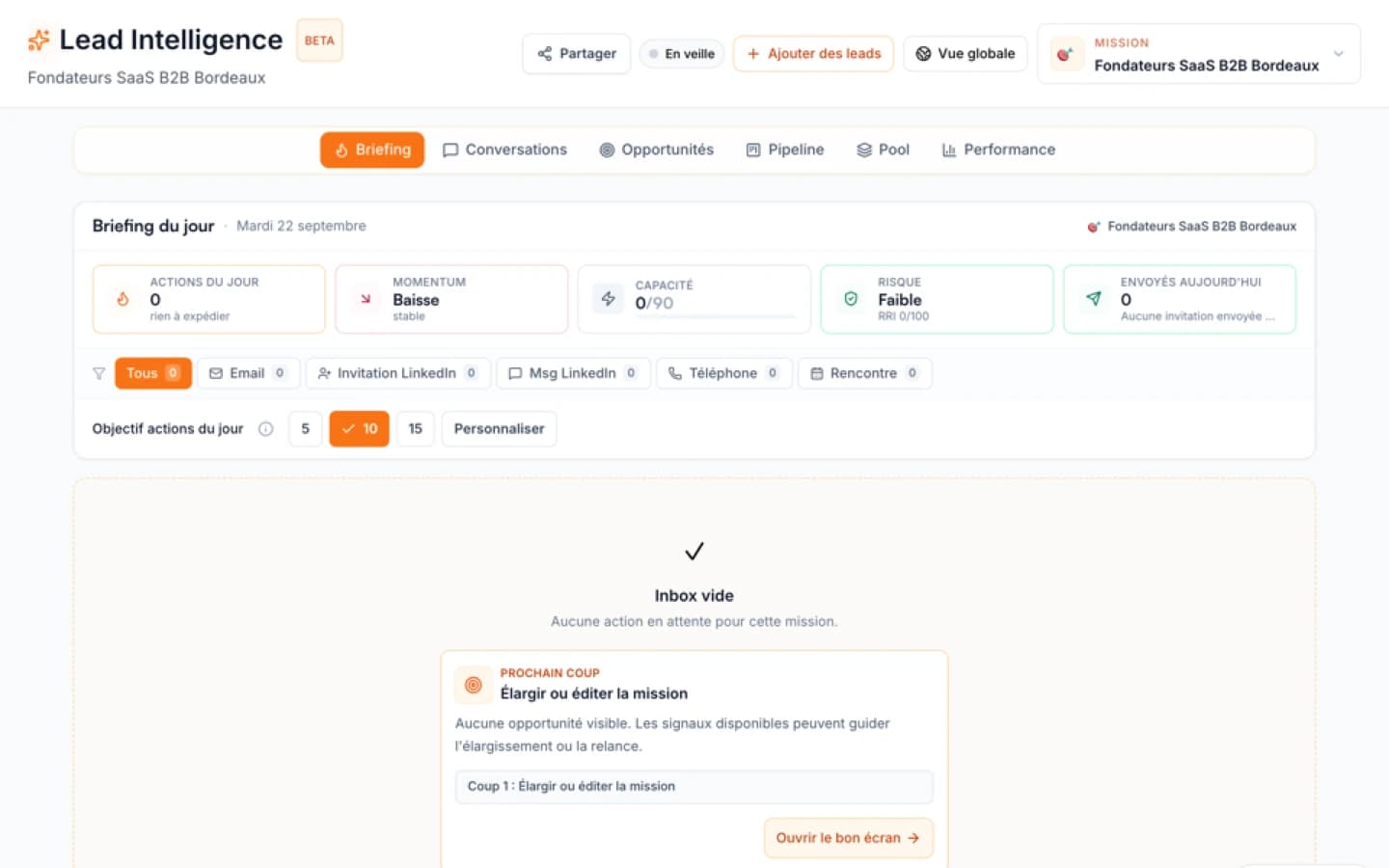
This analysis draws on three sources consulted on July 31, 2026: Growthlist on reaching founders, Harry Wetherald's LinkedIn post on cold outreach, and Startup to Scaleup on founder nerves. They come from three distinct websites. The Apollo figures come from its company history, its Series D announcement and its pricing page. For instance, when looking at traditional databases, the pricing page of Apollo shows that their unlimited plans remain subject to a Fair Use Policy where unlimited email credits are framed by limits on actual credits. This highlights why early-stage founders struggle with noise and need a system that reduces clutter. Ember addresses this through its Lead Intelligence capability, which finds accounts from the mission Ideal Customer Profile (ICP) and signals, then verifies useful sources to provide a clear next action on who to contact, why now, which channel, and which angle. With a usable targeting context, the first prioritized leads can appear in about 30 minutes, allowing founders to prioritize the conversations that deserve attention now.
To explore this point further, Clay vs Ember: Which GTM Tool Wins for Your Team? 2026 details a step directly related to this decision.
Why the common explanation is incomplete
The common explanation for why early-stage founders struggle to secure qualified business introductions is that they simply do not have enough leads. Founders are frequently told that prospecting is a pure numbers game, which leads them to focus entirely on expanding the top of their sales funnel. This perspective suggests that if you load enough contacts into an automated sequence, the law of averages will eventually yield results. To execute this high-volume strategy, founders often turn to established software as a service (SaaS) platforms. For example, a speed-focused founder might look to Apollo, an industry giant that reached 150 million dollars in annual recurring revenue (ARR) in 2025, according to Apollo. While such platforms offer massive business-to-business (B2B) databases and are backed by a valuation of 1.6 billion dollars in 2023, as detailed in Apollo, relying solely on raw data abundance introduces a different set of challenges. Even when founders opt for unlimited plans, they find that their outreach is still bounded by credit limits under a fair use policy, as outlined on the Apollo pricing page. More importantly, the volume-first explanation is fundamentally incomplete because it mistakes data access for relationship readiness. Having a list of one thousand email addresses does not tell a founder who to contact today, why this specific week is the right moment to reach out, or what message will actually spark a conversation. When founders blast generic messages to massive lists, they do not build trust. Instead, they create market noise and burn through potential accounts. The real problem preventing founders from securing qualified introductions is the absence of context. To break through the noise, a founder must be able to identify which opportunities deserve action immediately based on real-time signals. True efficiency comes from knowing the precise reason a prospect needs a solution right now, the exact channel they prefer, and the specific angle that aligns with their current business situation. Without this intelligence, prospecting remains an expensive, exhausting exercise in sending the wrong message to the wrong person at the wrong time.
The real problem
The real bottleneck for early-stage founders is not a lack of data, but the overwhelming noise that raw volume creates. When seeking qualified business-to-business (B2B) introductions, founders often turn to traditional database providers to build their initial lists. These platforms are highly effective when a company requires sheer scale and immediate outbound activity. For example, Apollo has built a massive market presence, reaching 150 million dollars in annual recurring revenue in 2025, with a valuation of 1.6 billion dollars in 2023, according to financial data published by Apollo (company history and Series D announcement). For sales teams or founders who prioritize rapid, high-volume outbound campaigns, such tools are excellent for launching sequences immediately, though users should note that even unlimited plans remain subject to a fair use policy with specific credit limits, as outlined on the Apollo Pricing Page. However, this volume-first model fails early-stage founders who need to secure highly qualified, warm introductions rather than executing broad cold campaigns. When a founder is forced to manage thousands of unprioritized contacts, they face multiple distinct problems that prevent them from taking action. Initially, they cannot identify who to contact because the ideal customer profile (ICP) is treated as a static set of filters rather than a dynamic target. A list of companies matching a basic industry and headcount filter does not reveal which accounts are actually experiencing the pain points the founder solves. Furthermore, they lack a clear reason for why now is the right time to reach out. Without real-time monitoring of organizational changes or buying signals, outreach is timed randomly. This leads to missed opportunities with prospects who might have been receptive recently but have since moved on to other priorities. Lastly, they struggle to determine which channel and which angle to use. Generic templates fail to build trust, yet manually researching every contact to craft a bespoke message is impossible to scale. The result is operational paralysis: the founder has the data, but lacks the specific context required to turn a cold record into a warm conversation. To break this cycle, founders must move away from raw list accumulation and focus on systems that turn available context into clear, prioritized actions.
This approach also connects with Apollo vs Ember Lead Intelligence for Founder Conversion, which clarifies the next choice.
How the mechanism works
To solve the challenge of knowing who to contact, why now, and with what message, the sales mechanism must move away from static lists and toward dynamic, contextual prioritization. Traditional sales databases are built for raw volume. For example, Apollo has scaled aggressively as a commercial intelligence platform, reaching 150 million dollars in annual recurring revenue (ARR) in 2025, with a valuation of 1.6 billion dollars in 2023 and about 250 million dollars raised, according to Apollo (company history and Series D announcement). However, even when using these massive databases, unlimited email plans remain subject to a fair use policy with credit limits, as shown on the Apollo pricing page. More importantly, raw contact data does not provide the strategic reasoning required for highly personalized outreach. Without context, outbound efforts quickly degrade into spam. Ember addresses this bottleneck through Lead Intelligence by aligning prospecting directly with your strategic foundation. Instead of starting with a blank search bar, the mechanism reuses your existing project context, including your Business Plan, Ideal Customer Profile (ICP), offer, and core strategy. This ensures that every prospecting mission is grounded in your actual business goals. The system then discovers accounts based on your specific ICP and real-time signals, filtering out the noise to focus attention on opportunities that deserve action immediately. It classifies accounts into clearly explained opportunities to watch, act on, or set aside. This contextual prioritization makes the priority of each lead completely explainable based on company signals and opportunity readiness. Rather than leaving you with a list of names, Lead Intelligence proposes a clear next action for each opportunity. It tells you exactly who to contact, why now, which channel to use, and what angle to take. This approach ensures that early-stage founders and sales teams know who to contact, why now, and which action to take without wasting time on manual research. The setup is designed for rapid execution. Once you establish a usable targeting context, the first prioritized leads can appear in about 30 minutes. This speed allows founders to transition from strategy to execution almost immediately, ensuring that outreach is guided by relevance and timing rather than raw, uncalibrated volume.
Concrete examples
To understand how these obstacles manifest in daily operations, consider an early-stage founder attempting to navigate a traditional outbound sales campaign. The founder often starts by purchasing access to a massive Business-to-Business (B2B) database to build a list of prospects. For example, Apollo has scaled aggressively to reach 150 million dollars in annual recurring revenue (ARR) in 2025, according to data from Apollo. However, simply having access to millions of profiles does not translate to qualified introductions. Even when a platform advertises unlimited email credits, those plans remain subject to a Fair Use Policy, as detailed on the Apollo pricing page. The founder is left with a massive, unfiltered list of contacts but no inherent guidance on who is actually ready to engage, why they should be contacted today, or what specific message will resonate. This lack of prioritization leads directly to the noise problem. When a founder treats prospecting as a pure volume game, they typically upload their exported list into an automated sequence tool and send identical messages to hundreds of people. This generic approach fails because it ignores the unique context of each recipient. The founder cannot answer why now is the right time to reach out to a specific executive, resulting in low response rates and a damaged sender reputation. Instead of building meaningful relationships, the founder spends valuable hours managing unsubscribes and bounced emails. A concrete alternative is to shift from raw data extraction to contextual intelligence. When a founder leverages Lead Intelligence, the system reduces noise by focusing attention on opportunities that deserve action now. Instead of waiting days to clean and segment a database, the founder can see results almost immediately. With usable targeting context, the first prioritized leads can appear in about 30 minutes. This rapid turnaround allows the founder to quickly identify high-potential targets without getting bogged down in manual spreadsheet filtering. Finally, the challenge of execution often stalls founders even after they have identified a promising lead. Knowing who to contact is only half the battle, as the founder must still determine the correct channel and the right conversational angle. Without guidance, they might send a cold email when a personalized LinkedIn connection would be far more effective, or they might pitch their product too early instead of referencing a recent company trigger event. Lead Intelligence addresses this bottleneck directly because it proposes the next action and channel that fit the lead situation. By providing a clear next action that details who to contact, why now, which channel, and which angle, the system helps founders prioritize the conversations that deserve attention now, turning cold outreach into warm, contextual business introductions.
When to use this diagnosis
This diagnosis is useful when your outreach produces noise rather than conversations: long lists, few replies, and no clear reason to contact anyone right now. It is also useful when your targets already receive a lot of automated outreach, because a generic message gets lost there all the faster.
In practice, How to Generate Qualified B2B Leads in 2026 for Sales Teams? completes this framework with another angle on the same topic.
When not to use it
An early stage founder should avoid a volume first prospecting approach when their target market is highly concentrated or requires high trust relationships. If your addressable market consists of only a few dozen key accounts, blasting automated sequences is a fast way to burn valuable bridges. Large database platforms are highly effective when you have a dedicated sales team capable of filtering massive lists and running broad outbound campaigns where a low response rate is acceptable. For instance, Apollo has built a highly successful platform for mid market sales teams, reaching 150 million dollars in annual recurring revenue (ARR) in 2025 (Apollo). Their platform is ideal for teams that need immediate volume, offering plans with unlimited email credits that are subject to a Fair Use Policy (Apollo Pricing). If your primary goal is to build a massive, automated outbound engine and you have the sales operations resources to clean the data, these traditional systems are the right choice. Conversely, a context driven tool like Lead Intelligence is not the right fit if you do not have a defined offering or a clear business direction. While Lead Intelligence can surface prioritized opportunities in about 30 minutes once you provide a usable targeting context, it cannot invent a strategy from thin air. If you are in the pre-product phase and simply want to browse random business directories without any specific Ideal Customer Profile (ICP), a generic search tool or a basic business directory is more suitable. Contextual prioritization only works when there is a real project context to align with. If you lack a clear understanding of your value proposition, you should focus on defining your core business model before attempting to prioritize your outreach.
Next step
To move past the paralysis of manual list building and generic outreach, early stage founders must shift their focus from raw volume to immediate relevance. Traditional databases often encourage a spray and pray approach, but even platforms offering unlimited plans subject those accounts to strict credit limits under a Fair Use Policy, as shown on the Apollo Pricing page. Instead of collecting thousands of cold profiles, the next logical step is to establish a system that identifies high priority opportunities based on real time changes and deep context.
This is where a context first approach changes the dynamic. By leveraging Ember, founders can understand a changing context, choose the next priority, and take immediate action. Specifically, the Lead Intelligence capability helps founders know who to contact, why now, and which action to take. Instead of guessing which channel or angle will resonate, this system proposes the next action and channel that fit the lead situation, providing a clear next action that details who to contact, why now, which channel, and which angle, as outlined on the Ember Lead Intelligence page.
By prioritizing the conversations that deserve attention now, founders can protect their brand reputation and build high trust relationships. This contextual approach is not limited to sales. For founders who are also preparing to raise capital, Ember offers Fund Your Growth to build the Business Plan, choose a coherent funding strategy, and plan the next steps by turning gaps in the file into prioritized next actions. Additionally, the Second Brain capability works across the workspace to turn all available context into clearer explanations and next actions.
The path forward requires moving away from static lists and embracing a living workflow where every outreach attempt is backed by a clear, defensible reason.
Before deciding, Using AI for B2B Lead Generation Without Losing Quality helps connect this method with adjacent priorities.
Sources and methodology
To address the critical challenges early stage founders face when trying to secure qualified introductions and determine who to contact, why to reach out now, and what message to send, we conducted a structured review of industry benchmarks and practitioner testimonies. We analyzed how traditional outbound databases often lead to high noise levels and generic outreach, noting that even platforms offering unlimited email credits, as detailed on the Apollo pricing page, subject accounts to strict limits under their fair use policy.
The retained sources, consulted on July 31, 2026, are the Growthlist guide on reaching startup founders, Harry Wetherald's LinkedIn post on cold outreach to founders, and the Startup to Scaleup newsletter on startup founders' nerves. They come from three distinct websites, which varies the points of view.
Sources
FAQ
Free diagnostic
Test your sales file
Drop an Excel or CSV and check its readiness without sending its rows to Ember.