
Symptom or signal
Many sales teams experience a common, frustrating cycle: outbound campaigns are launched, hundreds of emails are sent, yet reply rates remain low. When a prospect does agree to a call, reps often rush to qualify them using rigid checklists. Asking a cold prospect about their budget, decision-making authority, or purchase timeline right away often creates friction and stalls the relationship before it even begins.
When reps focus too heavily on extracting qualification data early on, they treat prospects like line items rather than partners. This symptom, high outbound volume paired with low engagement, signals that your qualification process is misaligned with how modern buyers actually make decisions.
To place this decision in context, the Knowledge guides for sales bring together deeper guidance on the same field.
What changed
The B2B buying journey has fundamentally changed. Buyers now conduct extensive independent research before ever speaking to a sales representative. Information asymmetry has flipped; buyers no longer rely on sales reps to understand a product's capabilities.
Legacy qualification frameworks like BANT, which IBM’s sales teams are widely credited with developing, were built for a seller-centric world source. Today, forcing a buyer to prove they have a budget and a strict timeline upfront is highly ineffective. Meanwhile, enterprise-grade frameworks like MEDDICC focus heavily on deal control and mapping complex internal structures source. While highly valuable for late-stage pipeline management, these frameworks are too heavy and intrusive for early-stage prospecting where trust has not yet been established.
Facts and sources
To understand why traditional qualification often fails at the top of the funnel, we must look at how these frameworks are structured:
- BANT (Budget, Authority, Need, Timeline): Often considered outdated for modern SaaS because budgets are highly dynamic, decision-making is distributed across multiple stakeholders, and timelines are flexible based on the perceived urgency of the solution source.
- MEDDICC (Metrics, Economic Buyer, Decision Criteria, Decision Process, Identify Pain, Champion): Highly effective for complex, high-value enterprise sales where deal execution risk is high, but it requires deep, active access to the prospect organization source.
- Framework Fit: Choosing the right qualification methodology depends entirely on your deal complexity, sales cycle length, and the stage of the opportunity source.
To explore this point further, Clay vs Ember: when each one fits details a step directly related to this decision.
Why the common explanation is incomplete
The standard advice given to sales teams is to simply adopt a "lighter" conversational framework, such as GPCTBA/C&I (Goals, Plans, Challenges, Timeline, Budget, Authority, Consequences & Implications) or ANUM (Authority, Need, Urgency, Money).
However, this explanation is incomplete because it still assumes you are already in an active conversation with the prospect. It completely ignores the pre-conversation challenge: out of thousands of accounts in your CRM or database, how do you decide who to contact today, why now, and with which message? Traditional prospecting databases store contact data, but they cannot tell you which account is experiencing a real-time trigger that makes them receptive to your offer right now.
The real problem
The real problem facing sales teams is not a lack of contacts or a bad qualification acronym. The real problem is noise.
Sales teams have access to more data than ever before, yet they struggle to identify which opportunities actually deserve action today. Without a way to prioritize accounts based on real-time context and external signals, reps waste valuable hours on cold outreach to accounts that have no active need. This volume-heavy approach creates noise for the buyer and leads to high burnout and low conversion rates for the sales team.
This approach also connects with What Signals Actually Tell You a B2B Prospect Is Worth Contacting Now?, which clarifies the next choice.
How the mechanism works
To qualify leads effectively without relying on intrusive early-stage questions, sales teams must transition to signal-based qualification. This mechanism relies on monitoring external, verifiable changes across target companies and people to determine their readiness to buy.
Instead of asking a prospect if they have a need, you look for indicators of that need, such as:
- Leadership changes: A new executive joining a target company often signals a budget restructure and a willingness to implement new tools.
- Team expansion: Rapid hiring within a specific department indicates growth and potential operational bottlenecks.
- Technology shifts: Changes in a company's tech stack can create integration needs or render legacy solutions obsolete.
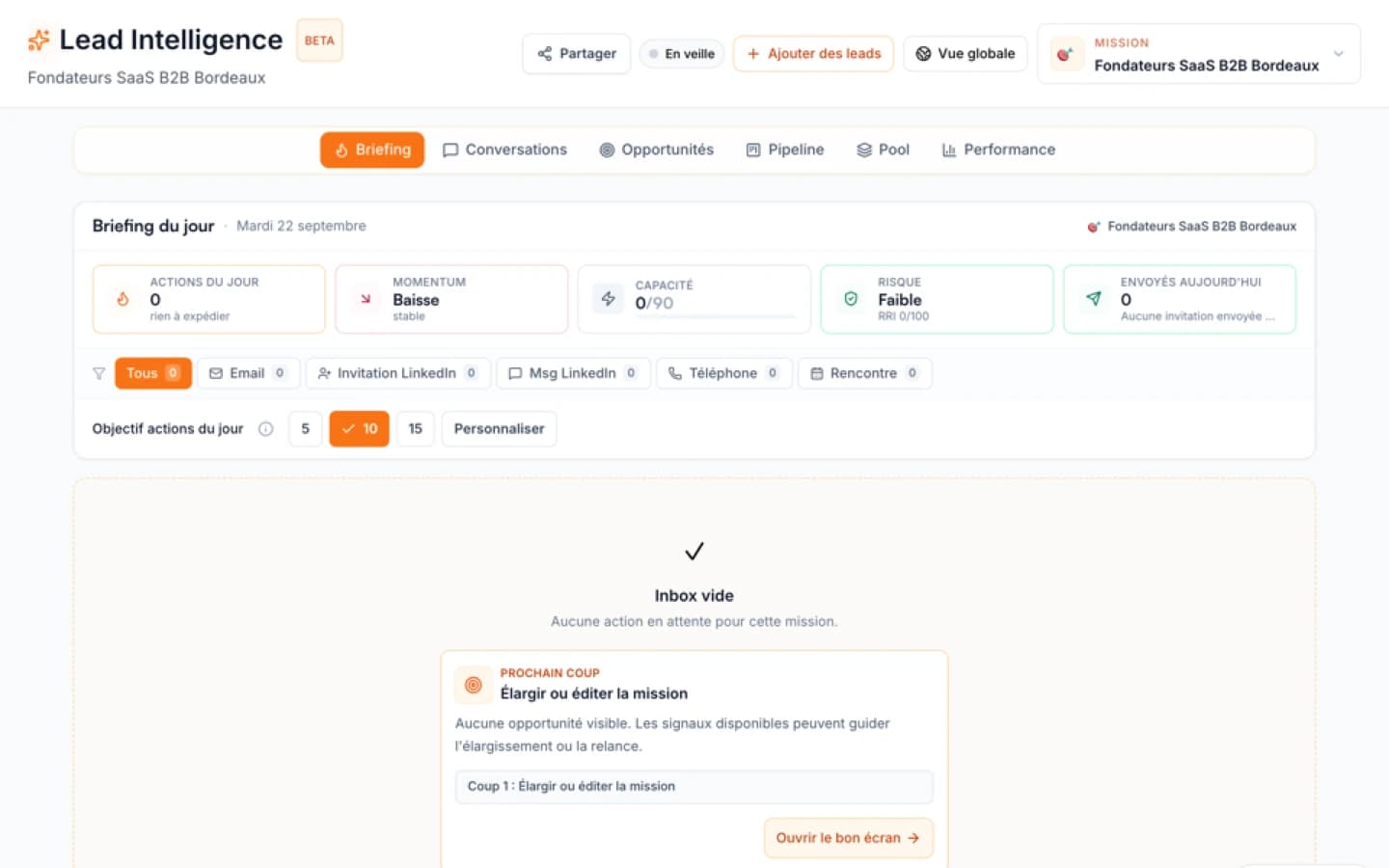
This is where Ember's Lead Intelligence transforms the workflow. Rather than forcing you to manually track these changes, Ember understands your business context and automatically detects shifts across companies and people. It reduces noise by focusing your attention on the opportunities that deserve action now, providing a clear next step: who to contact, why now, and which angle to use.
Concrete examples
Consider how qualification looks under these two different models:
- The Traditional Checklist Approach: A sales rep identifies a target account and sends a cold email asking if they have a budget allocated for marketing software this quarter. The prospect ignores the email because it feels like an interrogation and offers zero immediate value.
- The Signal-Based Approach: Ember detects that a target company has recently hired a new VP of Marketing who previously used your software at their last company. The "why now" is the leadership transition; the "angle" is helping them replicate their past success in their new role. The qualification is built on context and relationship history, making the outreach highly relevant and far more likely to convert.
In practice, No brand or contact list: choose first B2B outreach targets completes this framework with another angle on the same topic.
When to use this diagnosis
Your sales team should adopt signal-based qualification if:
- You have plenty of contact names in your CRM (like HubSpot, Salesforce, or Pipedrive) but your reps struggle to choose the next conversation.
- Your outbound reply rates are declining, and manual research is consuming too much of your reps' daily schedule.
- You want to transition your team from high-volume, generic outreach to high-relevance, context-driven conversations.
When not to use it
This approach may not be the primary focus if:
- Your sales team manages a very small number of highly complex, late-stage enterprise deals where mapping internal champions and formal decision processes via MEDDICC is strictly required source.
- Your team primarily needs basic contact storage, simple list enrichment, or high-volume, automated email execution, where a standard CRM or basic prospecting tool is sufficient.
Before deciding, Does Real-Time Lead Qualification Replace BANT for Small Teams? helps connect this method with adjacent priorities.
Next step
If your sales team is ready to cut through the noise and focus on the conversations that actually move decisions forward, it is time to shift from static checklists to active context.
Explore how Ember's Lead Intelligence can help your team prioritize opportunities, understand human relationships, and identify exactly who to contact, why now, and with which message.
Sources and methodology
This analysis is based on established sales methodologies and industry frameworks:
- Soco Selling's comparative analysis of BANT, MEDDIC, and MEDDPICC qualification methodologies source.
- SalesMotion's comprehensive guide on modern lead qualification frameworks and their alignment with deal complexity source.
- MEDDICC's official resources comparing enterprise deal control frameworks to traditional BANT checklists source.
| Criteria | BANT or MEDDICC | Lead Intelligence |
|---|---|---|
| Starting point | A checklist the prospect must confirm (budget, authority, need, timeline) | Signals observed at the company: hires, appointments, new projects |
| Where it fits best | Opportunities already under way and complex deals (MEDDICC) | Early prospecting and choosing the first account to contact |
Sources
FAQ
Free diagnostic
Test your sales file
Drop an Excel or CSV and check its readiness without sending its rows to Ember.