
Symptom or signal
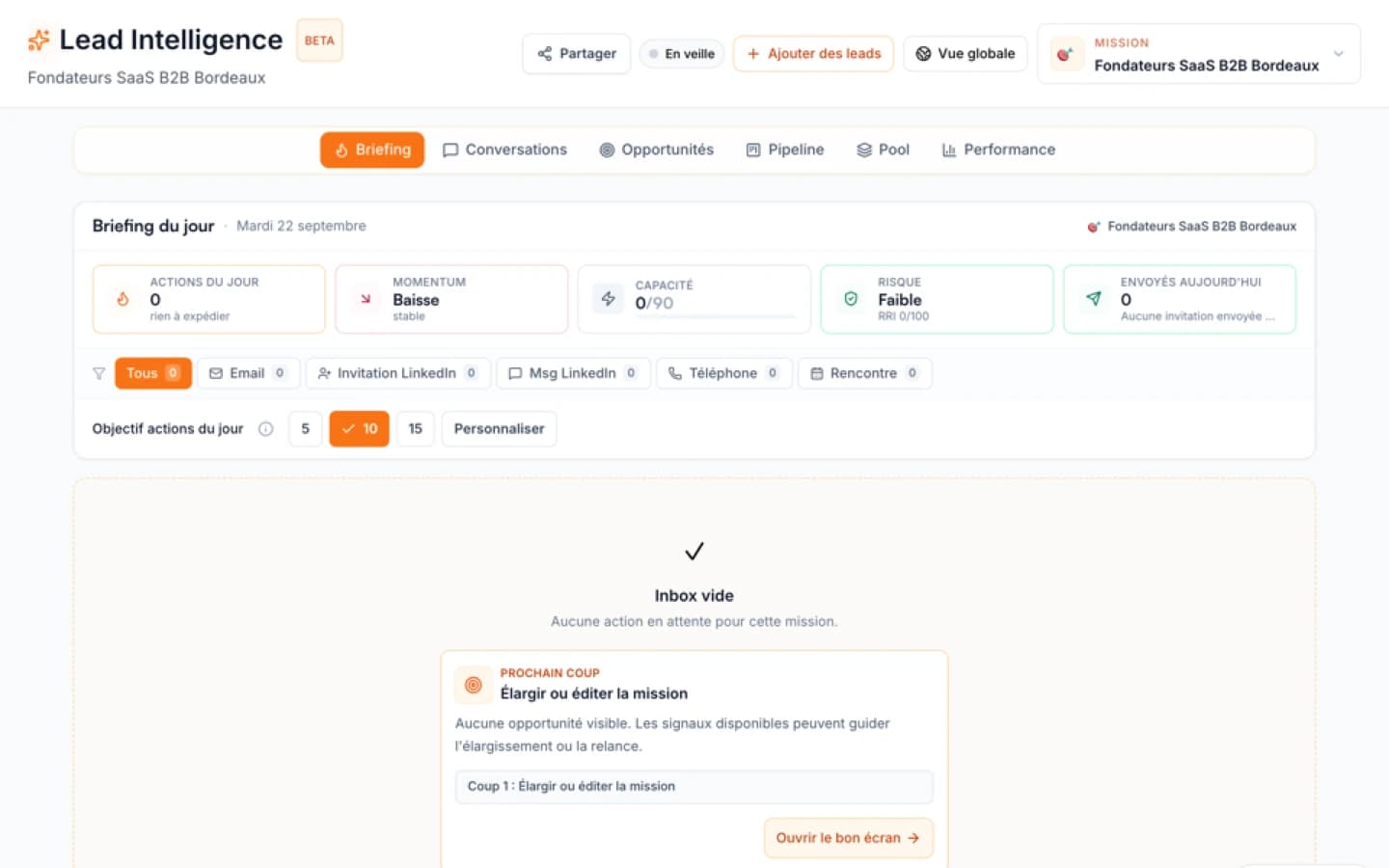
For an Account Executive (AE) tasked with hitting a quarterly quota, the primary symptom of a broken sales pipeline is not a lack of data, but an overwhelming abundance of noise. Sales teams often find themselves staring at thousands of cold records in databases like Apollo, which declared 150 million dollars in annual recurring revenue in May 2025, as reported by Apollo’s history page, with a valuation of 1.6 billion dollars in August 2023 (Apollo announcement). Despite this massive scale of data availability, the daily reality for an Account Executive remains highly manual. They spend hours sorting through static lists, trying to guess which accounts are actually receptive, and searching for relevant triggers to write a personalized message. This lack of clear direction leads to wasted effort, low response rates, and missed targets. The signal that a change is needed occurs when the sales team cannot answer three fundamental questions for any given prospect: who should be contacted, why should they be contacted right now, and what specific message will resonate. Traditional prospecting tools often provide contact details without the necessary timing or situational context. This is where Lead Intelligence changes the workflow. By analyzing signals rather than relying on static lists, the system identifies the accounts that deserve immediate attention. It searches and imports profiles through LinkedIn or Sales Navigator from a connected account, so that it starts from up-to-date data. For the Account Executive, this shifts the daily routine from tedious manual research to execution. The platform proposes the next action and channel that fit the lead situation, providing a clear next action that specifies who to contact, why now, which channel to use, and which angle to take. This targeted approach ensures that every outreach is backed by a genuine reason to connect, turning cold outreach into a timely, context-driven conversation.
To place this decision in context, the Knowledge guides for sales brings together deeper guidance on the same field.
What changed
Traditionally, sales teams relied on sheer volume to hit their numbers. Platforms like Apollo, which declared 150 million dollars in annual recurring revenue in May 2025 (Apollo’s history page), with a valuation of 1.6 billion dollars in August 2023 (Apollo announcement), have made it easier than ever to build massive list databases. Apollo promotes “one connected GTM system” (Apollo), which is highly effective when you need a massive database, although its unlimited plans remain subject to a Fair Use Policy with credit limits (Apollo Pricing). Similarly, Clay offers powerful data enrichment capabilities, including an official LinkedIn Sales Navigator integration (Clay Integrations). However, raw data is no longer the bottleneck. The real challenge for an Account Executive (AE) is identifying which of those thousands of contacts actually warrant a conversation today. This is where the paradigm shifts. Lead Intelligence changes the workflow by replacing manual list building with contextual prioritization. Instead of treating every contact in a Customer Relationship Management (CRM) system as equally cold, it reuses your existing business context, including your Ideal Customer Profile (ICP), core offer, and strategy, to prepare a targeted sales mission. The system then finds accounts based on your specific ICP and real world signals, verifying useful sources. It classifies these accounts into clearly explained opportunities to watch, act on, or set aside. Crucially, Lead Intelligence finds and prioritizes the contacts itself, whether your team starts with 10, 100, or 1,000 contacts, with no minimum contact threshold. By analyzing these signals, it removes the guesswork from daily outreach. Instead of sending generic email blasts, sales teams receive a clear next action, identifying who to contact, why now, which channel to use, and which angle to take. This ensures that every outreach attempt is grounded in a timely, relevant reason, allowing AEs to focus their energy on high value conversations rather than administrative filtering.
Facts and sources
To understand how Lead Intelligence transforms daily prospecting for an Account Executive (AE), it is essential to look at the underlying data models and verified industry sources. Traditional sales intelligence platforms focus heavily on sheer database size. For instance, Apollo declared 150 million dollars in annual recurring revenue in May 2025, according to data from Apollo’s history page. While these massive databases are highly effective for raw contact retrieval, they often leave sales teams with the burden of filtering out the noise to find actual buyer intent. Highspot publishes a guide to lead intelligence that offers another reading of the topic. This is where the mechanism of Ember differs. The system operates by first finding accounts based on the specific mission Ideal Customer Profile (ICP) and active signals, and then verifying useful sources. For an Account Executive looking for the optimal entry point, the platform searches and imports profiles through LinkedIn or Sales Navigator from a connected account. Rather than leaving the sales representative to guess the next step, the technology proposes the next action and channel that fit the lead situation, providing a clear path on who to contact, why now, and which action to take. This structured approach is also documented in the Business-to-Business (B2B) sales guides within the How Lead Intelligence works for a B2B founder who wants to know who to contact, why now, and with what message: a practical guide.
To explore this point further, How to qualify B2B leads without a marketing department? details a step directly related to this decision.
Why the common explanation is incomplete
The common explanation for modern outbound sales success is deceptively simple: buy a larger database, apply basic filters, and automate the outreach. Sales organizations are often led to believe that pipeline generation is purely a numbers game. If an Account Executive (AE) simply increases the volume of emails and calls, the revenue will follow.
This explanation is incomplete because it mistakes data abundance for sales readiness. Having access to millions of records does not translate to knowing who is actually receptive to a conversation today. In fact, relying solely on massive databases introduces significant operational friction. For instance, even when platforms promise vast outreach capabilities, their unlimited plans are often restricted by strict fair use policies, such as the email credit limits detailed on the Apollo Pricing Page.
Furthermore, traditional list-building tools require AEs to spend hours manually filtering and validating leads. The common narrative suggests that a standard Ideal Customer Profile (ICP) filter is enough to target the right accounts. However, this static approach ignores current business context. It fails to answer the three critical questions every AE faces before making a call: who to contact, why now, and which message will resonate.
Without this context, sales teams are forced to choose between two bad options: sending highly personalized but incredibly slow manual emails, or blasting generic, automated sequences that yield low response rates and burn valuable market accounts. True efficiency does not come from managing larger list sizes. Instead, it requires a system that can automatically prioritize opportunities based on active signals. For example, Lead Intelligence finds and prioritizes the contacts itself, whether the team starts with 10, 100, or 1,000 contacts, with no minimum contact threshold. By shifting the focus from raw volume to contextual relevance, sales teams can move past the limitations of basic databases and focus on conversations that are actually ready to convert.
The real problem
For an Account Executive (AE), the daily challenge is rarely a lack of names or email addresses. Sales teams have access to massive data providers that have scaled to meet the demand for raw contact information. For instance, Apollo declared 150 million dollars in annual recurring revenue in May 2025 according to Apollo’s history page. Yet, having access to millions of profiles does not solve the core issue of relevance. Even when platforms offer unlimited email credits, these plans remain subject to a fair use policy with credit limits as shown on the Apollo Pricing Page. The real problem is the cognitive load of deciding who to contact, why they should be contacted right now, and what specific message will resonate. Without clear context, an AE is forced to treat every lead the same way, resulting in generic outreach that buyers easily ignore. Sifting through thousands of cold records to find a handful of warm opportunities is an inefficient use of a sales team's time. Instead of generic filtering, sales professionals need a way to identify high-intent opportunities based on signals. They need to know who to contact, why now, and which action to take. When sales teams can bypass the noise of raw databases, they can focus their energy on the accounts that are actually ready for a conversation.
This approach also connects with How Small Sales Teams Qualify Inbound Leads Without a CRM?, which clarifies the next choice.
How the mechanism works
The mechanism of Lead Intelligence turns raw market data into structured, actionable sales decisions. For an Account Executive (AE), this process replaces manual research and guesswork with an automated, context-driven workflow that answers the three most critical questions in outbound sales: who to contact, why now, and what message to send. The process begins by establishing a deep strategic foundation. Instead of relying on generic industry filters, Lead Intelligence reuses the existing business plan, Ideal Customer Profile (ICP), and core offer from the Ember workspace to prepare the sales mission. This aligns every subsequent search with the actual value proposition and target criteria of the business. Once the mission parameters are set, the system handles sourcing with high flexibility. AEs can search and import profiles through LinkedIn or Sales Navigator from a connected account. After gathering the initial pool of targets, the mechanism shifts to continuous monitoring and classification. It actively monitors signals about people and companies to keep the context current. By analyzing these signals, the system classifies accounts into explained opportunities to watch, act on, or set aside. This contextual prioritization ensures that AEs focus their energy only on prospects showing genuine indicators of readiness. In the final step, the system translates these prioritized opportunities into direct action. It proposes the next action and channel that fit the lead situation. By delivering a clear next step, the mechanism provides the AE with the exact contact, the precise timing trigger, the most effective communication channel, and the tailored angle needed to start a meaningful conversation.
Concrete examples
To understand how Lead Intelligence operates in the daily workflow of an Account Executive (AE), consider a scenario where a sales representative needs to break into a new market segment. Instead of buying a massive, untargeted list of thousands of names, the AE can start with a highly specific, high-intent list. Lead Intelligence finds and prioritizes the contacts itself, whether the sales team starts with 10, 100, or 1,000 contacts, with no minimum contact threshold. For instance, an AE targeting mid-market software companies can import a small batch of highly relevant accounts. The system immediately begins analyzing these accounts against the company's Ideal Customer Profile (ICP) and active market signals, ensuring no time is wasted on low-priority leads. In another scenario, an AE might want to leverage social signals to find the right entry point. The AE searches and imports profiles through LinkedIn or Sales Navigator from a connected account. Suppose the AE identifies a key decision-maker who recently changed jobs or posted about a specific operational pain point. Lead Intelligence processes this connection, matches it with the broader organizational context, and evaluates whether this change represents a genuine buying signal. This allows the AE to bypass generic gatekeepers and focus directly on individuals who are actively experiencing the problem their solution solves. Once the contacts are analyzed, the AE is not left with a static list of names. The system proposes the next action and channel that fit the lead situation. If a target contact has recently published an article about scaling their customer support, the suggested action might be a personalized email focusing on efficiency, sent via a specific channel. If another contact is highly active on professional networks, the system might recommend a direct message on LinkedIn instead. This ensures that the AE knows exactly who to contact, why the timing is right, and what specific message will resonate, turning cold outreach into a warm, context-rich conversation.
When to use this diagnosis
An Account Executive (AE) should initiate this diagnosis when their outbound sales pipeline feels more like a guessing game than a structured process. When a sales team is spending hours manually cross referencing LinkedIn profiles, tracking company news, and guessing which angle will resonate, they are wasting valuable selling time. Traditional databases are highly effective when you simply need a massive volume of raw email addresses to build a broad top of funnel list. For instance, Apollo has scaled its database business successfully, reaching 150 million dollars in annual recurring revenue in May 2025 according to data from Apollo’s history page. If your primary Go-To-Market (GTM) goal is sheer volume, these large databases are perfectly adequate. However, the challenge arises when credit based pricing turns every single sales action into a metered decision. Apollo states, for example, that export credits are consumed whenever a contact is exported outside Apollo (Apollo pricing page). This is exactly when you should run a diagnosis. The Lead Intelligence diagnostic, whose availability remains limited, is designed for sales teams who want to identify the critical gaps in their current prospecting data before spending budget on massive enrichment campaigns. By analyzing a sample from your existing tools, such as Apollo, Lemlist, Clay, HubSpot, Salesforce, or Pipedrive, this diagnostic identifies what data is missing from your sales decisions. The diagnosis helps you transition from raw lists to prioritized opportunities. Once the diagnostic highlights the gaps, Ember helps you build a clear next action, showing you exactly who to contact, why now, and which channel and angle to use.
In practice, Qualify B2B prospects without a CRM completes this framework with another angle on the same topic.
When not to use it
While Lead Intelligence is highly effective for targeted, high-intent outbound sales, there are specific scenarios where traditional data tools or different workflows are better suited for an Account Executive (AE).
If your primary objective is to build a massive, raw database of millions of contacts for broad, untargeted email blasts, Lead Intelligence is not the right fit. Traditional data providers are excellent when you only need sheer volume. For example, Apollo, which declared 150 million dollars in annual recurring revenue in May 2025 (source), excels at providing vast directories of contact information. If your strategy relies on exporting thousands of raw records to fill a broad top of funnel pipeline without immediate prioritization, using a dedicated database provider is a more direct and efficient path.
Similarly, if your sales strategy relies on fully automated, high-volume email sequences where no human reviews the message or the channel before sending, you will not get the full value of Lead Intelligence. The platform is designed to propose the next action and channel that fit the lead situation, which is ideal for high-value, personalized outbound sales where quality and timing trump raw volume.
Finally, if your team requires a tool that automatically synchronizes every Customer Relationship Management (CRM) platform out of the box, Ember is not designed for this. The current capabilities of Lead Intelligence focus on analyzing and prioritizing opportunities from context rather than acting as a background CRM synchronization engine. For teams that only want a passive database connector to keep their CRM records updated without changing their prospecting strategy, standard data enrichment tools are a more appropriate choice.
Next step
To transition from manual prospecting to a structured, context-driven outbound strategy, an Account Executive (AE) can immediately take action without needing a massive database or complex setup.
The first step is to define the target segment or upload an existing list of prospects. Unlike traditional sales tools that require thousands of records to build statistical relevance, Lead Intelligence finds and prioritizes the contacts itself whether the team starts with 10, 100, or 1,000 contacts, with no minimum contact threshold. This allows sales teams to focus on high-quality, niche targets right from the start.
Next, the Account Executive can search and import profiles through LinkedIn or Sales Navigator from a connected account. This ensures that the context remains fresh and directly tied to real-world professional profiles.
Once the contacts are imported, the system analyzes the available business context, company signals, and timing. Instead of leaving the sales representative to guess the best approach, Lead Intelligence proposes the next action and channel that fit the lead situation. This provides a clear next action, helping the sales team understand who to contact, why now, which channel to use, and which angle to take.
By shifting the focus from raw volume to contextual relevance, sales teams can stop wasting time on generic outreach and start engaging in meaningful conversations. To see how this fits into your current sales workflow, you can explore the capabilities of Lead Intelligence on the official Ember Lead Intelligence page and launch your first targeted prospecting mission today.
Before deciding, How to Build a B2B Prospect List from Scratch for Founders? helps connect this method with adjacent priorities.
Sources and methodology
This analysis is grounded in a structured review of market data, product capabilities, and industry frameworks for modern sales teams. To evaluate the landscape of sales intelligence and data providers, we examined financial and operational benchmarks, such as the performance of Apollo.io, which declared 150 million dollars in annual recurring revenue in May 2025 according to data published by Apollo’s history page, with a valuation of 1.6 billion dollars in August 2023 (Apollo announcement). This context helps contrast traditional database models with agentic workflows. We also integrated insights on how modern sales organizations leverage buyer signals, drawing from industry analyses such as the Highspot guide on lead intelligence. To explain the functional mechanics of Ember, we analyzed the official product specifications detailed on the Ember Lead Intelligence product page. This includes verifying how the system identifies accounts from an Ideal Customer Profile (ICP) and signal monitoring, searches and imports profiles through LinkedIn or Sales Navigator from a connected account, and prioritizes contacts without requiring a minimum contact threshold, whether an Account Executive (AE) starts with 10, 100, or 1000 contacts. We also referenced the practical application of these workflows as documented in the How Lead Intelligence works for a B2B founder who wants to know who to contact, why now, and with what message: a practical guide.
Sources
FAQ
Free diagnostic
Test your sales file
Drop an Excel or CSV and check its readiness without sending its rows to Ember.