
Definition
A weekly outbound review for a self-managed, small Business-to-Business (B2B) sales team is a peer-led tactical session designed to align prospecting activity, diagnose friction points, and coordinate target accounts without top-down management. Without a dedicated manager or a traditional pipeline meeting, the reps themselves must take ownership of the process. As a practical starting point, the team can try a 30 to 45 minute meeting on pipeline coverage, replies, stalled accounts and next-week focus. This duration is a local proposal, not a rule from INFUSE. This structured approach ensures that the team remains focused on high-impact activities rather than getting lost in administrative updates.
Peer accountability works when the representatives can explain their own targets and discuss what happened with real accounts. Published vendor benchmarks may suggest questions, but they cannot set a quota for an unfamiliar offer or sales cycle. In the absence of a manager, reps must review each other's metrics, share what is working in their cold outreach, and collaboratively solve bottlenecks in their Customer Relationship Management (CRM) system.
For organizations without a dedicated sales department, a common question arises: how does a founder qualify B2B leads without a sales team? The answer lies in leveraging intelligent, context-driven tools that automate lead scoring and verify fit before outreach begins. Similarly, when launching initial campaigns, knowing who should an early-stage founder contact first is critical; the focus must always be on high-intent decision-makers within the core Ideal Customer Profile (ICP) rather than broad, generic lists.
Although Apollo offers data, intelligence and execution tools, a small team without a manager cannot afford to waste resources on unverified lists. High-volume tools often rely on credit-based pricing models that turn every export and enrichment into a metered, costly decision, as discussed in analyses of Apollo alternatives on Factors.ai. For a small, self-managed team, the weekly review must prioritize lead qualification and precision over raw volume, ensuring that every outbound credit and hour of effort is directed toward the highest-value opportunities.
To place this decision in context, the Knowledge guides for sales brings together deeper guidance on the same field.
Prerequisites
To establish a successful peer-led weekly outbound review without a manager, a small Business-to-Business (B2B) sales team must first secure several foundational elements. First, the team requires a shared, unambiguous definition of their Ideal Customer Profile (ICP) and a standardized lead scoring system to ensure everyone is targeting the same high-value accounts. While an early-stage founder might ask who should an early-stage founder contact first when building a prospect list from scratch, a collaborative sales team must align on pre-qualified segments to avoid stepping on each other's toes during cold outreach. This alignment prevents duplicate efforts and ensures that B2B prospecting remains highly targeted rather than volume-driven.
Second, the team must commit to a strict, time-boxed meeting structure. A 30 to 45 minute timebox can help this team focus on pipeline coverage, replies and next-week decisions; adjust it after trying it. Without a dedicated Revenue Operations (RevOps) manager to enforce updates, the team must maintain absolute discipline in updating the Customer Relationship Management (CRM) system prior to the meeting. This clean data environment is critical because peer accountability only works when every representative updates the same records and can explain the real accounts behind their numbers.
To explore this point further, Clay vs Ember: Which GTM Tool Wins for Your Team? 2026 details a step directly related to this decision.
Steps
To run an effective peer-led weekly outbound review without a manager, a small Business-to-Business (B2B) sales team must follow a highly structured, operational sequence. The first step is to establish a strict timebox. A team can trial a 30 to 45 minute review of pipeline coverage, replies, stalled accounts and next-week focus. This short, high-impact meeting prevents the session from devolving into a generic chat and keeps the focus entirely on tactical execution.
The second step requires the team to review core activity and performance metrics. During this phase, reps analyze their individual and collective sales pipeline. The team should define its own starting point: how many accounts were relevant, which contacts replied, which conversations were useful and what advanced. A meeting count without buyer context can hide both wasted effort and genuine learning. By comparing the next week with that starting point, self-managed reps can identify whether their cold outreach is underperforming and collaboratively brainstorm adjustments to their messaging.
The third step focuses on lead qualification and database diagnostics. For teams building a prospect list from scratch, this is where they align on their Ideal Customer Profile (ICP) and lead scoring models. This step also addresses a common challenge for early-stage companies: how a founder qualifies B2B leads without a sales team, by checking fit against the Ideal Customer Profile before any outreach begins.
Worked example
To see how this operational framework functions in practice, consider a self-managed Business-to-Business (B2B) sales team of Sales Development Representatives (SDRs) operating without a traditional sales manager.
Every Monday morning, the team initiates a peer-led outbound review. They bypass the standard pipeline meeting and instead focus on a structured review format. In this example, the team tries a 30 to 45 minute slot and measures whether it leads to useful decisions. During this time, the reps do not justify their individual activities. Instead, they collaborate to resolve friction points in their cold outreach campaigns.
This structured approach is critical because outbound sales for startups can easily devolve into low-yield activity. SalesHive publishes vendor benchmarks, but they do not establish the right target for this team. To make the review useful, the self-managed team relies on rigorous lead qualification rather than sheer volume.
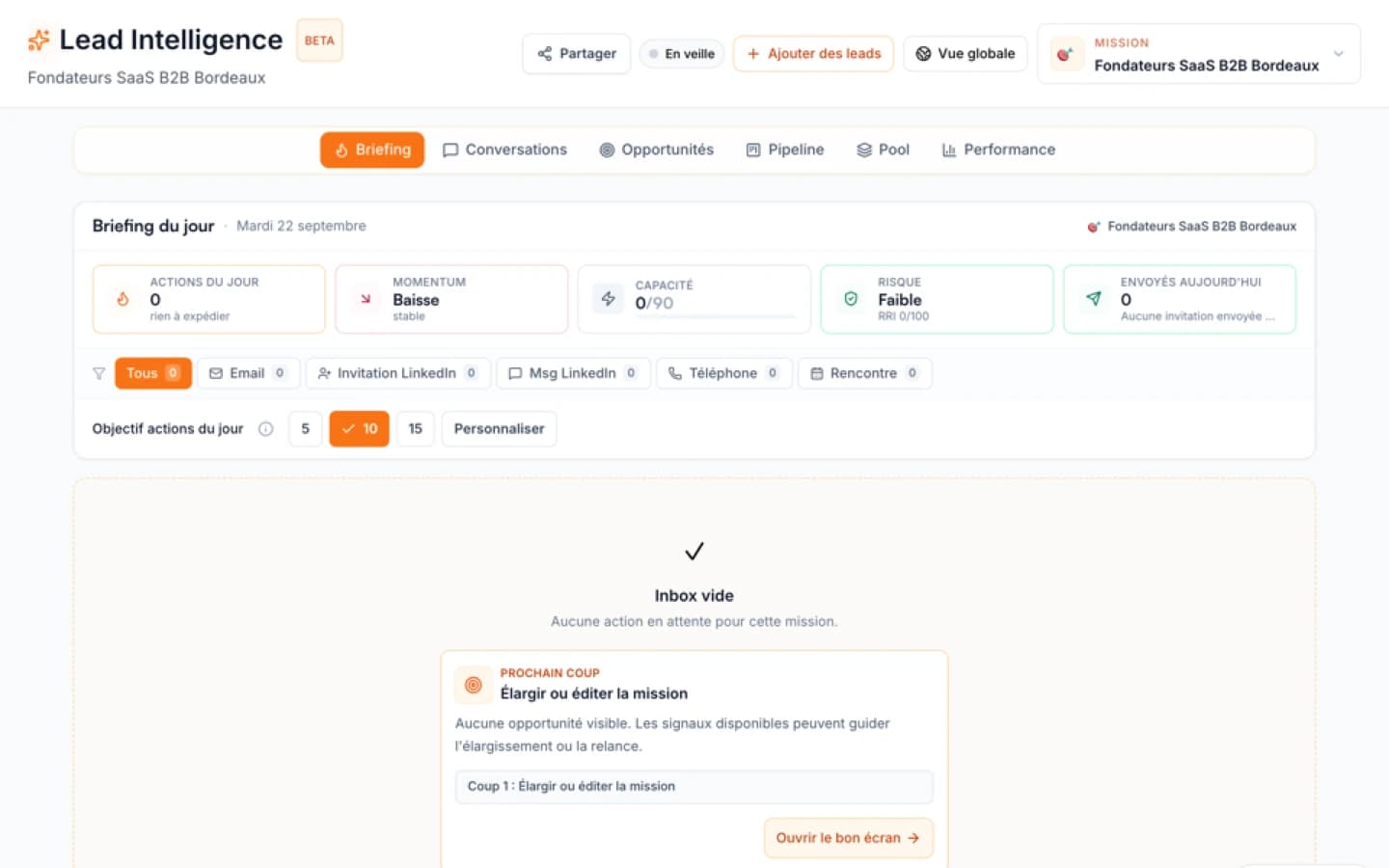
During the first segment of their meeting, the reps evaluate their target accounts using Ember's Lead Intelligence. Rather than building a prospect list from scratch using generic databases that encourage mass emailing, they align their efforts with their verified Ideal Customer Profile (ICP). This tool helps them focus on scored opportunities and real-time signal monitoring, ensuring they only pursue accounts with active buying indicators.
This methodology also addresses a common challenge faced by early-stage companies: how a founder decides who to contact first.
This approach also connects with Apollo vs Ember Lead Intelligence for Founder Conversion, which clarifies the next choice.
Common mistakes
When a small Business-to-Business (B2B) sales team operates without a manager, several critical errors frequently undermine their peer-led weekly outbound reviews. The most common mistake is falling into the volume trap, where the team measures success by the sheer quantity of cold outreach rather than the quality of lead qualification. Without a manager to enforce strategic boundaries, reps often default to high-volume prospecting tactics. Apollo includes data, intelligence and execution functions; its fit depends on the team’s workflow, not a presumed volume-only design (Apollo). Some plans meter data actions, so the team should inspect the current terms; unused exports can raise cost where wasted exports, bounced emails, and re-enrichment compound costs under credit-based pricing.
Tools
To test a self-managed 30 to 45 minute review, a small team must rely on tools that reduce operational noise rather than creating manual overhead. In traditional setups, a Sales Development Representative (SDR) team lead or a Revenue Operations (RevOps) manager might spend hours auditing activity metrics. Apollo presents a broad sales platform with data, intelligence and execution functions, so assess its actual fit for this team (Apollo). Apollo offers a broad sales platform; compare its current functions, data rights and total cost with the team’s needs (Apollo).
However, for a small Business-to-Business (B2B) prospecting team without a manager, volume-centric tools introduce significant friction. According to Factors.ai, credit-based pricing models turn every data enrichment and email verification into a metered decision.
In practice, How to Generate Qualified B2B Leads in 2026 for Sales Teams? completes this framework with another angle on the same topic.
When to use this method
Use a peer-led weekly review when a small team has several open conversations but no dedicated manager to decide priorities. Each representative brings a limited set of accounts, the last verified buyer action and an unresolved question. The group then chooses which account merits another conversation, what evidence is missing and who owns the next step. This format is useful when the team can record decisions and compare the following week’s outcome with the prior one. It is less useful if the meeting becomes a recital of email volume.
The duration is a local planning choice. A 30 to 45 minute slot can be a starting experiment, but the team should shorten or lengthen it according to the number of decisions. Qualification advice from INFUSE supports attention to the buying group and evidence, not that exact timebox.
When not to use it
This peer-led, lightweight weekly outbound review is not a universal solution for every Business-to-Business (B2B) sales environment.
First, this format is poorly suited for organizations built entirely around high-volume, transactional cold outreach. If your business model relies on a massive volume of outbound sales where the primary goal is sending thousands of emails to book a high volume of meetings, a structured, manager-led pipeline meeting is usually necessary to monitor activity metrics. For teams running high-volume prospecting, Apollo may be one candidate because it offers data, intelligence and execution functions (Apollo). Apollo may fit some high-volume workflows, but its product scope is broader and the team should evaluate its actual results (Apollo). In such high-volume environments, peer reviews cannot replace the rigorous, top-down tracking of credit consumption and daily dial counts.
Second, this decentralized approach should not be used in large, complex sales organizations that have already scaled their management layers. When a company employs a dedicated Vice President (VP) of Sales, multiple Sales Development Representative (SDR) team leads, and a Revenue Operations (RevOps) manager, the buying and operational priorities shift toward structured pipeline coverage and strict workflow speed Factors.ai. If its own representatives repeatedly miss a documented target, a peer-led review may lack the authority to diagnose systemic issues in onboarding, script quality, or structural sales pipeline blockages. These larger teams require formal Customer Relationship Management (CRM) oversight and centralized lead scoring systems to manage the complex credit-based pricing models of traditional databases, where wasted exports and bounced emails compound costs across multiple seats Factors.ai.
Finally, this framework is not designed for solo founders who do not yet have a sales team to run a peer review. For those asking how does a founder qualify B2B leads without a sales team, the immediate priority is not setting up weekly peer-led syncs, but rather mastering the fundamentals of outbound sales for startups. When building a prospect list from scratch, a solo founder must personally define the initial Ideal Customer Profile (ICP), establish basic lead qualification rules, and identify who to contact first as a founder to secure those critical early conversations.
For small, self-managed teams that want to escape the high-volume noise without adding managerial overhead, the focus should shift from tracking raw activity to identifying high-intent opportunities. In these scenarios, rather than relying on complex databases that meter every single search and export, teams can leverage Ember and its Lead Intelligence capability. Lead Intelligence helps founders and sales teams prioritise opportunities with their context, ensuring that the weekly review focuses on the accounts and signals that actually deserve action today.
Before deciding, Using AI for B2B Lead Generation Without Losing Quality helps connect this method with adjacent priorities.
Action plan
to understand why they are not moving forward. This is also where the team refines its lead scoring criteria and discusses how to qualify b2b leads early. If an early-stage founder is wondering how does a founder qualify B2B leads without a sales team, the answer lies in setting strict, objective criteria based on real buying signals rather than subjective interest. Reps should challenge each other on whether the target accounts truly match the established Ideal Customer Profile (ICP). This collaborative vetting process helps determine who to contact first as a founder or early sales rep, preventing wasted effort on low-intent accounts.
The final minutes of the review must translate discussions into a concrete action plan for the upcoming week. Rather than letting reps spend hours building a prospect list from scratch every Monday, the team should agree on the few accounts worth another conversation and name an owner for each next step.
Sources and scope
INFUSE discusses buyer-led qualification, not a required meeting duration. SalesHive publishes vendor benchmarks; these figures are not a universal target for this team. Apollo and Ember Lead Intelligence describe their own capabilities. The proposed review rhythm is an editorial method to test against the team’s own outcomes.
Sources
- The missing operational layer in most lead-gen content: what happens after the strategy is set. Define a 30-45 minute weekly review format (pipeline coverage, reply rates, stuck-deal diagnosis, next-week focus), the metrics that matter at t
- SDR Best Practices: How Top Teams Build Pipeline (2026)
- B2B Sales Team Structure: A 2026 How-To Guide
FAQ
Free diagnostic
Test your sales file
Drop an Excel or CSV and check its readiness without sending its rows to Ember.