
Definition
A defensible Business-to-Business (B2B) lead generation process is defined by its resilience to channel fatigue and rapid data decay. Relying on a single acquisition channel, whether it is cold emailing, cold calling, or social selling, leaves sales teams highly vulnerable to sudden algorithmic changes, deliverability drops, and outdated information. According to industry analysis by Virtual Sales, B2B contact databases decay at an estimated annual rate of 30-40% (Virtual Sales). When data decays at this rate, high-activity outbound strategies quickly degrade into expensive, low-yield operations that frustrate reps and burn through addressable markets.
To counter this, modern sales teams are shifting away from raw volume toward contextual, multi-channel prioritization. Traditional platforms have historically solved the volume problem by building massive databases; for example, Apollo, which offers broad channel coverage and sequence automation, reached 150 million dollars in annual recurring revenue (Apollo). However, teams looking for an alternative often cite credits and pricing that feel tight and run out faster than expected (Coldreach). Other teams look to highly technical data-enrichment setups, utilizing platforms like Clay, which features an LinkedIn Sales Navigator datapoint integration for lead discovery and connection insights (Clay).
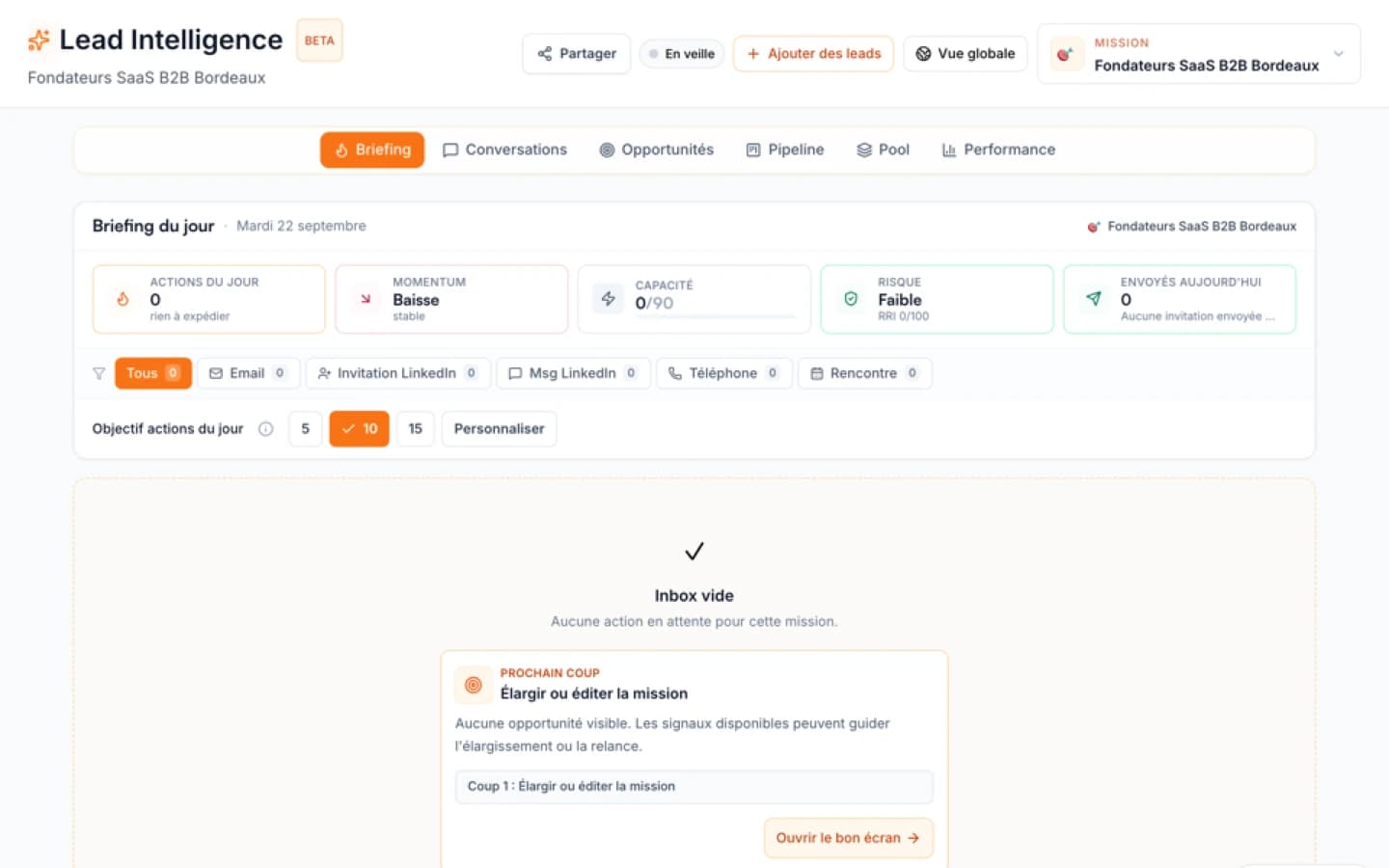
A truly defensible process does not force you to choose between expensive database subscriptions and complex data-engineering workflows. Instead, it aligns your outreach with real-time buyer readiness. This is where Ember's Lead Intelligence capability changes the dynamic.
To place this decision in context, the Knowledge guides for sales brings together deeper guidance on the same field.
Prerequisites
Building a defensible Business-to-Business (B2B) lead generation process in 2026 requires moving past the fragile, high-volume tactics of the past. To establish a system that does not break when a single channel fluctuates, sales teams must secure three foundational prerequisites. First, teams must solve the challenge of rapid data decay. Industry analysis indicates that B2B contact databases decay at an estimated annual rate of 30-40% (Virtual Sales). Relying on static lists or outdated exports leads to wasted sales effort and damaged sender reputation. A defensible process requires real-time verification and signal monitoring to ensure that outreach targets active, relevant buyers. Second, the economic model of lead discovery must support, rather than penalize, scaling. Traditional outbound platforms like Apollo, which scaled to $150 million in annual recurring revenue (Apollo), rely heavily on credit-based pricing. Credit and pricing constraints are among the pain points teams cite most often when they look for an alternative (Factors.ai). A defensible process requires a predictable way to discover and prioritize opportunities without turning every validation step into a metered financial decision. Third, the process must integrate multi-channel intelligence rather than just multi-channel execution. While tools like Clay offer valuable technical connections, such as an LinkedIn Sales Navigator datapoint integration for lead discovery (Clay), data alone does not tell a representative how to initiate a conversation. A defensible workflow requires a system that proposes the next action and channel that fit the specific lead situation. Furthermore, this prioritization must be highly adaptable; with Ember's Lead Intelligence, the system finds and prioritizes the contacts itself whether the team starts with 10, 100, or 1,000 contacts, with no minimum contact threshold. This allows sales teams to maintain momentum and focus on high-intent opportunities, regardless of their initial list size.
Steps
To establish a defensible Business-to-Business (B2B) lead generation process that thrives across multiple channels, sales teams must execute a series of highly coordinated steps.
First, teams must actively combat rapid data decay. Industry analysis indicates that B2B contact databases decay at an estimated annual rate of 30-40% (Virtual Sales). A defensible process replaces static, annual list buying with continuous verification, ensuring that sales representatives never waste valuable hours chasing departed executives or dead email domains.
Second, the strategy must transition from credit-metered volume to context-first prioritization. While legacy platforms built massive databases to support high-volume outbound sequencing, Apollo reached $150 million in annual recurring revenue (Apollo), but this model introduces severe economic friction. Under credit-based pricing, some organizations end up outgrowing their credit limits as they scale (Factors.ai). A defensible process avoids this compounding tax by focusing on deep account intelligence before executing any outreach.
Third, execution must be tailored to the specific situation of each prospect rather than forced into rigid, single-channel sequences. By utilizing Ember's Lead Intelligence capability, teams can automatically determine the optimal path forward, as the system proposes the next action and channel that fit the lead situation. This prevents channel fatigue and ensures that high-value prospects receive highly personalized, multi-channel touchpoints.
Finally, the process must remain completely scale-agnostic. Sales teams should not be penalized for running highly targeted, low-volume campaigns. A defensible process works seamlessly regardless of database size, which is why Lead Intelligence finds and prioritizes the contacts itself whether the team starts with 10, 100, or 1,000 contacts, with no minimum contact threshold required to begin. This flexibility allows teams to pivot between broad market discovery and highly focused account-based marketing without losing momentum or wasting budget.
To explore this point further, What does a realistic weekly outbound workload look like for a B2B sales rep in 2026 when they own prospecting, follow-up, and closing? details a step directly related to this decision.
Worked example
To see how a defensible, multi-channel lead generation process works in practice, consider a Business-to-Business (B2B) sales team targeting mid-market software companies. Historically, this team relied on buying massive lists and running high-volume email sequences. However, they are now facing the reality that B2B contact databases decay at an estimated annual rate of 30-40%, according to Virtual Sales (Virtual Sales). This rapid data decay means that traditional, volume-first databases often lead to high bounce rates, wasted budget, and frustrated representatives.
For example, Apollo, whose model is built around a database, reached 150 million dollars in annual recurring revenue, as reported by Apollo's company history page. Yet, buyers looking for alternatives often cite credits and pricing that feel tight and run out faster than expected (Coldreach).
To build a more resilient and cost-effective pipeline, the sales team shifts from a volume-first approach to a context-first approach using three coordinated steps:
First, the team establishes a highly targeted starting point. Instead of exporting thousands of unverified records, they focus on a tight list of high-value accounts. With Ember's Lead Intelligence, the sales team can initiate a highly targeted campaign whether they start with 10, 100, or 1,000 contacts, as the platform requires no minimum contact threshold to begin finding and prioritizing opportunities.
Second, they enrich these accounts with real-time signals rather than relying on static database records. The team uses specialized tools like Clay, which offers an LinkedIn Sales Navigator datapoint integration for lead discovery and connection insights (Clay), to pull live organizational changes and social signals directly into their workspace.
Third, instead of pushing every contact into the same generic email sequence, the team uses Lead Intelligence to analyze the gathered signals. The platform automatically proposes the next action and the specific channel, whether email, phone, or social, that best fits the current situation of each individual lead.
By structuring their workflow this way, the sales team stops guessing which lead to call and walks into every meeting with a highly relevant, defensible plan. They are no longer dependent on a single outreach channel or vulnerable to rapid database decay; instead, they run a highly targeted, multi-channel system where every action is guided by real-time context.
Common mistakes
Many Business-to-Business (B2B) sales teams fall into the trap of executing high-volume campaigns using static, unverified databases. This approach quickly deteriorates because B2B contact databases decay at an estimated annual rate of 30-40%, according to Virtual Sales (Virtual Sales). When teams rely on outdated lists, they waste valuable time on unverified contacts and dead ends, mistakenly believing that high activity levels automatically translate to high-quality revenue. This volume-first mindset ignores the reality of rapid data decay and leaves the sales pipeline fragile.
Another frequent mistake is building a multi-channel process around rigid, credit-based pricing models. In traditional platforms, credits are a line item to watch: credits and pricing that run out faster than expected are among the frustrations buyers seeking alternatives to traditional databases often mention (Coldreach). Instead of focusing on strategic outreach, reps end up rationing their activities to avoid overspending, which paralyzes multi-channel execution.
Finally, teams often assume that sophisticated lead prioritization is only possible with massive databases. They delay implementing intelligent workflows because they believe they need a high minimum threshold of contacts to start. However, modern systems like Ember Lead Intelligence can find and prioritize contacts whether a team starts with 10, 100, or 1,000 contacts, with no minimum contact threshold required. By waiting to build a massive list before applying intelligence, teams miss immediate, high-intent opportunities. Furthermore, failing to align outreach with the specific situation of the lead results in generic messaging. A defensible process requires proposing the next action and channel that fit the lead's actual situation, turning quiet signals into active, contextual conversations.
This approach also connects with Clay Pricing Update: What Changed for GTM Teams? (2026), which clarifies the next choice.
Tools
To build a resilient Business-to-Business (B2B) lead generation engine that does not collapse when a single channel underperforms, sales teams must select tools that balance data enrichment, channel execution, and contextual prioritization. The modern sales stack has evolved beyond simple contact lists to sophisticated platforms that orchestrate multi-channel outreach. For teams seeking a single platform to execute outbound campaigns across email, phone, and social media, Apollo has established itself as a prominent option. Its core strength lies in its breadth of channel coverage, combining a massive B2B contact database, email sequences, call dialing, and a dedicated Chrome extension for LinkedIn prospecting. According to Apollo's company history page, the company reached $150 million in annual recurring revenue. However, sales teams must weigh this convenience against its pricing model. Because it relies on credit-based pricing, some organizations outgrow their credit limits as they scale, which is a frequent driver for buyers seeking alternative solutions (sources : Factors.ai ; Coldreach). For teams that prefer to build highly customized, data-driven workflows, Clay offers a powerful alternative focused on data enrichment and orchestration. Rather than forcing teams into a single execution interface, Clay integrates directly with external outreach and sales engagement tools, including Salesloft, Outreach, Instantly, Smartlead.ai, and HubSpot Sequencer (Clay). Additionally, it provides an LinkedIn Sales Navigator datapoint integration to streamline lead discovery and connection insights (Clay). This makes it highly effective for operations teams that want to pull data from dozens of sources and feed it into their existing communication tools. To put these tools in perspective, our analysis of competitor platforms rests on sourced public facts covering Apollo and Clay. While these platforms excel at data aggregation and high-volume orchestration, they often require sales teams to spend significant time filtering out noise and calculating credit costs. This is where Ember’s Lead Intelligence offers a distinct path. Instead of treating lead generation as a volume game, Lead Intelligence focuses on helping sales teams prioritize the conversations that deserve attention right now. Rather than requiring complex setups or minimum database sizes, Lead Intelligence finds and prioritizes the contacts itself, whether a sales team starts with 10, 100, or 1,000 contacts, with no minimum contact threshold required.
When to use this method
Adopting a multi-channel, context-driven lead generation method becomes necessary when traditional, single-channel outbound strategies begin to yield diminishing returns. Sales teams should transition to this defensible approach under three specific scenarios.
First, this method is essential when your team is battling rapid data decay and falling deliverability rates. Relying on static lists or outdated databases quickly leads to wasted effort, as industry data from Virtual Sales indicates that B2B contact databases decay at an estimated annual rate of 30-40% (Virtual Sales). If your sales representatives are spending more time filtering out "junk" leads and bouncing emails than having meaningful conversations, it is time to shift from bulk list-buying to a dynamic, signal-based approach.
Second, this method is highly effective when credit-based prospecting tools begin to strain your budget. Traditional databases rely on credits, and credit and pricing constraints are among the pain points most often cited, which can hold back experimentation and multi-channel scaling (Factors.ai). If your team is hesitant to run multi-channel campaigns because the compounding cost of credit consumption outweighs the conversion rate, you need a process that prioritizes high-intent opportunities before credits are spent.
Finally, you should deploy this method when your team needs to coordinate outreach across multiple touchpoints without creating chaotic, disjointed messaging. Instead of manually tracking social signals, company news, and email replies across separate tools, sales teams can use Ember's Lead Intelligence capability. This system streamlines the process by analyzing your Ideal Customer Profile (ICP) and active market signals to ensure the platform proposes the next action and channel that fit the lead situation. This allows your team to walk into every sales conversation with a clear, defensible plan of who to contact, why the timing is right, and which message will resonate.
In practice, How to Build a 30-Day Outbound Cadence for Small B2B Sales? completes this framework with another angle on the same topic.
When not to use it
A context-driven, multi-channel approach is not the right fit for every sales team. If your primary go-to-market strategy relies on high-volume, single-channel outbound execution where success is measured purely by the sheer quantity of cold emails sent or cold calls placed, an all-in-one database and sequencing platform is a better choice. For instance, Apollo is specifically built for volume-driven outbound where the unit economics depend on sending more emails and booking more meetings per representative. That scale also appears on Apollo's company history page: $150 million in annual recurring revenue. If your team requires a built-in phone dialer, email sequencer, and Chrome extension operating out of a single, massive contact database, a high-volume legacy platform fits your workflow better than a prioritized, context-first system.
Similarly, if your sales operations team includes dedicated growth engineers who want to build highly customized, programmatic data-enrichment tables, a specialized data orchestration tool is more appropriate. For example, if you need to build complex, multi-source workflows that leverage specific technical connections, such as the LinkedIn Sales Navigator datapoint integration for lead discovery and connection insights (Clay), a developer-friendly data builder like Clay is the correct tool.
Finally, you should avoid transitioning to a context-first model if your team is comfortable managing the operational friction of metered, credit-based pricing. Traditional databases rely on credits that, according to teams looking for alternatives, run out faster than expected (Coldreach). If your team has the administrative bandwidth to constantly audit credit usage and manually clean up unverified contacts, the traditional database model remains viable. However, if you want to bypass this credit friction and focus entirely on opportunities that deserve action now, a context-driven system like Lead Intelligence becomes the logical alternative.
Action plan
Building a defensible Business-to-Business (B2B) lead generation process in 2026 requires moving away from static lists and single-channel dependency. The first step in this action plan is addressing data decay. According to Virtual Sales, B2B contact databases decay at an estimated annual rate of 30-40% (Virtual Sales). To prevent sales teams from wasting time on unverified contacts, organizations must establish a continuous verification loop rather than relying on quarterly database refreshes. The second step is optimizing the unit economics of prospecting. Traditional platforms often rely on credit-based pricing, whose limits are a frequently cited pain point as teams scale (Factors.ai). To build a sustainable workflow, sales teams should shift from bulk-exporting thousands of unverified records to a highly targeted, signal-based discovery model. The third step is executing contextual prioritization to focus energy where it matters. Instead of treating every lead with the same generic sequence, teams should leverage tools like Ember's Lead Intelligence to reduce noise and isolate opportunities that deserve immediate action. Lead Intelligence analyzes signals and context to propose the most relevant next action, channel, and messaging angle for each specific prospect situation. Because this system operates independently of database size, it can find and prioritize contacts whether a sales team starts with 10, 100, or 1,000 contacts, completely removing any minimum contact threshold for launching a campaign.
Before deciding, Re-engage a Stalled Outbound Sequence in 2026 Without Burning the Domain or the Contact helps connect this method with adjacent priorities.
Sources and methodology
To build a defensible perspective on modern Business-to-Business lead generation, this analysis relies on verified industry data and direct analysis of current market strategies. For instance, research from Virtual Sales indicates that B2B contact databases decay at an estimated annual rate of 30-40% (Virtual Sales), highlighting the critical need for continuous data verification.
Sources
FAQ
Free diagnostic
Test your sales file
Drop an Excel or CSV and check its readiness without sending its rows to Ember.