
An SEC Form 8-K filing is a mandatory regulatory disclosure of material corporate events, not an active procurement signal. When an enterprise files an 8-K with the Securities and Exchange Commission (SEC), revenue teams often assume that high-level disruption automatically creates an immediate buying window. In practice, treating a compliance event as a commercial intent signal leads to premature outreach, misaligned messaging, and damaged account relationships.
Understanding how regulatory filings work, what each item code actually discloses, and how corporate leadership behaves during a material transition is critical for enterprise outbound strategy.
The Regulatory Mechanism Behind Form 8-K
A public company files Form 8-K to report material events that shareholders and the market should know between periodic quarterly or annual reports. According to the SEC Investor Bulletin on Form 8-K, companies are required to make most 8-K disclosures within four business days of the triggering event, and in some cases even earlier.
The SEC categorizes these filings by numbered items to provide standard reporting across public markets. For developers and operations teams tracking public data, the SEC provides automated access. According to the SEC EDGAR Application Programming Interfaces guide, the Electronic Data Gathering, Analysis, and Retrieval (EDGAR) submissions history is accessible without authentication or API keys, exposing records through an entity's 10-digit Central Index Key (CIK) with real-time JSON updates throughout the day.
While the data feed is programmatic and instantaneous, corporate operational cycles are not. The presence of an 8-K filing proves that a legal threshold of materiality was crossed. It does not prove that a company has allocated budget, defined requirements, or opened an evaluation cycle for external software or services.
Deconstructing Common 8-K Items: Public Trigger vs. Buying Reality
Sales triggers frequently pull from specific 8-K sections. Each item addresses a legal reporting mandate, but each reflects a distinct operational reality inside the enterprise.
| Form 8-K Item | Regulatory Subject | What the Filing Actually Means | Enterprise Outbound Reality |
|---|---|---|---|
| Item 1.01 | Entry into a Material Definitive Agreement | The company signed a major contract outside ordinary business. | The vendor ecosystem is already contracted; budget is committed. |
| Item 1.05 | Material Cybersecurity Incident | The company determined that a material security incident occurred. | IT and legal are in lockdown; unsolicited pitch emails burn trust. |
| Item 2.01 | Completion of Acquisition or Disposition of Assets | A significant merger, acquisition, or sale has formally completed. | Systems and teams are frozen for integration; priorities are inward. |
| Item 5.02 | Departure or Appointment of Directors or Principal Officers | A high-level corporate leader or board member changed. | The new executive faces evaluation, audits, and strategic onboarding. |
| Item 8.01 | Other Events | The company reports an event it considers material not covered elsewhere. | General corporate update that provides context, not purchasing intent. |
Item 1.01: Entry into a Material Definitive Agreement
Under general SEC instructions detailed in the SEC Form 8-K General Instructions, Item 1.01 discloses the entry into a material definitive agreement not made in the ordinary course of business. When an outbound team sees this filing, they often interpret it as a sign of heavy capital deployment. In reality, the transaction has already closed. The legal terms, integration partners, and core vendors were selected months before the disclosure. Pitching complementary services on day one assumes an open cycle where commitments are already locked down.
Item 1.05: Material Cybersecurity Incidents
As specified in the SEC Form 8-K General Instructions, an Item 1.05 report must be filed within four business days after the registrant determines that it has experienced a material cybersecurity incident. This is a liability disclosure designed to protect investors. When an enterprise discloses a material breach, the security and executive teams enter strict crisis remediation protocols. Cold outbound offering security software or incident response during this window does not demonstrate timing; it signals opportunism and lack of enterprise awareness.
Item 2.01: Completion of Acquisition or Disposition of Assets
When an asset transfer or acquisition concludes, Item 2.01 documents the completion of the transaction. For sales leaders, M&A activity looks like account expansion potential. However, newly acquired companies face prolonged IT freezes, duplicate tool reviews, and contract consolidation. Procurement teams during this phase seek to rationalize existing vendor counts, not sign new agreements.
Item 5.02: Departure and Appointment of Officers
Item 5.02 discloses the appointment or departure of directors or principal officers, including executive compensation arrangements. New leadership is one of the most common signals used by sales teams to justify immediate outreach. While a newly appointed executive will eventually reshape vendor stacks, their first 30 to 60 days are spent assessing teams, reviewing existing vendor utilization, and establishing organizational alignment. Outreach that assumes an instant willingness to replace existing systems misunderstands the executive onboarding process.
Why Immediate Outbound Fails on Regulatory Triggers
When outbound sequences fire automatically against regulatory disclosures, they create friction across four organizational fronts:
- Premature Timing: A filing marks the formal disclosure point, not the operational kick-off. Outreach sent within hours of an EDGAR filing reaches executives when internal communication and legal reviews are at their peak.
- Confusing Disruption with Procurement: A material event disrupts routine workflows. Teams dealing with asset divestitures, executive turnover, or material regulatory obligations are reprioritizing existing workloads, which reduces appetite for new project implementations.
- Budget Freezes and Consolidation: Major corporate events are frequently followed by spending audits. Unsolicited pitches sent into organizations undergoing cost scrutiny face heightened resistance from procurement and finance.
- Tone-Deaf Messaging: Mentioning a public compliance filing directly in an email intro makes outreach feel surveillance-driven rather than advisory. Citing an 8-K filing to an executive without deep operational context shows a shallow reliance on public scrapers. Just as Why Cold Google Calendar Invites Kill Sales Outreach? highlights the risks of forcing interaction before establishing value, premature outbound off an EDGAR alert alienates enterprise buyers.
Structuring Contextual Intelligence: Hypothesis vs. Intent
Regulatory filings are valuable when used as background context rather than immediate purchase triggers. Enterprise sales reps should treat an 8-K filing as an anchor for strategic hypotheses rather than proof of budget.
When reviewing regulatory disclosures, structure your account analysis around three distinct layers:
1. Verification of Account Scope
Not every prospect is a public entity subject to SEC reporting obligations. If a prospect is private, European, or structured under different corporate laws, no 8-K filings exist. When tracking public entities, cross-reference filing patterns against corporate strategic goals outlined in their annual reports rather than acting on single alerts in isolation. Teams evaluating data integration options can review comparative methodologies in Zeliq vs Ember Lead Intelligence for Outbound Strategy.
2. Operational Timeline Mapping
Instead of triggering a cold sequence four days after an event, build a phased account plan. For an Item 5.02 executive transition, the appropriate engagement window often begins weeks after the onboarding dust settles, when the leader shifts from discovery to operational execution.
3. Contextual Problem Framing
If you reference changes indicated by public events, anchor the messaging on the challenges associated with those transitions. An organization undergoing asset consolidation faces vendor overlap and data governance challenges. Framing your solution around transition stability provides value; assuming they have an open request for proposals (RFP) does not. Broader operational tactics for enterprise revenue teams are detailed across the Knowledge guides for sales.
Enterprise outreach succeeds when it aligns with the buyer's internal reality. Public disclosures via Form 8-K provide verifiable facts about corporate changes, but converting those facts into productive outbound requires patience, contextual framing, and disciplined timing.
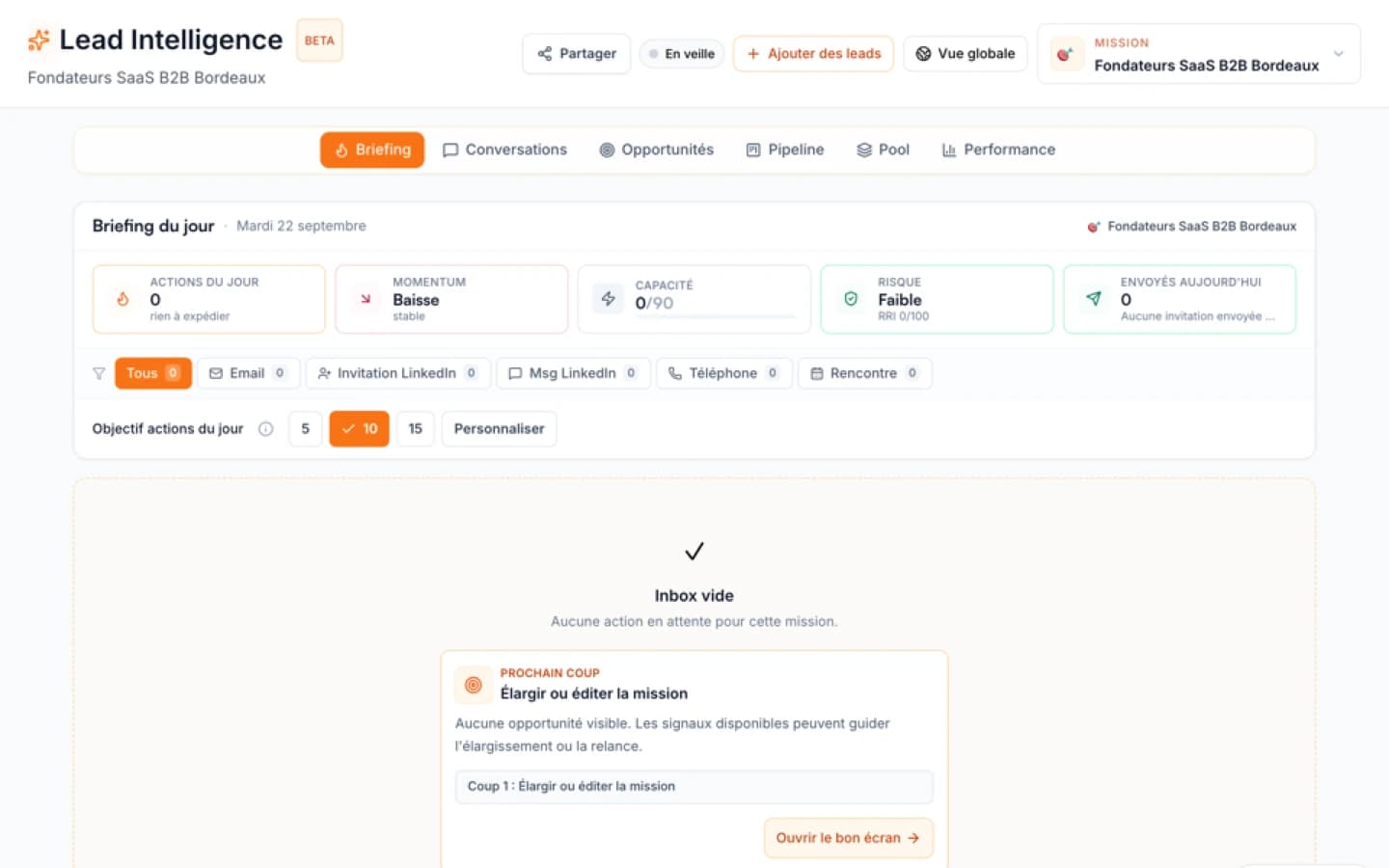
For revenue teams tracking complex accounts, Ember Lead Intelligence helps synthesize account context and timing signals without confusing mandatory regulatory filings for instant buying cycles.
Sources
FAQ
Free diagnostic
Test your sales file
Drop an Excel or CSV and check its readiness without sending its rows to Ember.