
Symptom or signal
You're sending 50 cold emails a day, maybe more. You've tweaked subject lines, personalised the first paragraph, and segmented your list. But meetings are flat or declining. Most replies are polite passes. The symptom is clear: more volume isn't producing more pipeline.
To place this decision in context, the Knowledge guides for sales brings together deeper guidance on the same field.
What changed
By 2026, B2B buyers have become more selective and inbox filters more aggressive. AI-assisted outreach tools have made surface personalisation cheap, so everyone does it: the personalised opener that used to set you apart is now table stakes. The numbers reflect it. Belkins' study of 7.5 million cold emails measures an average reply rate of 0.45% on 2025 campaigns source. Woodpecker's 2026 overview cites a 3.43% reply benchmark from Instantly; its other figures draw on several studies with different samples source. What hasn't changed is the buyer's attention budget: relevance and timing are what still cut through.
To explore this point further, Build a B2B Prospect List from Zero, Without Customers or a Brand details a step directly related to this decision.
Facts and sources
- Belkins (7.5 million emails analysed): average reply rate of 0.45% across 2025 campaigns, with over 1,200 appointments booked on the whole corpus. Smaller targets respond better: 0.72% reply rate for companies with 0 to 10 employees versus 0.22% for enterprises above 10,000 source.
- Woodpecker (2026 overview drawing on several datasets): its 3.43% overall benchmark is attributed to Instantly, while the 5.8% reply figure for campaigns under 50 contacts comes from other cited research. The article also reports 17-18% replies with advanced personalisation and 42% of replies from follow-ups source.
- SalesHive (cold calling benchmarks): phone outreach follows the same logic, with targeting quality mattering more than call volume source.
Read together, the sources are unambiguous: the gap between an average campaign and a targeted, personalised one is a factor of 10 or more. Daily volume is a secondary variable.
Why the common explanation is incomplete
The common advice is to send more emails, personalise better, or add a multi-channel sequence. But at a 0.45% average reply rate, doubling volume mostly doubles noise: it takes hundreds of sends to earn a handful of replies. At 5.8% on a small targeted campaign, a few dozen well-chosen emails generate real conversations. CRMs store lists and enrichment tools add data, but neither answers the decisive question: who should I contact now, and why? Without that answer, the personalisation effort is wasted on the wrong targets.
This approach also connects with Inbound or Outbound? A One-Motion Test for Small B2B Teams, which clarifies the next choice.
The real problem
The real problem is that reps spend most of their time writing and sending, and very little time deciding who to contact. The decision of who to contact, why now, and with what angle is the highest-leverage activity. Without it, even the best-written email lands in a crowded inbox and gets ignored. The bottleneck has shifted from execution to prioritisation.
How the mechanism works
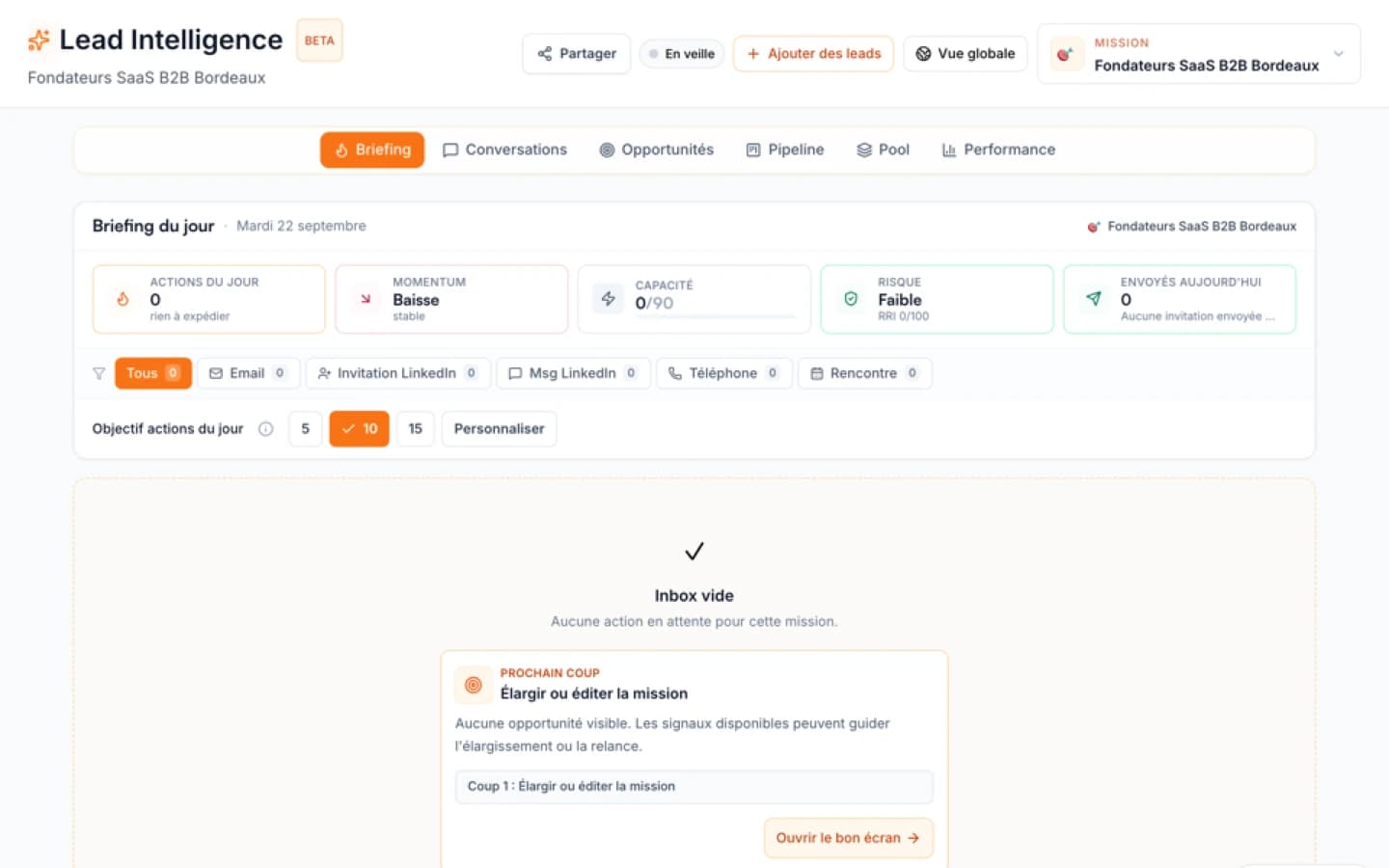
Ember's Lead Intelligence works as a prioritisation layer on top of your prospecting. It reuses your project context (business plan, ICP, offer) to define a mission, researches accounts and profiles, including through LinkedIn and Sales Navigator, then analyses public signals (job changes, funding rounds, publicly expressed needs) to rank opportunities. For each priority contact it proposes a clear next action (who to contact, why now, which channel, which angle) and can generate a personalised message draft that you review before sending. Replies are tracked in the same place, feeding the next round of priorities. The mechanism is not about email volume; it is about decision quality.
In practice, How to Prioritise Lead Conversations: A Practical Guide for Sales Teams and Founders completes this framework with another angle on the same topic.
Concrete examples
Run the numbers with the published benchmarks. A rep sending 100 emails a day to a broad list at Belkins' 0.45% average collects less than one reply per day source. If that rep tests a smaller, well-researched list, they should compare its reply and meeting rates with the original campaign at the same follow-up cadence. The published studies show that results vary by list and message; their averages cannot establish a daily meeting yield for this rep source.
When to use this diagnosis
If your team has a healthy pipeline of named accounts but struggles to convert outreach into meetings, the problem is likely prioritisation, not volume. Use this diagnosis when you have a list of contacts but no clear signal on who is ready to engage, or when your reply rate sits far below the published targeted ranges. If your team spends more time crafting emails than deciding on the next contact, it is time to rethink the workflow.
When not to use it
If your team has no contacts at all and needs to build a list from scratch, the prioritisation layer is less urgent at first. Similarly, in a high-volume transactional model where every account is identical, volume optimisation may still be the right move. This diagnosis is for teams that have enough names but not enough clarity on which ones deserve attention now.
Before deciding, The Ember Brief #01 - Stop stacking sales frameworks. Pick the one that fits your deal size. helps connect this method with adjacent priorities.
Next step
Start by auditing your current outreach for one week: emails sent versus meetings booked, and time spent on contact selection versus writing. If selection takes less than a fifth of your time, you have a prioritisation gap. Define the signals that matter for your market (job changes, funding, expressed needs), and do not skip follow-ups: Woodpecker attributes 42% of all replies to them source. Then test a prioritisation layer such as Ember's Lead Intelligence on a pilot mission with your existing contacts, and measure one thing: meeting rate at constant volume. You can start free.
Sources and methodology
This article references three sources: Belkins' B2B cold email response rate study (7.5 million emails analysed) source, Woodpecker's statistics built on more than 20 million emails sent through its platform source, and SalesHive's cold calling benchmarks source. All figures are cited inline; averages hide wide variance by market, list and message quality. The Ember Lead Intelligence capabilities described (LinkedIn and Sales Navigator research, signal-based prioritisation, message drafts, reply tracking) reflect the currently available product.
Sources
FAQ
Free diagnostic
Test your sales file
Drop an Excel or CSV and check its readiness without sending its rows to Ember.