
Symptom or signal
Early-stage founders preparing a pitch deck often face a critical disconnect when transitioning from designing their slides to initiating outreach. The primary challenge is not just finding names, but determining exactly who to contact, why a conversation is relevant right now, and how to frame the message to secure a meeting. Without a clear bridge between strategic planning and execution, founders waste valuable time on low-yield activities.
One major symptom of this problem is the reliance on unfiltered, high-volume databases. While platforms like Apollo provide extensive business to business (B2B) contact data, helping them reach 150 million dollars in annual recurring revenue in May 2025 as reported by Apollo’s history page, their unlimited email plans are governed by strict fair use policies according to the Apollo Pricing Page. For an early-stage founder, blasting generic sequences to massive lists creates noise rather than meaningful engagement, often leading to domain restrictions or ignored messages.
Another signal of trouble is the lack of a clear "why now" trigger. Pitching an investor or a first customer requires precise timing. Without real-time signals, founders cannot distinguish between a cold lead and an active opportunity. This timing gap is compounded by generic messaging. When the narrative in the pitch deck does not align with the recipient's current priorities, the outreach fails. According to a post by David Sym-Smith on LinkedIn, many founders make basic mistakes in their pitch deck that signal to investors that they are not ready for funding.
To break this cycle, founders must move away from static lists and generic templates. Resolving these symptoms requires a structured approach that connects the core business plan directly to prioritized, context-rich outreach, ensuring every conversation is backed by a clear reason to act today.
To place this decision in context, the Knowledge guides for marketing brings together deeper guidance on the same field.
What changed
The disconnect between designing a pitch deck in Creation and launching an actual outreach campaign stems from a fundamental shift in how early-stage founders handle market data. Traditionally, founders treat pitch preparation and lead generation as two entirely separate phases. They spend weeks polishing slides, only to realize they have no clear strategy for who to contact first, why those contacts are relevant right now, or what message will resonate. According to David Sym-Smith's LinkedIn post on Common Red Flags in Startup Pitch Decks, a pitch deck should rest on solid research and real numbers, otherwise it signals to investors that the founder is not ready. To bridge this gap, founders often turn to legacy sales databases to build lists. However, these platforms are built for high-volume sales teams rather than strategic, context-driven outreach. For example, Apollo offers a Free plan at $0 with 900 credits per seat per year, granted monthly, which limits users to 2 sequences and restricts the artificial intelligence assistant to 5 chats (Apollo Pricing). As founders scale their efforts, they face paid tiers: the Basic plan costs $49 per seat per month, billed annually, with 30,000 credits per seat per year granted upfront (Apollo Pricing). The Professional plan costs $79 per seat per month, billed annually, with 48,000 credits per seat per year (Apollo Pricing). For larger setups, the Organization plan requires a minimum of 3 seats and costs $119 per seat per month, billed annually, with 72,000 credits per seat per year (Apollo Pricing). For an early-stage founder, buying thousands of unverified records does not solve the core problem. Raw volume simply creates noise, leaving the founder to guess which opportunities actually deserve immediate action. What has changed is the realization that data without context is a liability. Instead of exporting massive, cold lists and wasting credits, founders need to connect their strategic positioning directly to their outreach. This is where Lead Intelligence redefines the process. By reusing the core business strategy and Ideal Customer Profile (ICP) defined during the pitch phase, it helps founders bypass the noise of generic databases. Instead of guessing, founders can immediately identify who to contact, why now, and which action to take, transforming a static pitch deck into a highly targeted, active conversation.
Facts and sources
When transitioning from pitch deck preparation to active investor or customer outreach, early-stage founders often struggle to bridge the gap between their high-level narrative and practical execution. David Sym-Smith reminds founders on LinkedIn that basic mistakes in a pitch deck signal to investors that the founder is not ready, and that unrealistic claims should be removed and everything based on real numbers. When founders turn to traditional data providers to build their outreach lists, they often encounter operational hurdles. For instance, even the unlimited plans on platforms like Apollo are subject to a Fair Use Policy where unlimited email credits are framed by credit limits, which can restrict a founder's ability to execute continuous campaigns.
To evaluate how modern platforms compare in solving these data and outreach challenges, our comparison rests on sourced public facts covering Apollo and Clay.
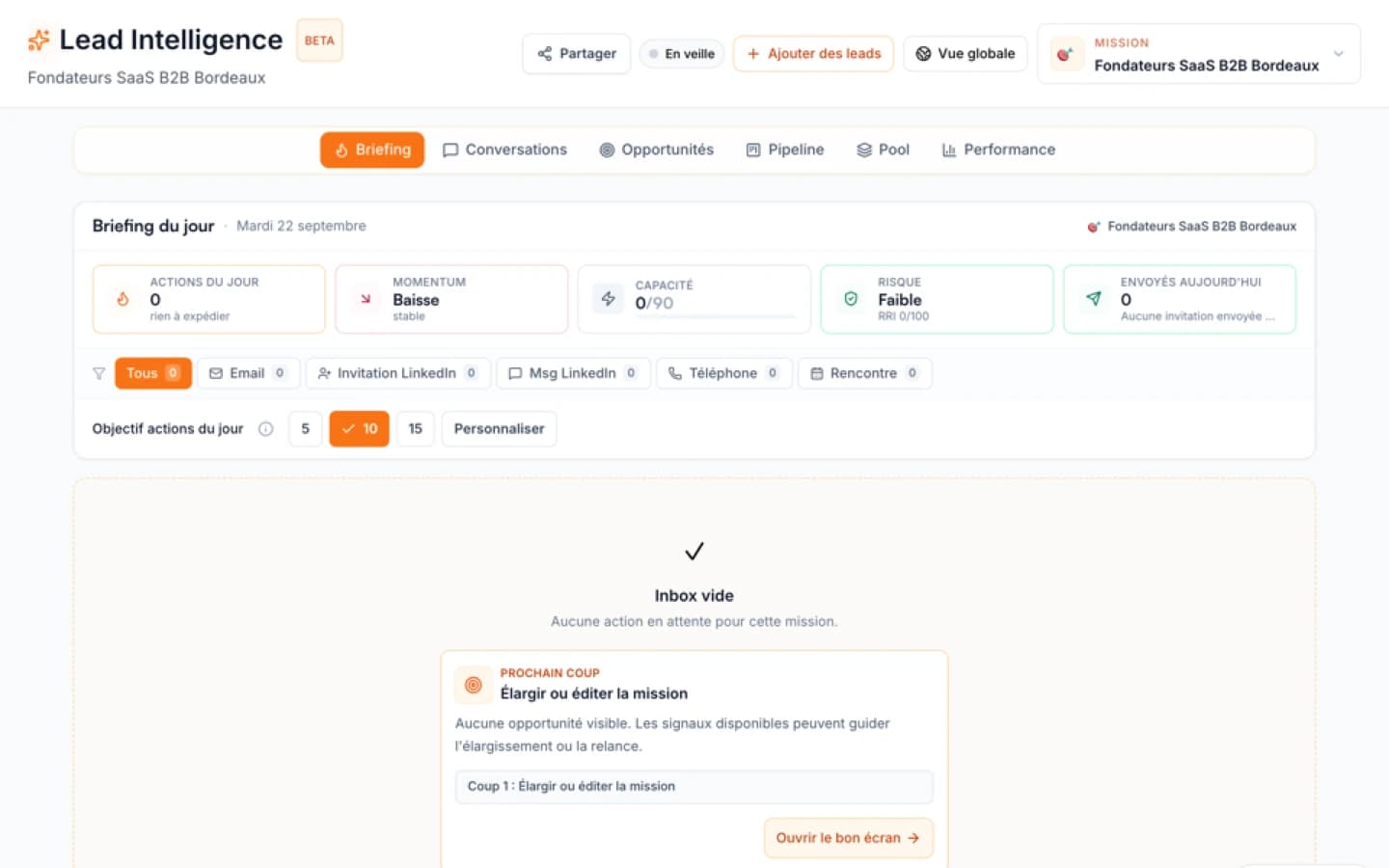
Rather than relying on static lists that lead to generic outreach, founders require a system that connects their strategic context directly to their execution. Ember addresses this through Lead Intelligence, which finds accounts from the mission Ideal Customer Profile (ICP) and signals, then verifies useful sources. This capability reduces noise by focusing attention on opportunities that deserve action now, allowing founders to prioritize the conversations that deserve attention now. By integrating these insights, founders can know who to contact, why now, and which action to take, providing a clear next action that details the channel and angle. This execution strategy works in tandem with Ember's other capabilities, such as Creation, which lets users edit the generated presentation and record, replay, and rehearse the presentation with Speaking practice, and Fund Your Growth, which replaces a generic list of options with a funding path coherent with the project.
To explore this point further, How Lead Intelligence Helps Founders Structure Their Pitch Deck Outreach details a step directly related to this decision.
Why the common explanation is incomplete
The conventional advice given to early-stage founders is deceptively simple: once your pitch deck is finished, buy a subscription to a massive Business-to-Business (B2B) database, download a list of hundreds of contacts, and start sending cold emails. This explanation assumes that outreach is purely a numbers game, where volume eventually guarantees a response. However, this volume-first approach fails because it ignores the critical need for timing and relevance. Large-scale database providers have scaled immensely to meet this demand. For example, Apollo reached 150 million dollars in annual recurring revenue in May 2025, according to Apollo’s history page, with a valuation of 1.6 billion dollars in August 2023 (Apollo announcement). Yet, even when founders gain access to these massive directories, they quickly run into practical limitations. Even unlimited email plans on these platforms remain subject to strict fair use policies, as detailed on the Apollo pricing page. The real bottleneck is not contact volume, it is the complete absence of context. A list of one thousand email addresses does not tell a founder who to contact today, why a conversation is urgent right now, or what specific angle will resonate. This disconnect often leads to generic, spam-like outreach that damages the startup's reputation. It echoes the basic mistakes David Sym-Smith describes on LinkedIn, where unrealistic claims and weak areas signal to investors that the founder is not ready. To bridge this gap, founders must connect their strategic narrative directly to their outreach execution. Instead of treating the presentation and the prospecting as isolated tasks, the insights developed during the pitch creation must guide the targeting. This is where tools like Lead Intelligence change the dynamic. Rather than forcing founders to sift through endless noise, it focuses attention on opportunities that deserve immediate action. By analyzing the project context, it proposes the next action and the most coherent channel for each specific lead situation, turning a blind numbers game into a series of highly relevant, timely conversations.
The real problem
The real problem is that a pitch deck is designed for persuasion, not execution. While building a presentation helps clarify the high level value proposition, it does not automatically translate into a daily action plan. Founders are left with a conceptual definition of their Ideal Customer Profile (ICP) but no clear path to identify the actual human beings who fit that profile today. This gap between strategy and execution manifests as a three part challenge: identifying the right target, timing the outreach based on real signals, and tailoring the message to resonate immediately.
Without a direct bridge between the strategic context of the pitch and the tactical reality of the market, founders default to purchasing access to massive contact databases. For instance, platforms like Apollo, which grew its annual recurring revenue to 150 million dollars in May 2025 according to data from Apollo’s history page, offer access to millions of profiles. However, raw volume does not solve the underlying problem of relevance. In fact, it often compounds it. Founders download lists of hundreds of names, only to realize they have no objective way to prioritize them. Even when tools offer unlimited email plans, these remain bound by fair use policies, such as the limits outlined in the Apollo pricing terms, meaning founders cannot simply spam their way to success without consequences.
The core issue is that traditional prospecting tools lack the specific context of the startup's unique narrative. They treat every contact as a static row in a spreadsheet. They cannot tell a founder why a particular lead is likely to respond this week, nor can they suggest a personalized angle that aligns with the core thesis of the pitch deck. This lack of signal monitoring and contextual prioritization forces founders into a cycle of high volume, low response outreach. They waste valuable time on cold leads while missing the critical, timely opportunities that could actually move their business forward.
This approach also connects with How to Prioritize Your Customers with Lead Intelligence: A Structured Guide, which clarifies the next choice.
How the mechanism works
The transition from a persuasive presentation to active execution requires a mechanism that connects strategic reasoning with daily outreach. Instead of treating these as isolated steps, Ember uses a unified project context to bridge the gap between high-level strategy and concrete actions. The process begins within Creation, which builds and improves your presentation by working on reasoning, the audience journey, structure, design, and impact. Rather than just creating static slides, this step structures your core business assumptions, target audience definitions, and value proposition into a reusable knowledge base. Once your narrative is defined, you can edit the generated presentation directly in Creation, or even record, replay, and rehearse your delivery with Speaking practice to ensure your message is fully aligned. This structured strategic context is then reused by Lead Intelligence to prepare your outreach mission. Instead of forcing you to manually translate your pitch into search filters on a generic database, the system automatically aligns your mission with the business plan, Ideal Customer Profile (ICP), offer, and strategy already established in your workspace. Traditional database tools are often sufficient when you simply need a massive directory of raw contacts. For instance, platforms like Apollo allow you to search large volumes of professionals, though it is important to note that their unlimited plans remain subject to a fair use policy with specific email credit limits, as detailed on the Apollo Pricing Page. However, these platforms still leave founders with the heavy burden of manually filtering noise, guessing who is ready to talk, and drafting individual messages from scratch. Ember solves this by focusing on relevance over raw volume. The mechanism discovers accounts based on your specific mission ICP and real-time signals, verifying useful sources to ensure accuracy. It reduces noise by focusing attention on opportunities that deserve action now, classifying accounts into explained opportunities to watch, act on, or set aside. With a usable targeting context in place, the first prioritized leads can appear in about 30 minutes. For every identified opportunity, Lead Intelligence proposes the next action and channel that fit the lead situation, giving you a clear next action on who to contact, why now, which channel, and which angle to use. This supports a realistic pitch deck: David Sym-Smith recommends on LinkedIn removing unrealistic claims and basing everything on solid research and real numbers. By turning your strategic slides into a prioritized, context-driven conversation list, the mechanism ensures your outreach is always grounded in the core strengths of your project.
Concrete examples
To understand how early-stage founders struggle to bridge the gap between strategic planning and daily execution, consider the common pitfalls encountered when moving from a slide deck to active outreach. First, founders frequently fall into the high-volume database trap. Platforms like Apollo are excellent for scaled, volume-based sales campaigns. According to Apollo’s history page, Apollo reached 150 million dollars in annual recurring revenue in May 2025, with a valuation of 1.6 billion dollars in August 2023 (Apollo announcement). It provides a massive repository of contacts, but even its unlimited plans are subject to a fair use policy as detailed on the Apollo pricing page. For an early-stage founder, downloading thousands of raw contacts without deep context creates overwhelming noise. The founder is left with a massive list but still does not know who to contact first, why a specific prospect would care today, or what precise message to send. Second, the disconnect between high-level strategy and immediate action often manifests as a critical weakness during investor discussions. In a post on LinkedIn, David Sym-Smith outlines common basic mistakes in startup pitch decks. A frequent mistake is presenting a massive Total Addressable Market (TAM) without a credible, immediate path to reach the first customers. When investors ask who the founder will contact tomorrow and why those specific prospects are ready to buy, a lack of concrete answers destroys credibility. The pitch deck remains a theoretical exercise because the founder cannot translate a broad market definition into a prioritized list of real-world opportunities. Finally, founders often struggle to maintain momentum because they treat pitch preparation and market outreach as entirely separate workflows. After spending weeks building a presentation, they must start from scratch to build a prospecting list. This is where Lead Intelligence from Ember changes the dynamic. Instead of starting with a blank spreadsheet, founders can use their existing project context to prioritize the conversations that deserve attention now. With usable targeting context, the first prioritized leads can appear in about 30 minutes. The system reduces noise by focusing attention on opportunities that deserve action now, proposing the next action and channel that fit the lead situation. This ensures the founder can immediately know who to contact, why now, and which action to take, turning a static pitch deck into a living, executable strategy.
When to use this diagnosis
Early-stage founders preparing a pitch deck often hit a wall when transitioning from investor persuasion to active customer acquisition. While a presentation built in Creation structures the high-level narrative, it does not tell you who to contact tomorrow morning, why they care today, or what specific message will resonate. This diagnosis becomes urgent when you realize that strategic slides are not generating active sales conversations. A frequent weak point, which comes on top of the basic mistakes David Sym-Smith describes on LinkedIn, is the disconnect between market sizing and actual go-to-market execution. Founders often present a massive Total Addressable Market (TAM) but lack a granular plan for immediate outreach. They mistake a defined Ideal Customer Profile (ICP) on a slide for an active, prioritized list of buyers. To bridge this gap, founders often rush to buy generic lists from legacy databases. However, this approach introduces a frustrating tradeoff. According to Factors.ai, credit and pricing constraints are among the pain points teams frequently cite with Apollo. Even when platforms promise unlimited plans, those options remain subject to strict limits, such as the email credit caps outlined in the fair use policy on the Apollo Pricing page. This constant credit counting distracts founders from what really matters: building relationships. To understand the broader landscape of sales tools that founders turn to, we rely on sourced facts covering Apollo and Clay, each backed by a public URL. This structured landscape shows that while traditional tools are highly integrated, they still force founders to manage complex, credit-heavy setups just to find a few relevant leads. You should use this diagnosis when your strategic planning is complete but your sales pipeline is stagnant. If you have a clear value proposition in your deck but find yourself staring at a blank spreadsheet, or if you are tired of wasting budget on unverified lists, it is time to shift from static databases to contextual prioritization. Instead of forcing you to manually piece together data, Ember's Lead Intelligence uses your validated project context to provide a clear next action. It identifies exactly who to contact, why now, which channel to use, and which angle to take, transforming your pitch deck strategy into an actionable daily routine.
In practice, Building a B2B account list without an existing network completes this framework with another angle on the same topic.
When not to use it
There are specific scenarios where a highly targeted, context-driven approach to sales outreach is not the right fit for an early-stage founder. If your immediate business model relies on high-volume, automated email blasts to thousands of unsegmented prospects, traditional database providers are often good enough. For instance, Apollo is a highly capable sales intelligence platform built around a massive database of Business-to-Business (B2B) contacts and automated workflows. The company reached 150 million dollars in Annual Recurring Revenue (ARR) in May 2025, as reported by Apollo’s history page, with a valuation of 1.6 billion dollars in August 2023 (Apollo announcement). If your strategy is to maximize sheer volume rather than relevance, these legacy platforms are well-suited, though you should note that even their unlimited plans are subject to a fair use policy with credit limits, as detailed on the Apollo pricing page. Similarly, you should not use this approach if you are still in the raw ideation phase and have not yet defined your basic value proposition. When a founder is solely focused on raising capital and has no immediate plans to test market demand or speak to customers, prioritizing sales leads is premature. According to David Sym-Smith's LinkedIn post, a pitch deck with unrealistic claims signals to investors that the founder is not ready; presenting a narrative completely disconnected from real-world execution is a mistake of the same kind. However, if you are not yet ready to validate your assumptions through actual market conversations, attempting to map out specific outreach channels will only create unnecessary noise. For founders who are ready to bridge this gap, Ember provides the necessary tools to transition smoothly. While you can use Creation to refine your presentation, Lead Intelligence is specifically built to reduce noise by focusing your attention on opportunities that deserve action now. Once you have a usable targeting context, the platform can surface your first prioritized leads in about 30 minutes, showing you exactly who to contact, why now, and which channel to use. If you are not at this stage of execution yet, focusing on your core strategy within Second Brain or structuring your funding path through Fund Your Growth is the more logical first step.
Next step
To move past the planning phase and begin engaging the market, early-stage founders must resolve the disconnect between their pitch deck and their daily sales execution. A common pitfall at this stage is presenting a compelling vision on paper while lacking a concrete plan for immediate market traction. This gap can be perceived as a warning sign by investors, in line with the common pitch deck mistakes described by David Sym-Smith.
Instead of relying on generic databases that offer bulk email credits governed by restrictive fair use policies, such as those detailed in the Apollo pricing terms, founders need a highly targeted approach to initiate their first commercial conversations. The transition from strategy to execution requires knowing exactly who to contact, why they are receptive right now, and what specific message will resonate with them.
The logical next step is to activate your project context for direct outreach. By leveraging Ember Lead Intelligence, you can turn your strategic foundations into immediate, prioritized sales actions. The platform analyzes your target market to propose the next action and channel that fit each lead's specific situation. This ensures you always know who to contact, why now, and which angle to take, allowing you to build early traction with absolute clarity.
Before deciding, Signals that reveal which prospect deserves contact next helps connect this method with adjacent priorities.
Sources and methodology
To begin with, we examined common structural errors in founder presentations. This includes the basic mistakes recalled by David Sym-Smith in his post Common Red Flags in Startup Pitch Deck. Furthermore, we analyzed the operational limitations of traditional outbound sales tools. We reviewed database providers like Apollo to understand how standard list-building approaches differ from context-driven prioritization, noting that unlimited email plans remain subject to a fair use policy with credit limits, as detailed on the Apollo Pricing page verified on September 28, 2026. Lastly, the performance benchmarks and functional workflows of Ember are grounded directly in the verified capabilities of the platform. Lead Intelligence can find accounts based on the Ideal Customer Profile (ICP) and real-time signals. Once usable targeting context is available, the first prioritized leads can appear in about 30 minutes.
Sources
FAQ
Free diagnostic
Test your sales file
Drop an Excel or CSV and check its readiness without sending its rows to Ember.