
Definition
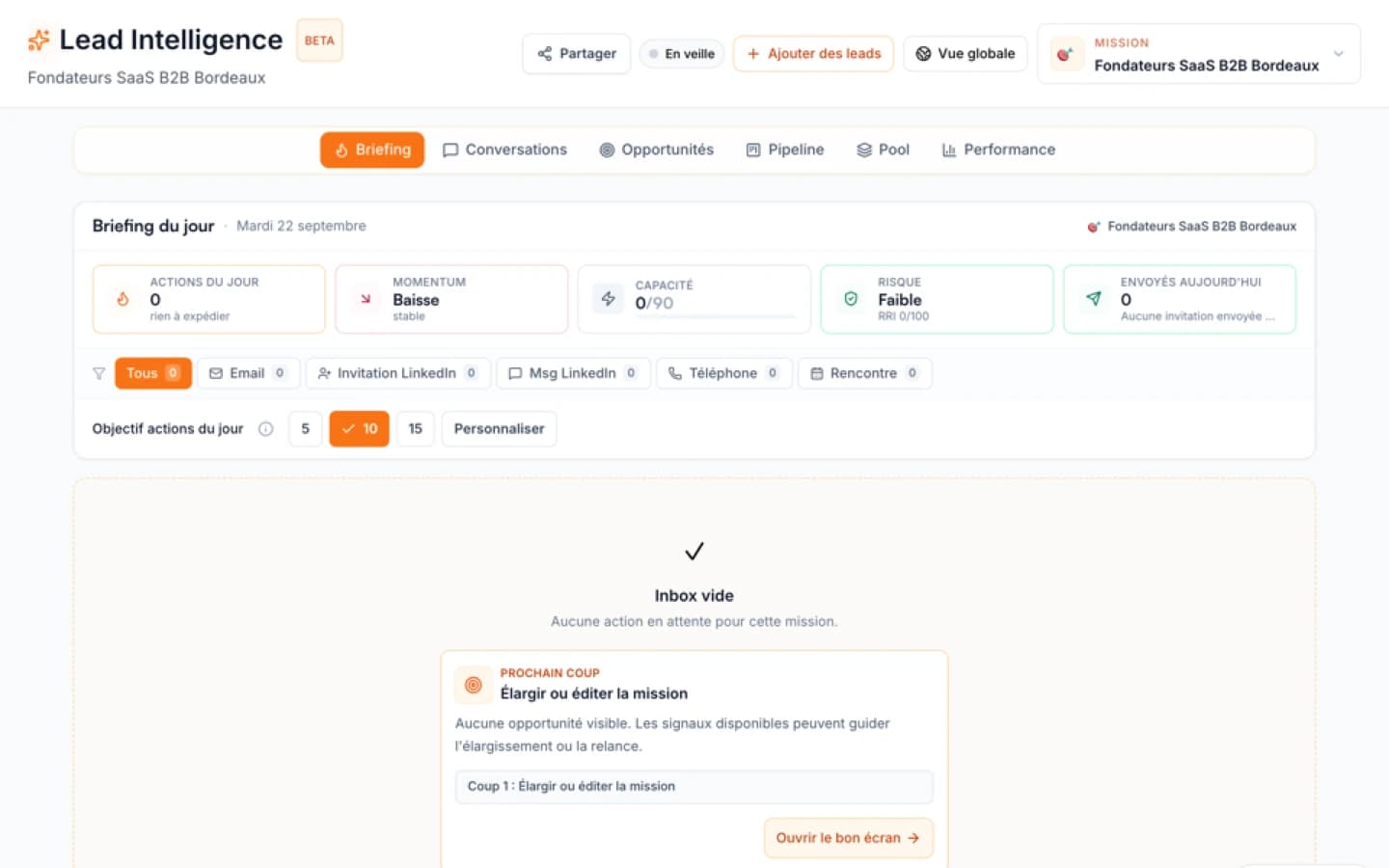
Customer prioritization is the strategic process of evaluating and ranking accounts or customer inquiries to determine where a business should focus its immediate attention, resources, and outreach. Instead of treating every contact with equal urgency, prioritization uses signals, context, and fit to identify which opportunities are most ready for action. This approach ensures that teams do not waste time on cold or irrelevant leads, allowing them to focus their energy where the probability of conversion or successful resolution is highest. Prioritizing the customer is not a simple marketing slogan, it is a winning business strategy that directly impacts commercial success, as highlighted by SAP Engagement Cloud on Emarsys. Managing customer expectations, as discussed by Five9, requires a clear plan and a focus on prioritizing each customer's needs. This is particularly true when determining how to prioritize the processing of customer requests, a challenge that spans different service sizes and sectors, as noted by easiware. In a sales context, manual prioritization often leads to cognitive overload. This is where tools like Lead Intelligence from Ember help by reducing noise and focusing attention on opportunities that deserve action now. By analyzing signals and opportunity readiness, businesses can move away from arbitrary volume metrics and focus on conversations that warrant immediate engagement. Whether a team starts with 10, 100, or 1,000 contacts, the system finds and prioritizes them with no minimum threshold, delivering the first prioritized leads in about 30 minutes once a usable targeting context is established. This transforms prioritization from a manual guessing game into an explainable, context-driven workflow.
To place this decision in context, the Knowledge guides for sales brings together deeper guidance on the same field.
Why this category exists
In a commercial environment where attention is the scarcest resource, treating every customer and prospect with equal weight is an operational trap. When businesses attempt to address every incoming inquiry or sales opportunity in the order they arrive, they inevitably dilute their focus. High-value accounts that require immediate, tailored engagement get stuck in the same queue as low-intent, transactional queries. This lack of differentiation leads to missed revenue, slow response times, and team exhaustion.
The category of customer prioritization exists to solve this fundamental imbalance. It shifts organizations away from reactive firefighting and toward proactive resource allocation. Prioritizing customers is not a superficial marketing slogan; it is a core commercial strategy that drives sustainable business growth. As highlighted by Emarsys, putting the customer first serves as a powerful commercial engine rather than a mere promotional campaign. When teams understand which relationships yield the highest strategic value, they can align their efforts to protect and expand those accounts.
Furthermore, managing customer expectations is impossible without a structured framework to determine who gets what level of service, and when. According to insights from Five9, setting clear boundaries and actively managing what clients expect is essential to maintaining high service quality and preventing operational friction. Without prioritization, teams try to promise everything to everyone, ultimately satisfying no one.
On the operational side, establishing clear rules for processing customer requests is the only way to keep support and sales pipelines functional. As detailed by easiware, structuring how inquiries are handled makes it possible to answer critical customer demands with the appropriate urgency.
To ground our insights on how organizations structure these workflows, we rely on 3 verified sources, each coming from a distinct domain. This structural approach to sorting the signal from the noise is exactly why customer prioritization has evolved from a manual guessing game into a critical, data-driven business category.
How it works
Effective customer prioritization operates as a continuous three-step loop that transforms raw market data into structured commercial focus.
First, the process requires establishing a deep strategic foundation. Prioritizing customers is not a simple marketing slogan, as highlighted by Emarsys, but a deliberate commercial strategy. It begins by defining clear parameters around your Ideal Customer Profile (ICP) and business goals. Without this baseline, any attempt to rank accounts will default to superficial metrics like company size or immediate loud requests, rather than true strategic fit.
Second, businesses must capture and synthesize real-time signals. Customer expectations and organizational needs shift constantly, meaning static database records quickly become obsolete. To manage these expectations effectively, companies can also monitor external triggers such as leadership changes, funding events, or shifts in technology stacks. For support and account management teams, this step also involves distinguishing contact channels to assess the urgency of each request: a customer who phones often needs an immediate answer, while an email can wait 24 to 48 hours, as detailed by easiware.
Third, the system translates these signals into an explainable score and a concrete next action. Instead of presenting a black-box rating that sales representatives might distrust, a robust prioritization framework explains the reasoning behind every priority. It details who to contact, why the timing is right today, which channel to use, and what specific angle will resonate with their current situation.
This structured workflow is exactly how the Lead Intelligence capability within Ember operates. By reusing your existing Ember Fund Your Growth, ICP, offer, and strategy, Lead Intelligence prepares a targeted sales mission without requiring manual setup. It reduces noise by focusing your team's attention on the opportunities that deserve action right now. Rather than guessing which accounts to pursue, the system makes every priority explainable from context, signals, and opportunity readiness, ensuring your commercial resources are always directed where they will yield the highest impact.
To explore this point further, Building a B2B account list without an existing network details a step directly related to this decision.
Difference from the classic approach
Classic methods of customer prioritization often rely on sheer database volume and manual filtering. In a traditional setup, sales and marketing teams use database platforms to build broad lists of potential accounts. For example, Apollo operates as a classic Business-to-Business (B2B) sales engagement platform where teams define their Ideal Customer Profile (ICP), build lists from a large contact database, apply filters, and sequence outreach (the Apollo pricing page lists filters, sequences and extensions), an approach suited to teams that already know their target profile cold.
Other modern setups focus heavily on data orchestration and enrichment. Clay provides a powerful data orchestration environment, offering waterfall enrichment across 150 data providers on all plans, as shown on the Clay Pricing Page. Their Launch plan starts at $185 per month billed monthly ($167 per month billed annually), with 15,000 actions and 2,500 data credits per month, according to the Clay Pricing Page. For scaling teams, their Growth plan starts at $495 per month billed monthly ($446 per month billed annually), with 40,000 actions and 6,000 data credits per month, as outlined on the Clay Pricing Page. These platforms are excellent for building highly customized data pipelines and enriching contacts at scale.
However, the primary challenge with these classic approaches is that high volume inevitably creates noise. When sales teams are flooded with thousands of enriched contacts, deciding who to contact first, why they should be contacted now, and what message will resonate becomes an overwhelming manual bottleneck. Without deep situational context, prioritization is reduced to basic firmographic filtering, which ignores real-time signals and opportunity readiness.
Ember Lead Intelligence shifts the paradigm from raw volume to context-driven prioritization. Instead of leaving teams to manually parse massive spreadsheets, it finds accounts based on the mission ICP and signals, then verifies useful sources to prioritize opportunities from the available context. This makes priority explainable from context, signals, and opportunity readiness, ensuring that commercial teams focus their energy where it matters most.
For teams that already have curated lists or prefer to leverage their existing networks, Ember integrates seamlessly into their workflow. It allows users to search and import profiles through LinkedIn or Sales Navigator from a connected account. Furthermore, with Ember Lead Intelligence, users can prepare and import up to 3,500 valid contacts from a Comma-Separated Values (CSV) file or Excel sheet, using a local score to measure the readiness of the file. Once the cost is confirmed, each wave enriches up to 200 contacts and exposes its progress. This ensures that instead of managing complex data pipelines, businesses can immediately identify which conversations deserve attention now.
Concrete example
To see how customer prioritization works in practice, consider a Business-to-Business (B2B) software provider that has just updated its core offering. The sales team is facing a database of hundreds of potential accounts, but they lack the time to contact everyone individually. Without a clear system, they risk falling into the trap of treating every lead with the same urgency, which makes managing customer expectations highly inefficient. Instead of guessing who to call first, the team initiates a sales mission using Lead Intelligence. The system begins by reusing the Ember Fund Your Growth, Ideal Customer Profile (ICP), offer, and strategy to prepare the mission. It then finds accounts from the mission ICP and signals, verifying useful sources to ensure accuracy. Rather than waiting days for manual list building, the team sees results rapidly. With usable targeting context, the first prioritized leads can appear in about 30 minutes. This speed allows the team to act while market signals are still fresh. The system reduces noise by focusing attention on opportunities that deserve action now. For each prioritized account, it provides a clear next action, detailing who to contact, why now, which channel to use, and which specific angle to take. This makes the priority entirely explainable from context, signals, and opportunity readiness, so sales representatives do not have to blindly trust an arbitrary score. This approach is highly adaptable to the team's current resources. Lead Intelligence finds and prioritizes the contacts itself whether the team starts with 10, 100, or 1,000 contacts, with no minimum threshold. By making the first value actually produced by the mission visible, including the contacts analysed, signals detected, and priority actions, the business can immediately see which conversations deserve their attention.
This approach also connects with Signals that reveal which prospect deserves contact next, which clarifies the next choice.
Limits
Traditional customer prioritization models face severe operational limits when they rely on static data. A primary challenge is managing customer expectations dynamically. As highlighted by Five9, managing customer expectations starts with prioritizing customers' needs and getting to know them. When sales and support teams use manual spreadsheets or basic Customer Relationship Management (CRM) filters, they are working with a snapshot of the past. This approach might be good enough for small teams managing a handful of stable accounts, but it quickly breaks down under pressure. Furthermore, prioritizing customer requests and opportunities requires deep customer knowledge and centralized channels. As discussed by easiware, prioritizing requests is the watchword for optimizing the customer relationship, provided that suitable urgency levels are defined. Manual prioritization forces teams to spend hours cleaning databases instead of engaging in meaningful conversations. To bypass these limitations, modern organizations require a system that connects strategic intent with real-time market signals. Ember addresses this challenge through Lead Intelligence. By reusing the Ember Fund Your Growth, Ideal Customer Profile (ICP), offer, and strategy, Lead Intelligence prepares a targeted sales mission. It finds accounts from the mission ICP and signals, then verifies useful sources to ensure accuracy. This approach shifts the focus from database volume to strategic relevance. Lead Intelligence finds and prioritizes the contacts itself, whether the team starts with 10, 100, or 1,000 contacts, with no minimum threshold. It reduces noise by focusing attention on opportunities that deserve action now, providing a clear next action regarding who to contact, why now, which channel, and which angle. It also makes the priority explainable from context, signals, and opportunity readiness, while making the first value actually produced by the mission visible by showing the contacts analyzed, signals detected, and priority actions. However, even advanced systems have operational boundaries. For Lead Intelligence to perform optimally, the business must provide a clear starting strategy. With a usable targeting context, the first prioritized leads can appear in about 30 minutes. Without this initial strategic foundation, no system can accurately determine which conversations deserve immediate attention. Prioritization is ultimately a reflection of business strategy, and technology works best when it amplifies a well-defined direction.
When to use it
Recognizing the exact moments to transition from static list-building to dynamic customer prioritization is essential for maintaining sales momentum.
The first critical scenario occurs when a sales team finds itself overwhelmed by database noise. When sales representatives spend more time filtering out irrelevant contacts than having meaningful conversations, it is time to shift resources. This transition is also vital when credit-based prospecting tools begin to drain the budget. When a sales team scales, credit-based plans weigh more on the budget as seats and volumes grow. According to comparisons on Factors.ai and Coldreach, some organizations outgrow their credit limits and the credit system can feel restrictive or expensive, which makes a priority-first approach easier to sustain.
Another key moment is when a company must align its sales outreach with customer service demands. Prioritizing customer requests is not just about outbound sales; it also involves structuring incoming demands. As outlined by easiware, managing customer requests effectively requires prioritizing them by contact channel and level of urgency. When internal teams struggle to balance proactive prospecting with reactive customer management, they need a system that makes priority explainable based on context, signals, and opportunity readiness.
This is precisely where Lead Intelligence on Ember becomes necessary. Instead of forcing teams to manually filter cold databases, Lead Intelligence reuses the Ember Fund Your Growth, Ideal Customer Profile (ICP), offer, and strategy to prepare a targeted sales mission. The platform finds accounts from the mission ICP and real-time signals, then verifies useful sources to ensure accuracy. By focusing attention on opportunities that deserve action now, it reduces noise and provides a clear next action, including who to contact, why now, which channel, and which angle to use. This ensures that sales teams only spend their energy and budget on conversations that are ready to move forward.
In practice, Why B2B founders keep prioritising the wrong prospects completes this framework with another angle on the same topic.
When not to use it
Dynamic customer prioritization is not a universal remedy for every stage of a business. There are specific scenarios where traditional, static list-building tools are entirely sufficient, or where attempting to implement a dynamic prioritization system is premature.
First, if your business is in the earliest phase of market exploration and has not yet defined its Ideal Customer Profile (ICP) or core offering, dynamic prioritization will lack the necessary foundation. Advanced tools like Lead Intelligence rely on clear strategic inputs to function effectively. The system reuses the Ember Fund Your Growth, ICP, offer, and strategy to prepare a sales mission. Without these structured strategic elements, there is no context to evaluate which signals or accounts actually deserve attention. In this scenario, a company is better off conducting manual, qualitative interviews to discover their market before trying to prioritize leads at scale.
Second, traditional database platforms remain highly effective if your primary goal is simply to build a massive, unsegmented directory of raw contacts. If your sales strategy relies on high-volume, generic cold outreach where timing, account signals, and personalized angles do not matter, static lists are good enough. However, businesses should remain aware of the financial trade-offs of this approach. Credit-based pricing models in traditional databases turn every single export, enrichment, and verification into a metered expense. When sales teams scale, these costs can weigh on the budget, a challenge also highlighted by Coldreach.ai, which describes Apollo as cheap to enter but expensive to scale with seats and credits. If your team is prepared to absorb these compounding costs for the sake of sheer volume, static database platforms are a reasonable choice.
Finally, if your sales cycle is purely transactional with extremely low contract values, the operational effort of monitoring real-time signals may exceed the return on investment. Dynamic prioritization is designed to reduce noise and identify high-value opportunities that require tailored action. For low-margin, high-velocity sales where customers buy instantly without human interaction, a simple automated checkout flow is far more appropriate than a prioritized sales pipeline.
Honest relationship to Ember
For businesses managing a small handful of active accounts, standard customer relationship management databases or simple spreadsheets are often perfectly sufficient. When personal memory and direct relationships are enough to guide daily outreach, introducing complex prioritization algorithms only adds unnecessary overhead. However, as customer databases expand, manual sorting quickly becomes a bottleneck. Prioritizing customers is not just a marketing slogan, it is a core commercial strategy, as noted in insights by SAP Emarsys. When teams struggle to decide who to contact first, they need a system that translates raw data into clear, actionable decisions. This is where Ember assists through its Lead Intelligence capability. Instead of forcing sales teams to manually filter through noise, Lead Intelligence reuses the existing Ember Fund Your Growth, Ideal Customer Profile (ICP), offer, and strategy to prepare a targeted sales mission. The system finds accounts based on the mission ICP and real-time signals, then verifies useful sources to classify accounts into explained opportunities to watch, act on, or set aside. This approach removes the need for massive databases to get started. Lead Intelligence finds and prioritizes the contacts itself, whether the team starts with 10, 100, or 1,000 contacts, with no minimum threshold. With a usable targeting context, the first prioritized leads can appear in about 30 minutes. By focusing attention on opportunities that deserve action now, the system reduces noise and provides a clear next action, defining who to contact, why now, which channel to use, and which angle to take. This makes the priority entirely explainable from context, signals, and opportunity readiness, allowing teams to focus their energy where it matters most.
Before deciding, Sales signals that show who a startup CEO should contact helps connect this method with adjacent priorities.
Sources and methodology
This article relies on a rigorous selection of industry analyses and practitioner frameworks to address the challenge of customer prioritization. Key insights on managing customer expectations are drawn from the guidance provided by Five9. Strategies for structuring customer support and handling incoming requests are grounded in the operational methodologies outlined by Easiware, while the strategic value of customer centricity as a business driver is supported by the analysis from Emarsys. Additionally, insights regarding modern data orchestration and enrichment workflows for growth teams are informed by the tools analysis on Derrick App.
Sources
FAQ
Free diagnostic
Test your sales file
Drop an Excel or CSV and check its readiness without sending its rows to Ember.