
Symptom or signal
The traditional playbook of solution selling is failing because modern buyers no longer need a salesperson to diagnose problems they have already identified or to pitch generic bundles of features. When sales representatives rely on standard discovery scripts to uncover pain points, they often frustrate highly informed buyers who have already completed extensive independent research. This mismatch between buyer expectations and sales execution is a primary reason why modern Business-to-Business (B2B) transactions stall. As highlighted in discussions on LinkedIn, common reasons B2B sales deals fail frequently trace back to friction in the buying experience rather than the product itself.
To reverse this trend, sales teams must replace generic solution pitches with deeply contextual, insight-driven engagement. According to analysis on the evolution of sales methodologies by The Sales Blog, traditional solution selling has lost its efficacy because it treats the discovery process as a transaction rather than an opportunity to deliver immediate value. When representatives fail to bring unique perspective or tailored insights to the table, they fail to build trust. This challenge is compounded when the internal sales organization is disconnected from the broader corporate strategy, a critical gap analyzed by LSA Global regarding whether sales teams are sufficiently aligned to execute complex sales.
Instead of asking buyers to educate them on their business, sales teams must arrive with pre-analyzed context, clear next steps, and immediate relevance. Replacing solution selling means shifting from a posture of passive questioning to one of active leadership, where the seller uses precise account intelligence to guide the buyer toward a clear decision.
To place this decision in context, the Knowledge guides for founders brings together deeper guidance on the same field.
What changed
buyers who already know their own problems. This friction marks a fundamental shift in how Business to Business (B2B) transactions occur.
The core issue is that the traditional discovery process has transitioned from an educational service into an administrative hurdle. According to insights from The Sales Blog, the death of solution selling is driven by a changing environment where buyers no longer require a salesperson to diagnose problems they have already thoroughly researched. When sales representatives continue to push generic discovery questions, they alienate prospects. This misalignment in the buying experience is a primary reason why modern deals fall through, as highlighted in a study on LinkedIn regarding the common reasons B2B sales deals fail.
To make matters more difficult, many sales organizations suffer from internal disconnects. If a sales team is not fully aligned with the strategic value they must deliver, even the most advanced methodology will fail to convert prospects, a challenge explored by LSA Global in their analysis of sales team engagement.
In response to these challenges, sales teams have historically turned to database platforms and orchestration tools to scale their outreach. Platforms like Apollo position themselves as unified Artificial Intelligence (AI) sales platforms for modern sales and marketing teams to manage pipelines and simplify their software stack. Similarly, data orchestration tools like Clay focus on providing infrastructure for Go To Market (GTM) teams and GTM engineers to run agentic workflows. For teams starting out, Clay offers a free tier limited to 200 rows per table, which scales to 50,000 rows per table on their launch and growth plans, according to the Clay pricing page.
However, these database-heavy approaches introduce a new set of problems. Credit-based pricing models turn every sales action into a metered decision, where exporting, enriching, and verifying each contact consumes credits, compounding costs as teams scale, as noted by buyers searching for alternatives on Factors.ai. This constant calculation of credit consumption creates unnecessary friction for growing teams.
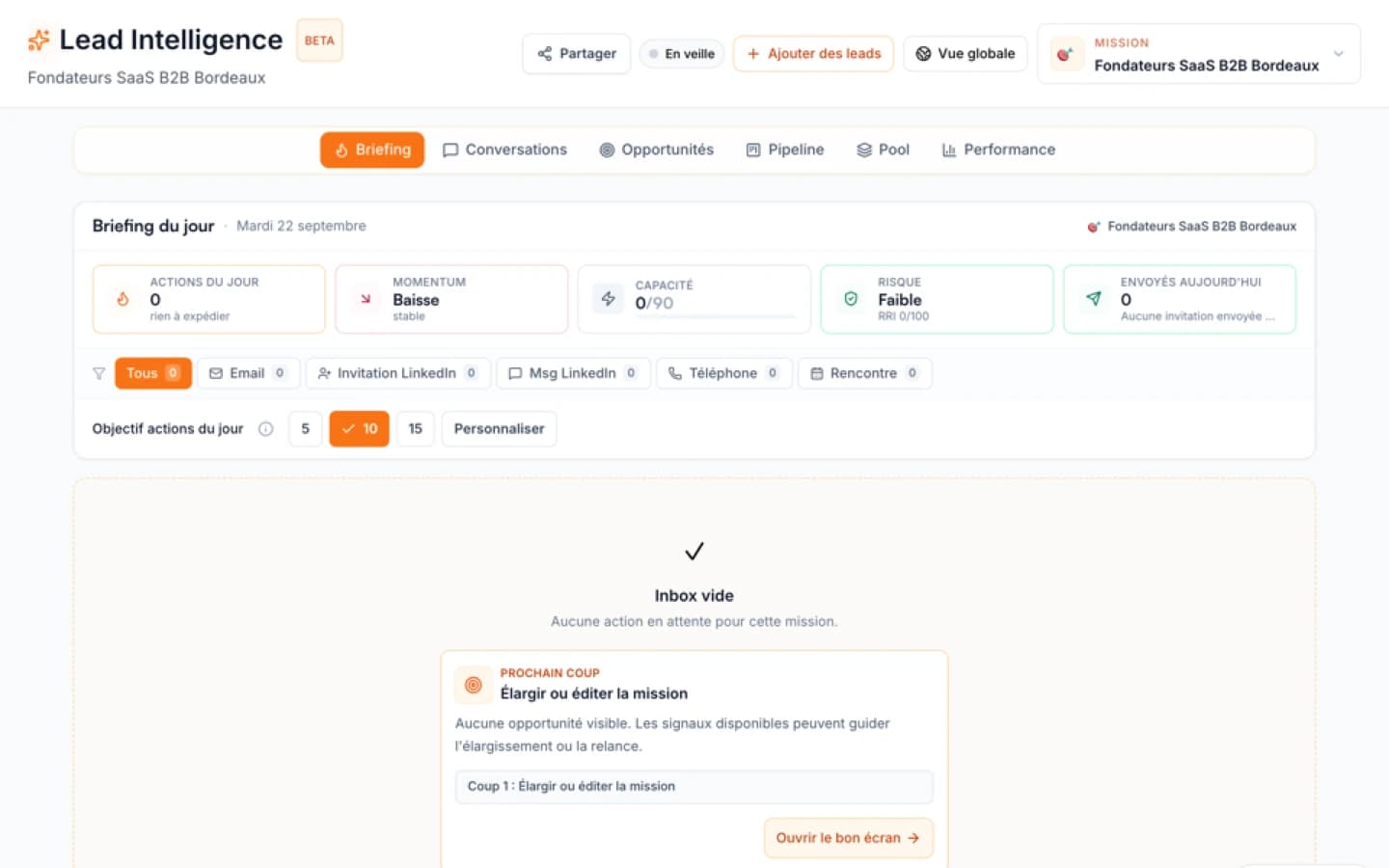
Instead of managing complex databases and credit math, sales teams need a way to prioritize conversations based on actual context rather than sheer volume. Ember addresses this shift through its Lead Intelligence capability. This system finds and prioritizes contacts itself, whether the team starts with 10, 100 or 1,000 contacts, with no minimum contact threshold, as detailed on the Ember Lead Intelligence page. By focusing on context and relationship signals rather than generic lists, sales teams can replace outdated solution pitching with timely, relevant conversations.
Facts and sources
To understand why traditional solution selling is faltering, sales teams must look at the structural changes in the buying experience and the tools driving modern sales strategies. Industry analyses highlight that alignment and engagement are critical. For instance, research by LSA Global on whether sales teams are sufficiently engaged to execute complex sales models points out that organizational alignment is often the missing link when deals stall, as detailed in their analysis on sales team engagement. When alignment fails, the buying experience deteriorates, which is one of the primary reasons Business-to-Business (B2B) deals fall through, according to professional insights compiled on common B2B sales failures.
Furthermore, the shift away from standard discovery scripts is discussed by industry experts who argue that the traditional playbook is obsolete. As explored in depth by The Sales Blog, solution selling is being replaced by methodologies that focus on deeper business acumen and immediate value rather than repetitive questioning.
On the tooling side, modern Go-To-Market (GTM) teams are moving toward data-rich environments, but this transition introduces its own operational challenges. Platforms like Apollo position themselves as a unified Artificial Intelligence (AI) sales platform for modern sales and marketing teams to manage pipeline, closing, and stack simplification, as outlined on the Apollo homepage. However, traditional credit-based pricing models can turn every action into a metered decision. Industry evaluations of alternative platforms note that exporting contacts, enriching records, and verifying emails each consume credits, creating compounding costs when scaling sales teams from one seat to five, as documented by Factors.ai and Coldreach.
Similarly, Clay positions its infrastructure for GTM teams and GTM engineers, including Revenue Operations (RevOps), sales, and marketing, to gather data, run agentic workflows, and launch GTM plays, as described on the Clay website. While Clay offers integrations with sales engagement tools like Salesloft, Outreach, Instantly, Smartlead.ai, and HubSpot Sequencer, as shown on the Clay integrations page, and provides an official LinkedIn Sales Navigator integration for lead discovery as detailed on the Clay Sales Navigator page, it enforces strict limits on table sizes. According to the Clay pricing page, the free tier is limited to 200 rows per table, while the Launch and Growth plans support 50,000 rows per table.
In contrast, modern agentic tools like Ember approach lead discovery without these rigid constraints. The Lead Intelligence capability within Ember finds and prioritizes contacts automatically, whether a team starts with 10, 100, or 1,000 contacts, with no minimum contact threshold, as detailed in the Ember Lead Intelligence documentation. This allows sales teams to bypass complex credit math and focus entirely on high-priority conversations.
To explore this point further, How Small Sales Teams Qualify Inbound Leads Without a CRM? details a step directly related to this decision.
Why the common explanation is incomplete
Many organizations diagnose the decline in closed deals as a simple execution problem. They assume that sales representatives are not sufficiently engaged in the process or that they are failing to execute the standard playbook. According to analysis on whether sales teams are sufficiently engaged to sell solutions by LSA Global, organizations often focus on internal alignment and training to fix these gaps. Similarly, discussions on LinkedIn frequently attribute failed Business-to-Business (B2B) transactions to basic flaws in the sales process or a poor buying experience.
However, this explanation is incomplete because it treats the symptom rather than the cause. The problem is not that sales teams are executing the solution selling playbook poorly. The problem is that the playbook itself is fundamentally misaligned with how modern buyers operate. When buyers already know their problems, forcing them through a standard diagnostic discovery feels like an administrative hurdle rather than a value-add.
Furthermore, the tools that sales teams rely on to scale their outreach often compound this friction. Traditional database platforms, such as Apollo, position themselves as a unified Artificial Intelligence (AI) sales platform for modern sales and marketing teams to manage pipelines, closing, and stack simplification. However, this volume-centric approach introduces its own challenges. For instance, credit-based pricing models turn every single action into a metered decision, where exporting contacts, enriching records, and verifying emails each consume credits. When a sales team scales from one seat to five, the credit math does not just multiply linearly because wasted exports, bounced emails, and re-enrichment compound the overall expense, a challenge frequently cited by buyers searching for alternatives on Factors.ai or Coldreach.
Similarly, advanced data orchestration tools like Clay, which serves as an infrastructure for Go-To-Market (GTM) teams to run workflows, offer deep integrations with sales engagement tools like Salesloft, Outreach, Instantly, Smartlead.ai, and HubSpot Sequencer, as detailed on the Clay Integrations Page. They also provide an official LinkedIn Sales Navigator datapoint integration for lead discovery and connection insights, as shown on the Clay Sales Navigator Integration Page. Yet, these platforms require significant technical setup and enforce strict limits, such as a cap of 50,000 rows per table on their Launch and Growth plans, according to the Clay Pricing Page.
This reliance on complex, credit-heavy, or highly technical data pipelines shifts the sales team's focus away from understanding the buyer's context and toward managing data logistics. The common explanation of poor execution ignores this structural burden. Sales teams are not failing because they lack motivation or data. They are failing because they are trapped in a cycle of high-volume, low-context outreach that modern buyers actively avoid.
The real problem
According to analysis on whether sales teams are sufficiently engaged to sell solutions by LSA Global, organizational alignment and genuine engagement are often misdiagnosed. The real problem is not a lack of sales activity or motivation. Rather, it is a structural mismatch between how modern buyers make decisions and how sales teams are equipped to engage them.
When sales teams attempt to solve declining win rates by increasing the volume of cold outreach, they inevitably run into severe operational friction. To manage this volume, many organizations turn to complex Go-To-Market (GTM) data tools. For example, platforms like Clay, which provides infrastructure for GTM teams to acquire data and run agentic workflows as described on Clay, require significant technical setup. Sales representatives find themselves managing complex databases where free accounts are limited to 200 rows per table, and Launch or Growth tiers support up to 50,000 rows per table, as detailed on Clay Pricing. Instead of selling, representatives spend their time acting as data engineers.
Other organizations rely on unified platforms such as Apollo, which positions itself as a unified Artificial Intelligence (AI) sales platform for modern sales and marketing teams on Apollo. However, as highlighted in market discussions on Factors.ai and Coldreach, credit-based pricing models turn every sales action into a metered decision. When a sales team scales from one seat to five, the compounding costs of wasted exports, bounced emails, and re-enrichment create administrative hesitation. Salespeople become cautious about which contacts to target, not based on strategic fit, but based on credit budgets.
This operational distraction directly damages the buying experience. According to a study on why Business-to-Business (B2B) sales deals fail published on LinkedIn Top Content, deals collapse primarily due to friction in the sales process and a poor buying experience. When sales representatives are bogged down by data management or constrained by credit limits, they revert to generic, automated sequences that offer zero value to the prospect.
The death of solution selling, as explored by The Sales Blog, stems from the fact that buyers no longer need a sales representative to diagnose basic problems or pitch standard feature bundles. Buyers already understand their pain points. What they lack is the internal alignment to make a decision and the confidence that a partner truly understands their specific business context. To close deals today, sales teams must replace generic solution pitching with context-driven, highly prioritized engagement that respects the buyer's time and immediate situation.
This approach also connects with Qualify B2B prospects without a CRM, which clarifies the next choice.
How the mechanism works
The replacement for traditional solution selling is a mechanism built on real-time signal monitoring and contextual prioritization. In the past, sales teams relied on static database exports to build lists. However, as noted by buyers searching for alternatives to traditional platforms, credit-based pricing models turn every single action into a metered decision where exporting, enriching, and verifying records constantly consume credits and compound costs when scaling, according to analysis by Factors.ai. Instead of treating prospecting as a series of costly, disconnected database queries, the modern mechanism connects company context directly to active market signals.
This new approach operates as an orchestrated workflow rather than a manual search engine. While specialized data infrastructures like Clay provide Go-To-Market (GTM) teams with the technical framework to run complex data plays, they often require dedicated engineering resources and impose strict structural limits, such as a limit of 200 rows per table on their free plan or 50,000 rows on their growth tier as detailed on Clay Pricing. The alternative mechanism bypasses this technical complexity by using artificial intelligence to automatically align target accounts with active business changes. It continuously monitors executive movements, hiring patterns, and financial shifts, translating these raw signals into an explained priority score.
To make this mechanism practical for sales teams, the system must work independently of list size. Traditional Customer Relationship Management (CRM) workflows often fail because they require a massive, clean database to yield any meaningful insights. The modern signal-driven mechanism is designed to be volume-independent. For instance, Ember's Lead Intelligence capability finds and prioritizes the contacts itself, whether the sales team starts with 10, 100, or 1,000 contacts, with no minimum contact threshold, as documented on the Ember Lead Intelligence page. By removing the requirement for massive initial databases, sales representatives can focus their energy on high-intent conversations immediately.
Ultimately, the mechanism succeeds because it replaces generic outreach templates with a clear, context-grounded next action. Instead of asking sales representatives to manually research every lead, the system analyzes the gap between the prospect's current situation and the seller's offering. It suggests the exact angle, the most effective communication channel, and the precise timing for the outreach. This shifts the sales representative's role from an administrative data gatherer to a high-value advisor, ensuring that every conversation is relevant from the very first touchpoint.
Concrete examples
To understand how this shift plays out in daily operations, consider how a modern sales team handles outbound prospecting compared to the old playbook. In the traditional solution-selling model, a representative begins by exporting a massive, static list of potential buyers from a database. For example, they might use a platform like Apollo, which positions itself as a unified Artificial Intelligence (AI) sales platform for modern sales and marketing teams to manage pipeline and closing as stated on Apollo.
However, this approach quickly runs into structural inefficiencies. As highlighted by sales teams searching for alternatives on Factors.ai and Coldreach, credit-based pricing models turn every prospecting action into a metered decision. When a sales team scales from one seat to five, the credit math does not just multiply linearly because wasted exports, bounced emails, and re-enrichment compound the overall cost. The representative is forced to spend valuable time filtering out noise rather than engaging in meaningful conversations.
In contrast, a modern Go-To-Market (GTM) team replaces this broad, credit-heavy approach with precise, signal-based workflows. Some teams build these workflows using data infrastructure platforms like Clay, which is designed for GTM teams to get data, run agentic workflows, and launch GTM plays as detailed on Clay. This infrastructure connects with various sales engagement tools such as Salesloft, Outreach, Instantly, Smartlead.ai, and HubSpot Sequencer according to Clay Integrations, and utilizes an official LinkedIn Sales Navigator datapoint integration for lead discovery as documented on Clay Sales Navigator Integration. Yet, even powerful data tools have operational limits that teams must navigate, such as a limit of 200 rows per table on the free plan and 50,000 rows per table on the Launch and Growth plans as shown on Clay Pricing.
When teams need to bypass these rigid limits and focus purely on opportunity readiness, they turn to dedicated solutions like Ember. With the Lead Intelligence capability, the system prioritizes the contacts itself, whether the team starts with 10, 100, or 1,000 contacts, with no minimum contact threshold as explained on the Ember Lead Intelligence Page. This allows sales representatives to focus on high-intent accounts without worrying about credit consumption or manual list cleaning.
Another concrete example involves the actual pitch. In the traditional model, a salesperson secures a meeting and spends the first twenty minutes presenting a generic slide deck about their solution's features. This often leads to friction or lost momentum. According to professional insights on LinkedIn, common reasons Business-to-Business (B2B) sales deals fail frequently stem from issues within the sales process itself or a poor buying experience. When buyers feel they are being subjected to a standardized pitch rather than a tailored business conversation, they disengage.
Replacing the generic solution pitch means entering the conversation with a pre-validated business case. As explored in The Sales Blog, the death of solution selling requires sales teams to adopt methodologies that address the actual, complex buying environment. Instead of asking a prospect to explain their problems, the modern representative uses real-time signals to identify the prospect's active challenges before the call even begins. By shifting from generic problem-solving to contextual, signal-driven engagement, sales teams can deliver a buying experience that aligns with how modern enterprises actually make decisions.
When to use this diagnosis
This diagnosis is critical for Business-to-Business (B2B) sales teams facing specific operational friction points. You should apply this shift in strategy when your outbound campaigns are generating high activity metrics but failing to produce meaningful revenue. If your representatives are sending thousands of automated emails and booking few meetings, the problem is likely that your team is relying on generic solution-selling playbooks that buyers now routinely ignore, as highlighted in the LinkedIn B2B sales discussion. For organizations focused on raw outbound volume, established platforms are often sufficient. For example, Apollo is an excellent unified sales intelligence platform that helps modern sales and marketing teams build pipeline and simplify their technology stack. This volume-driven approach has proven highly successful, helping Apollo reach 150 million dollars in annual recurring revenue according to Apollo. Similarly, if you have dedicated Revenue Operations (RevOps) engineers who want to build highly customized data pipelines, Clay provides powerful Go-To-Market (GTM) infrastructure to run agentic workflows and launch complex GTM plays. Clay integrates with popular sales engagement tools like Outreach and Salesloft, as detailed on the Clay integrations page, and offers official integrations with LinkedIn Sales Navigator, which you can explore on the Clay Sales Navigator integration page. However, you should pivot to a signal-based, contextual approach when the overhead of these platforms becomes a bottleneck. As noted in the Factors.ai analysis and the Coldreach review, credit-based pricing models can turn every sales action into a metered decision, where exporting, enriching, and verifying contacts compound costs rapidly as teams scale. Furthermore, complex data-enrichment tools may be overkill if your team lacks the engineering resources to manage them, especially given constraints like the 200 rows per table limit on the free plan documented on the Clay pricing page. This is where Ember's Lead Intelligence becomes the right choice. You should use this diagnosis when you want to eliminate the noise of massive databases and focus strictly on opportunities that deserve action right now. If you do not have a massive list to start with, Lead Intelligence is highly relevant because it finds and prioritizes contacts itself, whether your team starts with 10 or 100 contacts, with no minimum contact threshold. When you have a usable targeting context, the first prioritized leads can appear in about 30 minutes, allowing your sales team to move from strategy to execution without waiting days for data enrichment or manual list cleaning.
In practice, How to Build a B2B Prospect List from Scratch for Founders? completes this framework with another angle on the same topic.
When not to use it
While transitioning away from traditional solution selling toward contextual prioritization is highly effective for most Business-to-Business (B2B) sales teams, there are specific scenarios where this shift or the tools that support it may not be the right fit.
First, if your organization has a highly technical Go-To-Market (GTM) engineering team that wants to build complex, highly customized data pipelines from scratch, an infrastructure-first tool is often a better choice. For example, Clay positions itself as an infrastructure for GTM teams and GTM engineers to get data, run agentic workflows, and launch GTM plays, as detailed on Clay. This platform is highly effective for teams that need to build massive databases, offering up to 50,000 rows per table on its Launch and Growth plans, as shown on Clay Pricing. It also provides deep integrations with sales engagement tools like Salesloft, Outreach, Instantly, Smartlead.ai, and HubSpot Sequencer, which can be explored on Clay Integrations, alongside an official LinkedIn Sales Navigator datapoint integration for lead discovery, as documented on Clay Sales Navigator Integration. If your team has the engineering resources to manage these complex workflows, this technical setup is excellent.
Second, if your primary goal is to simplify your entire sales and marketing stack into a single, unified database and pipeline management tool, an all-in-one platform is highly suitable. Apollo, for instance, positions itself as a unified Artificial Intelligence (AI) sales platform for modern sales and marketing teams to manage their pipeline, closing, and stack simplification, as outlined on Apollo.
However, these heavy database and infrastructure approaches come with clear tradeoffs. For many sales teams, credit-based pricing models turn every single prospecting action into a metered decision where exporting contacts, enriching records, and verifying emails constantly consume credits, as discussed on Factors.ai and Coldreach. If you do not have the budget or the dedicated GTM operations staff to manage these compounding credit costs, a highly technical data-scraping setup might introduce more friction than it resolves.
Finally, if your sales team is suffering from fundamental organizational misalignment or a lack of genuine motivation, changing your sales methodology or buying new software will not solve the problem. As highlighted in research on whether sales teams are engaged enough to sell solutions on LSA Global, structural misalignment and low engagement are often the root causes of failed deals, which remains a primary reason why B2B sales transactions fall through, according to LinkedIn.
If your team is aligned but simply lacks the time to manage complex data engineering, you do not need to build massive, credit-consuming databases. Instead of managing complex tables, you can focus on high-conviction conversations. Ember's Lead Intelligence capability is designed to bypass this complexity by finding and prioritizing contacts directly from your existing business context, whether your team starts with 10, 100, or 1,000 contacts, with no minimum contact threshold, as detailed on Ember Lead Intelligence.
Next step
To transition your sales team from pitching generic solutions to leading with context, the first step is to audit your current outbound workflow. Many Business-to-Business (B2B) sales deals fail because of misaligned buying experiences, a challenge highlighted in the LinkedIn analysis of common B2B sales failures. When representatives focus entirely on product features rather than the prospect's immediate situation, they miss the timing that makes a deal viable. Moving past what industry experts call the death of solution selling, as explored on The Sales Blog, requires placing situational context at the center of every interaction. For many Go-To-Market (GTM) teams, this transition is blocked by the tools they use. Traditional databases encourage high-volume, low-context outreach because their credit-based pricing models turn every single action into a metered decision. As buyers searching for alternative platforms frequently observe on Factors.ai, the compounding costs of exporting, enriching, and verifying records can quickly penalize teams trying to refine their targeting. Instead of forcing representatives to calculate the cost of every contact edit, sales organizations need an environment where context is built in from the start. This is where Ember's Lead Intelligence changes the dynamic. Instead of requiring massive databases or complex manual workflows, Lead Intelligence uses your existing business context, including your Ideal Customer Profile (ICP) and strategy, to identify who to contact, why now, and which angle to use. According to the capabilities detailed on the Ember Lead Intelligence page, the system finds and prioritizes contacts itself whether your team starts with 10 or 100 contacts, with no minimum contact threshold. This allows your sales team to focus their energy on high-probability conversations without the noise of generic bulk emailing. By replacing rigid solution pitches with timely, context-driven outreach, you can rebuild your sales process around how modern buyers actually make decisions.
Before deciding, How small sales teams build pipeline without a lead scoring? helps connect this method with adjacent priorities.
Checked sources
Sources
FAQ
Free diagnostic
Test your sales file
Drop an Excel or CSV and check its readiness without sending its rows to Ember.