
Cold outbound text messaging in B2B sales creates an immediate regulatory trap for revenue teams that assume business contacts are exempt from consumer protection laws. While commercial callers often assume corporate communications operate outside the Telephone Consumer Protection Act (TCPA), federal courts and regulatory agencies have established narrow, highly technical boundaries around text messaging, consent, and opt-out processing.
Two major developments define the current legal landscape for outbound texting in the United States. First, the United States Court of Appeals for the Seventh Circuit ruled in Steidinger v. Blackstone Medical Services that the private right of action under Section 227(c)(5) of the TCPA does not extend to unsolicited text messages, as detailed in the official Seventh Circuit opinion. Second, the Federal Communications Commission (FCC) voted on September 30, 2026, to overhaul its consent revocation framework, replacing broad "revoke all" requirements with structured mechanisms for both marketing and informational outreach, according to analysis by Kelley Drye & Warren LLP.
Navigating these signals requires sales leaders to distinguish between statutory claims under the National Do Not Call (DNC) Registry, automated texting restrictions, and the administrative mechanics of consent management.
The Seventh Circuit Ruling: Section 227(c)(5) and the Definition of a Call
On July 14, 2026, the Seventh Circuit delivered a pivotal ruling in Steidinger v. Blackstone Medical Services regarding unsolicited texts, documented in the Seventh Circuit opinion. The court examined whether a recipient of unwanted text messages could initiate a private lawsuit under Section 227(c)(5), the statutory provision that permits individuals who receive more than one telephone call within a twelve month period in violation of DNC regulations to sue for damages.
Judge Kirsch, writing for the court, held that a text message is not a "telephone call" within the ordinary public meaning of the phrase when Congress passed the statute in 1991. The court noted that telephone calls historically involved voice communications through sound, and surrounding statutory provisions explicitly differentiate between calls and other forms of electronic communication. As a result, the court concluded that Section 227(c)(5) does not authorize private lawsuits for unwanted text messages.
The Strict Limits of the Seventh Circuit Decision
Sales leadership must avoid misinterpreting this decision as permission for unrestricted cold texting. The court applied its holding strictly to private litigation brought under Section 227(c)(5) within the Seventh Circuit, which spans Illinois, Indiana, and Wisconsin:
- Section 227(b) remains untouched. The Seventh Circuit expressly observed that other federal appeals courts, including the Ninth Circuit in Howard v. Republican National Committee, have treated text messages as calls when evaluating automated dialing and prerecorded communications under Section 227(b), as cited in the Seventh Circuit opinion. Automated text blasts remain fully exposed to statutory litigation under Section 227(b).
- State telemarketing laws remain active. The plaintiffs in the case brought additional claims under Florida law, which the federal district court declined to adjudicate under supplemental jurisdiction. State mini-TCPA statutes frequently define telephone solicitations with separate, broader language that includes text messages regardless of federal interpretations.
- Agency enforcement continues. The ruling limits private civil litigation under a single subsection; it does not curb administrative enforcement by federal regulators against abusive messaging practices.
The Dual-Use Phone Dilemma: Why B2B Data Triggers DNC Risk
A frequent misconception in B2B prospecting is that calling or texting an executive is automatically exempt from the National DNC Registry.
According to guidance published by the Federal Trade Commission, the National Do Not Call Registry is designed exclusively for personal phone numbers, and dedicated business telephone numbers and fax lines are not covered. However, modern professional workflows rely heavily on personal mobile devices, mixed-use cell phones, and remote setups. Under federal regulations set out in 47 CFR 64.1200, residential DNC protections apply to wireless telephone numbers as well.
When an outbound sales team enriches an executive target and acquires a wireless number, that number is frequently registered on the national list as a personal line. If a commercial text is transmitted to that device without verifiable prior express consent, the sender faces potential liability under federal and state rules. Simply pointing out that the recipient is a chief executive or procurement manager does not convert a personal wireless subscription into an exempt commercial landline.
For teams building outbound motions, relying on unverified mobile data creates continuous friction. Validating professional identity and routing outreach through channels where intent and identity are structured, such as professional social platforms, dramatically reduces regulatory exposure. Exploring Why LinkedIn Verification Matters for Outbound Sales? illustrates how verified profile touchpoints bypass the phone registry ambiguity altogether.
The FCC September 2026 Consent Revocation Rules
On September 30, 2026, the FCC took decisive action to update how consent revocation operates under the TCPA, as outlined by regulatory counsel at Mac Murray & Shuster LLP. The newly adopted Report and Order systematically replaces the previous "revoke all" mandate, which had required that an opt-out from any communication automatically shut down every interaction across an entire organization.
The revised framework introduces operational clarity while reinforcing strict requirements for sales messaging.
| Compliance Area | Previous Standard (2024 Rule) | Revised FCC Framework (September 30, 2026 Order) | Operational Impact for Outreach Teams |
|---|---|---|---|
| Revocation Scope for Informational Outreach | A single opt-out could terminate all communications across the enterprise. | Opt-outs can be applied at the specific campaign category level (e.g., billing alerts). | Operational systems must segregate informational notifications from commercial campaigns. |
| Revocation Scope for Marketing Outreach | Blanket opt-out requirement across all entity touchpoints. | Revoking marketing consent revokes all future marketing calls and texts from that sender and related affiliates. | A marketing opt-out must immediately freeze all promotional cadences company-wide. |
| Opt-Out Mechanism Designation | Senders were prohibited from naming a single, exclusive opt-out channel. | Senders may designate one exclusive opt-out channel from a pre-approved list. | Teams can standardize on reply keywords or specific web portals if clearly disclosed. |
| Timeframe to Process Revocations | Ten business days from receipt of request. | Up to ten business days to honor requests, with potential shortening under review. | Suppression lists must sync across outbound tools well inside the ten-day envelope. |
As reported by Kelley Drye & Warren LLP, callers and texters may now designate an exclusive revocation method by clearly disclosing it in the message or call. Permitted methods include:
- Automated interactive voice or key-press options on calls.
- Standardized reply keywords in text messages, limited to seven words: stop, quit, end, revoke, opt out, cancel, or unsubscribe.
- A designated website URL or telephone number established by the sender to record opt-outs.
If a company specifies one of these authorized options clearly in its message, it has no obligation under federal rules to process opt-out demands submitted through alternative channels. Conversely, if a sender does not designate an exclusive mechanism, it must continue honoring any revocation request submitted by any reasonable means.
According to analysis by Mac Murray & Shuster LLP, these revised rules take effect 30 days after publication in the Federal Register, replacing the compliance date of January 31, 2027, that had previously been set for remaining elements of the 2024 rule.
Building a Safe and Sustainable B2B Outreach Motion
Given the legal boundaries established by the Seventh Circuit and the operational requirements adopted by the FCC, commercial teams must adjust how they execute outbound prospecting.
1. Separate Informational and Marketing Suppression
Under the new FCC order, a marketing opt-out applies across all promotional touchpoints for that business entity and any affiliates a buyer would reasonably expect to be included. If an executive texts any of the standardized opt-out keywords in response to a marketing campaign, your CRM and outreach tools must immediately suppress that contact from all sales cadences. Informational messages, such as product maintenance or security notifications, may be handled separately, but marketing suppression must be absolute.
2. Standardize In-Message Opt-Out Language
Texters that want the legal protection of an exclusive revocation channel must state that channel clearly and conspicuously within the message itself. If your team relies on short message service (SMS) communications for sales follow-ups, standardizing on recognized keywords like "stop" or "unsubscribe" simplifies tracking and shields the organization from ambiguous opt-out arguments.
3. Move from Cold Phone Outreach to Contextual Engagement
Cold texting delivers diminishing commercial returns while magnifying legal risk. Because dual-use mobile numbers blur the line between personal and commercial devices, uninvited texts risk triggering regulatory scrutiny and damaging brand reputation before a sales conversation begins.
Modern go-to-market teams achieve higher conversion and lower compliance overhead by focusing on qualified intent, verified corporate email channels, and structured social platforms. Rather than firing automated text sequences into unverified mobile lists, top performers prioritize relevance, timing, and multi-channel context. Teams reviewing their sales execution architecture can consult the Knowledge guides for sales to evaluate structured, compliant prospecting models that avoid cold phone traps.
4. Maintain Rigorous Internal Suppression Timelines
While the FCC currently allows up to ten business days to honor reasonable revocation requests under 47 CFR 64.1200, relying on the maximum statutory buffer invites operational errors. Sales sequences frequently send follow-up messages within 48 to 72 hours. An opt-out received on day one that takes eight days to sync across sales software can easily result in an unlawful subsequent message. Establishing automated, real-time suppression synchronization across all data platforms eliminates this risk entirely.
Prioritizing Context Over Regulatory Friction
The combination of the Seventh Circuit's statutory analysis and the FCC's revised consent revocation order confirms an unmistakable trajectory: commercial outreach to wireless devices requires meticulous tracking, clear disclosures, and strict suppression discipline.
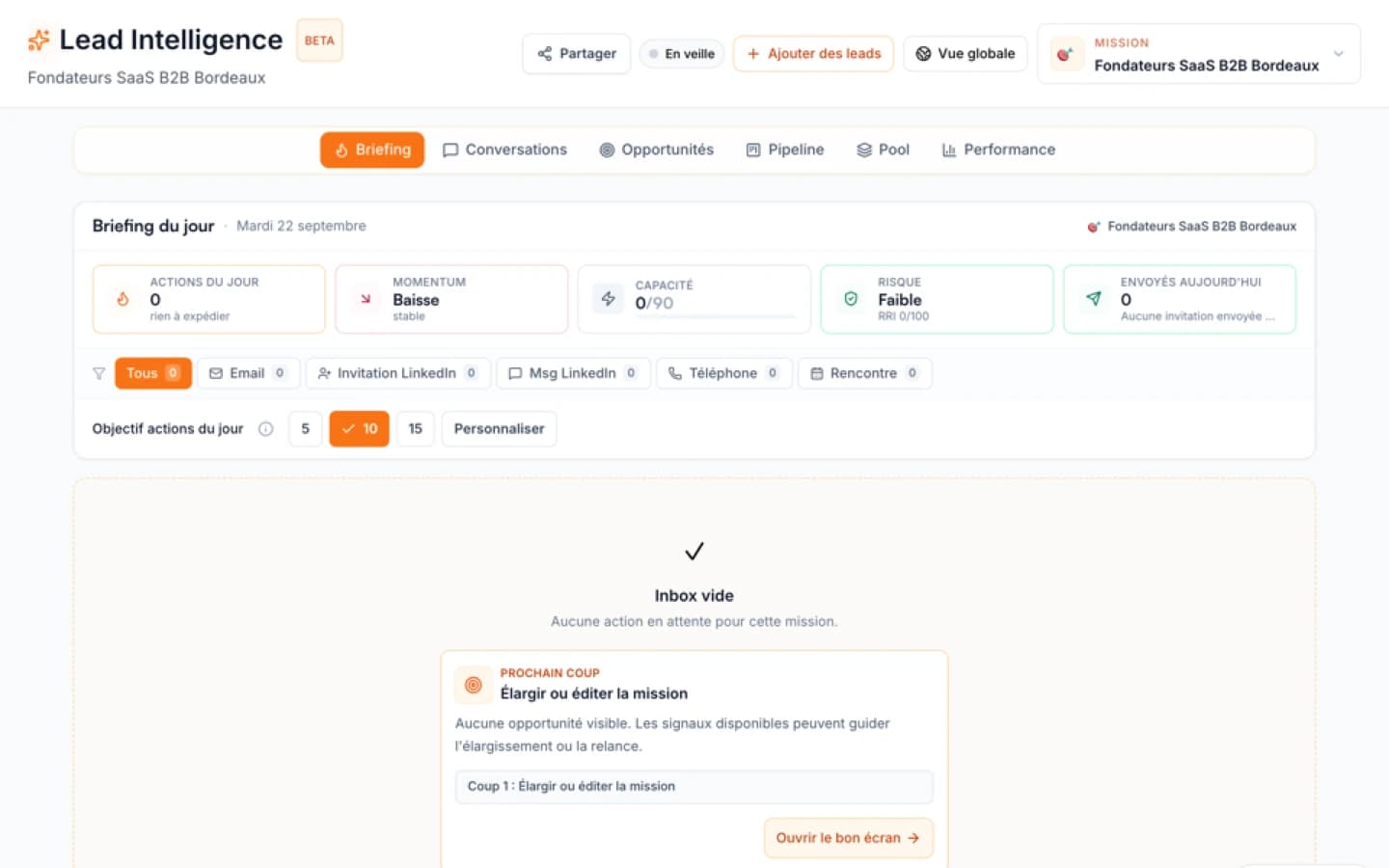
High-growth B2B organizations succeed not by pushing the boundaries of cold text messaging, but by targeting prospects where they expect to conduct business. By integrating structured business intelligence, verifying prospect seniority, and focusing on timing rather than message volume, revenue teams generate pipeline without stepping into the regulatory crosshairs of modern telemarketing law. Ember Lead Intelligence supports this approach by discovering and prioritizing business opportunities based on strategic context, helping sales teams engage the right accounts through verified channels without relying on intrusive, automated cold outreach.
Sources
- FCC Finalizes New TCPA Revocation Rules
- FCC Revises TCPA Consent Revocation Rules:…
- Septième circuit, 14 juillet 2026 : un SMS n'est pas un appel pour l'action privée « Do Not Call » de la TCPA : source S1
- FCC : projet de réforme du retrait de consentement TCPA soumis au vote du 30 septembre 2026 : source S1
- FCC : projet de réforme du retrait de consentement TCPA soumis au vote du 30 septembre 2026 : source S2
- Registre national Do Not Call : les numéros professionnels ne sont pas couverts, mais le mobile personnel l'est : source S1
- Page publique Lead Intelligence : reçu S8
- Page juridique données prospects : reçu S9
FAQ
Free diagnostic
Test your sales file
Drop an Excel or CSV and check its readiness without sending its rows to Ember.