
Start with a usable first room
For a B2B company approaching a Series A, an investor data room should make the financial story traceable. Start with an organized first version, then make deeper files available as diligence progresses. Burkland's data-room guide separates the first view from the deeper review. A folder with every file is harder to use than a clear set of current records.
The core financial records
Prepare monthly historical profit and loss, balance sheet and cash-flow statements. Show the current cash position, cash burn and runway with a stated calculation date. Add a forward-looking model for the funding period, with its assumptions, spending plan and more than one plausible scenario. Burkland identifies these records for Series A diligence; Slidebean's checklist also distinguishes actual accounts from projections. Label drafts and forecasts so readers cannot mistake them for closed accounts.
Include the current, fully diluted cap table and a readable explanation of outstanding options, SAFEs, debt and earlier financings. The cap table is a financial and ownership record, so reconcile it with the underlying agreements before sharing. Keep the round amount, intended use of proceeds and the milestones it should fund together with the financial model. A legal or finance adviser should resolve any discrepancy in the financing records.
Connect traction to the model
A B2B forecast is useful only when its drivers are visible. Choose the few measures that explain your business, such as recurring revenue, customer retention, signed contracts or conversion through a defined sales pipeline. State the period and source of each measure. Separate signed revenue from opportunities and explain where a forecast depends on a contract that has not closed. Burkland lists traction evidence alongside financials; this is a way to help a reader test the assumptions behind the plan, not a promise that any particular metric will satisfy every investor.
Review before granting access
Assign an owner and an update date to each financial file. Check that the deck, financial model, management accounts and cap table tell the same story. Record a missing item explicitly, with who will supply it, instead of silently filling the gap with an estimate. Share sensitive material in stages and review access when an investor's role changes. Slidebean describes staged access and routine permission checks. The exact request list still depends on the investor, jurisdiction and transaction.
A practical review can use five questions: Which period do these actuals cover? Which assumptions drive the forecast? What evidence supports the traction figure? Which securities affect ownership? Who owns the next correction? If one answer is unclear, fix the underlying record before polishing the presentation.
A small worked example
Suppose a founder's deck says revenue will double next year, while the model assumes two sales hires and a higher conversion rate. The room should show the historical sales baseline, the hiring cost, the conversion assumption and the cash impact. If there is no evidence yet for the higher conversion rate, label it as a scenario. This example illustrates how to make a claim testable; it is not a forecast for another company.
Where Ember can help
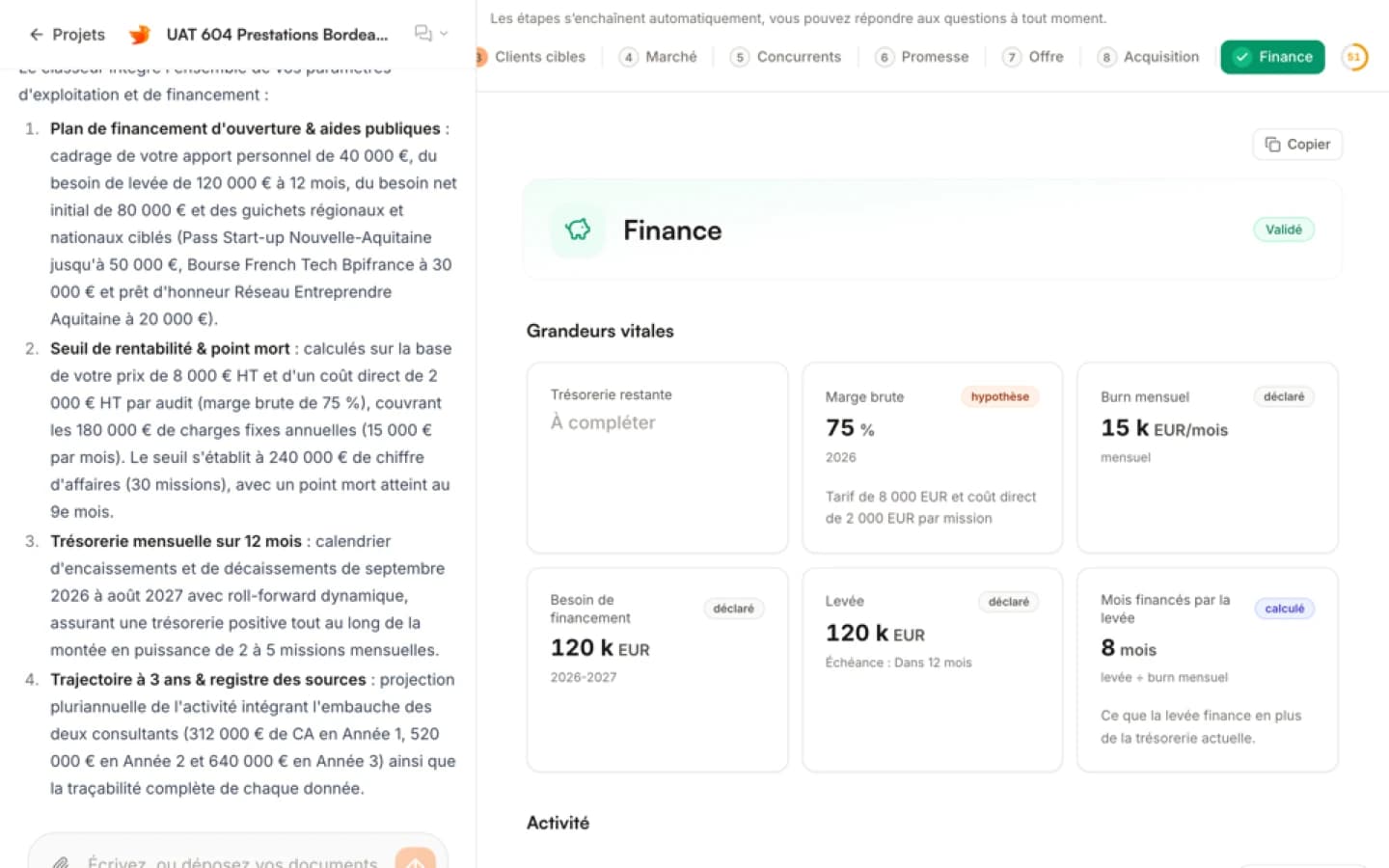
Fund Your Growth can help structure the business plan and organize finance, traction, legal and investor materials in a data room connected to the project. It does not create missing accounts, verify a cap table or guarantee funding. The founder and advisers remain responsible for the accuracy and sharing of the underlying records.
Sources and scope
This guide draws on Burkland's VC data-room guide, Slidebean's investor data-room checklist and Ember's product description. These are practical checklists and product descriptions, not a universal legal requirement. Confirm the requested documents with each investor and qualified advisers.
Sources
- A practical, evidence-first checklist of what goes into a data room that survives diligence: cohort metrics, retention curves, pipeline coverage, CAC payback, hiring plan tied to use of funds, and the legal/financial hygiene items (cap tabl
- How to Build a VC Data Room for Your Fundraise
- What is a Data Room for Investors? Examples and Checklist
FAQ
Mini audit
Test your Business Plan
Identify strengths, missing proof and the next priority.