
What Are BODACC and RNE Records in French B2B Intelligence?
Cross-referencing official gazette notices from BODACC with statutory filings in the RNE creates verified, date-stamped triggers for B2B sales outreach. Instead of relying on self-reported social media updates, unverified rumors, or stale commercial directories, revenue teams can detect corporate restructuring, leadership changes, and capital operations directly from official French public records.
Regulated under Article R 123-209 of the French Commercial Code, the Bulletin officiel des annonces civiles et commerciales (BODACC) publishes official records from commercial courts across five weekly editions according to the BODACC dataset on data.gouv.fr. The gazette organizes legal publications into three parts: BODACC A for business sales, asset transfers, new corporate creations, and collective proceedings; BODACC B for statutory modifications and deregistrations; and BODACC C for notices of annual account filings according to the BODACC dataset on data.gouv.fr. The Direction de l'information légale et administrative (DILA) provides programmatic access through an API under the Open License 2.0 according to the DILA BODACC API service.
Administered by the Institut National de la Propriété Industrielle (INPI), the Registre national des entreprises (RNE) replaced the previous commercial registry on January 1, 2023 under the PACTE law, delivering updates in JSON format according to the INPI RNE dataset on data.gouv.fr. The national registry collects corporate filings across commercial, craft, agricultural, and liberal sectors, including non-confidential data from annual accounts submitted since January 1, 2017 according to the INPI RNE dataset on data.gouv.fr.
| Legal Source | Primary Scope | Typical Sales Signal |
|---|---|---|
| BODACC Part A | Sales, transfers, incorporations, collective proceedings | Asset acquisitions and distress signals |
| BODACC Part B | General amendments, executive appointments, deregistrations | Leadership changes and capital restructuring |
| BODACC Part C | Notices of annual account filings | Fiscal year milestones and scale verification |
| RNE Registry | Unified directory of company statutes and filings | Corporate representation and registry status |
Categorizing Legal Events: Differentiating Fact from Intent
A legal publication is an administrative fact, not an express purchase intent. A notice confirms that a statutory or legal event took place, but outbound sales teams must interpret the commercial reality behind the paperwork. Treating every court notice as an urgent buying signal leads to misaligned messaging and wasted effort.
Structural Expansion and M&A Activity
Notices published in BODACC Part A frequently reveal acquisitions of ongoing business operations (cessions de fonds de commerce) and major asset transfers. When an enterprise acquires a commercial location or absorbs an existing operating unit, it usually triggers a wave of operational changes: IT stack consolidation, vendor reviews, and staff integration.
Parallel checks against the RNE confirm whether the acquiring entity created a new dedicated subsidiary or expanded an existing corporate vehicle. Cross-referencing both sources validates the actual legal buyer rather than the commercial brand name used in press communications.
Leadership Transitions and Statutory Modifications
Corporate modifications recorded in BODACC Part B capture key corporate governance adjustments. These include the appointment of a new company director (gérant, président), a relocation of the corporate headquarters, or an increase in share capital.
A newly appointed executive frequently audits existing suppliers within their opening months. Verifying the statutory appointment in the RNE confirms the exact date of executive registration and the identity of authorized legal representatives. This prevents reps from pitching outgoing decision-makers whose departure has already been formalized at the registry.
Financial Filings and Corporate Solvency
BODACC Part C provides notices confirming that an enterprise has deposited its annual financial accounts with the commercial court clerk. The notice itself does not contain the balance sheet, but it confirms filing compliance.
The RNE then provides the corresponding non-confidential financial data deposited by the company. For commercial teams assessing customer viability or target account health, examining balance sheets and statutory stability helps avoid low-margin or risky engagements. Those seeking deeper perspectives on managing working capital and evaluating fiscal statements can consult the Knowledge guides for finance.
Crucially, BODACC Part A also lists collective proceedings, including safeguard procedures (procédure de sauvegarde), court-ordered receiverships (redressement judiciaire), and liquidations. Detecting these notices protects outbound teams from pursuing prospects that are legally barred from signing contracts or entering insolvency management.
Reconciling Gazette Notices with the National Registry
Connecting a public announcement from BODACC with an operational account record in the RNE requires a structured, multi-step reconciliation procedure.
Step One: Capturing and Filtering Gazette Notices
Raw notices must be ingested and sorted by section. Civil notices regarding personal insolvency or inheritance procedures are excluded from the dataset under statutory protection rules according to the BODACC dataset on data.gouv.fr. Commercial teams must focus strictly on corporate notices involving registered commercial entities.
Step Two: Resolving Conflicting Event Dates
A common challenge in legal intelligence is date discrepancy. A corporate change involves several different dates:
- The event date: The day the general meeting took place or the purchase deed was signed.
- The filing date: The day documents were submitted to the court registry.
- The publication date: The day the announcement appeared in the official gazette.
Sales teams should rely on the bulletin publication date to evaluate signal freshness, while referencing the registration date in the RNE to verify that the filing has achieved full legal validity.
Step Three: Confirming Entity Identity in the RNE
Once a notice is captured, the company registration identifier (SIREN) and statutory corporate name must be queried against the RNE dataset. This verification confirms that the entity is active, checks whether secondary establishments were affected, and lists current corporate officers.
Step Four: Applying Data Privacy Safeguards
The availability of open public datasets does not exempt commercial teams from privacy regulations. As noted by the DILA, reusers of legal gazette data must comply with data protection regulations, particularly because notices involving individual entrepreneurs (entrepreneurs individuels) contain personal data according to the BODACC dataset on data.gouv.fr. Any automated outreach referencing public registry details must respect legitimate interest assessments and provide clear opt-out avenues.
Operationalizing Verified Triggers in Outbound Workflows
The primary danger when leveraging legal filings in sales outreach is sounding like a court bailiff. Reaching out to a newly appointed chief executive by citing a commercial court announcement creates suspicion rather than trust.
The legal record should serve as internal qualification rather than outbound copy. Instead of stating where the information was discovered, commercial teams should address the operational problems naturally caused by the underlying event:
- For executive appointments: Address onboarding priorities, contract rationalization, and performance benchmarks for the upcoming fiscal quarter.
- For corporate acquisitions: Address tooling integration, system migrations, or operational alignment between newly merged business units.
- For capital increases: Discuss scaling constraints, hiring support, or infrastructure readiness.
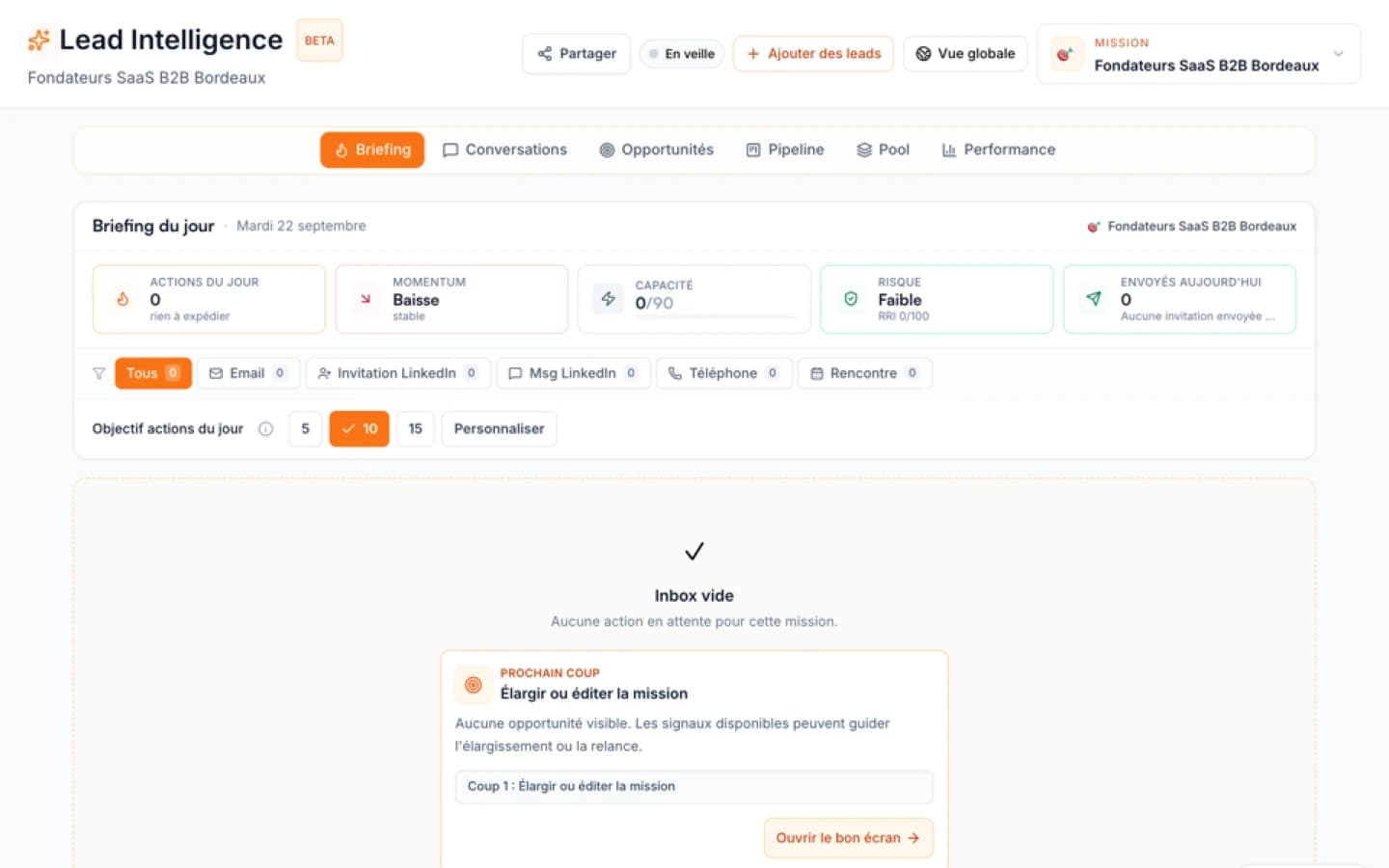
Modern prospecting platforms streamline this transition from public data to sales execution. Through Ember Lead Intelligence, commercial teams can prioritize verified triggers, identify key stakeholders within target organizations, and coordinate contextual outreach without getting bogged down in manual registry searches. Connecting verified business timing with targeted sales execution turns public administrative filings into meaningful pipeline growth.
Sources
FAQ
Free diagnostic
Test your sales file
Drop an Excel or CSV and check its readiness without sending its rows to Ember.