
Early-stage founders can strike federal beneficial ownership reporting from their immediate compliance checklist. Under a final rule issued by the Financial Crimes Enforcement Network on August 11, 2026, domestic entities formed under United States law are permanently exempt from filing Beneficial Ownership Information reports under the Corporate Transparency Act.
This regulatory change eliminates the risk of federal civil and criminal penalties for domestic startups that previously faced strict reporting deadlines. However, the rule does not repeal the underlying statute, nor does it remove ongoing state-level corporate filings, tax declarations, or investor due diligence expectations. Founders must understand precisely what this federal exemption covers, where disclosure rules still apply, and how to maintain an orderly corporate trail.
What the FinCEN Final Rule Actually Changes
The shift represents the formalization of exemptions that initially appeared in an interim framework. On August 11, 2026, FinCEN finalized its rule removing reporting obligations for domestic entities, which officially took effect on August 14, 2026, as documented in the Federal Register.
For startup operators, the operational implications are straightforward:
- Domestic startups are exempt: Any corporation, limited liability company, or other entity created by the filing of a document with a secretary of state or similar office in the United States no longer needs to submit an initial or updated BOI report, as confirmed on the official FinCEN BOI portal.
- No FinCEN ID maintenance for U.S. persons: Founders and executives who previously secured a personal FinCEN ID are relieved from updating or correcting their personal data according to the U.S. Department of the Treasury.
- Purging of historical records: In its official announcement, FinCEN confirmed that it will delete previously submitted beneficial ownership records provided by U.S. persons.
This relief removes an administrative friction point that had complicated early-stage company formation, founder equity splits, and board restructuring throughout 2024 and 2025.
Who Remains Subject to Federal Reporting?
While domestic startups formed under state law are exempt, foreign companies face a different set of obligations. FinCEN redefined the regulatory definition of a reporting company to focus strictly on entities formed under the laws of a foreign country that have registered to conduct business in any U.S. state or tribal jurisdiction.
According to the FinCEN news release, foreign entities qualifying as reporting companies must still report beneficial ownership details for foreign individuals who exercise substantial control or hold significant equity.
Even for foreign entities, the final rule introduced notable carve-outs:
- They do not need to report beneficial ownership information for U.S. persons.
- They do not need to report U.S. persons as company applicants, which previously included corporate formation agents, attorneys, or paralegals who handled the domestic filing, as outlined by the U.S. Department of the Treasury.
If your startup operates as a Delaware C-Corp or a state-registered LLC formed directly inside the United States, your company is treated as a domestic entity and is fully exempt. If your corporate parent remains based abroad and registers directly to do business in a U.S. state, compliance teams must still prepare disclosures for foreign beneficial owners.
Why State-Level Disclosures and Governance Still Matter
The FinCEN exemption addresses a single federal anti-money laundering reporting channel. It is not an umbrella waiver for corporate governance, state disclosure laws, or general record retention.
Founders frequently conflate federal transparency rules with state corporate filings. State-level requirements remain entirely distinct:
Secretary of State Annual Reports
States such as Delaware, California, New York, and Texas require registered entities to submit annual reports, franchise tax returns, or statements of information. These filings frequently require the names and business addresses of officers, directors, and registered agents. Missing an annual state filing can cause your corporate entity to lose good standing, which halts banking operations and prevents venture financings.
Corporate Governance Formalities
Exemption from federal BOI filings does not mean internal corporate transparency is optional. Venture funds, angel investors, and lenders conduct thorough due diligence on cap tables, board structures, and intellectual property assignments. Founders managing a Delaware entity must still document every equity grant, option pool expansion, and corporate decision properly, often relying on structured tools and frameworks like Delaware Board Consents: How Startups Pass Written Actions.
Tax and Statutory Record Retention
While FinCEN does not mandate ongoing beneficial ownership tracking for domestic startups, federal tax regulations, state revenue offices, and employment agencies require comprehensive record-keeping. Maintaining organized corporate registries, formation certificates, and financial books remains essential. Founders can consult How Long Startups Must Keep Business and Tax Records? to establish a compliant internal document policy.
Evaluating Your Startup Compliance Posture
To help early-stage teams verify their corporate standing following these regulatory updates, the following comparison clarifies where obligations have ended and where ongoing diligence is still mandatory:
| Area of Compliance | Current Status for Domestic Startups | Current Status for Registered Foreign Startups | Primary Governing Authority |
|---|---|---|---|
| Federal BOI Filing | Permanently Exempt | Required for foreign owners only | FinCEN |
| FinCEN ID Updates | Not Required for U.S. persons | Not Required for U.S. persons | FinCEN |
| State Annual Reports | Mandatory | Mandatory in states of qualification | Secretary of State |
| Corporate Minutes & Consents | Mandatory | Mandatory under home/local jurisdiction | State General Corporation Law |
| Cap Table & Investor Diligence | Required for fundraising & audits | Required for fundraising & audits | Investors / Lenders |
Founders looking to expand their knowledge across other accounting, corporate, and venture requirements can explore the Knowledge guides for finance.
Structuring Corporate Records for Future Diligence
Federal rules can shift across regulatory cycles, but investor expectations remain consistent. When preparing for institutional funding, accelerators, or venture debt, prospective backers demand a verifiable corporate history.
Instead of treating corporate compliance as an ad hoc response to shifting agency rules, top founders maintain an audit-ready foundation:
- Maintain a single, verified cap table: Track common equity, preferred stock, SAFEs, and convertible notes alongside board-approved resolutions.
- Preserve formation and foreign qualification certificates: Ensure every entity filed in Delaware, or registered to do business in other operating states, has up-to-date registered agent representation.
- Keep governance separated from assumptions: Maintain clear boundaries between confirmed legal documents, board authorizations, and early-stage commercial projections.
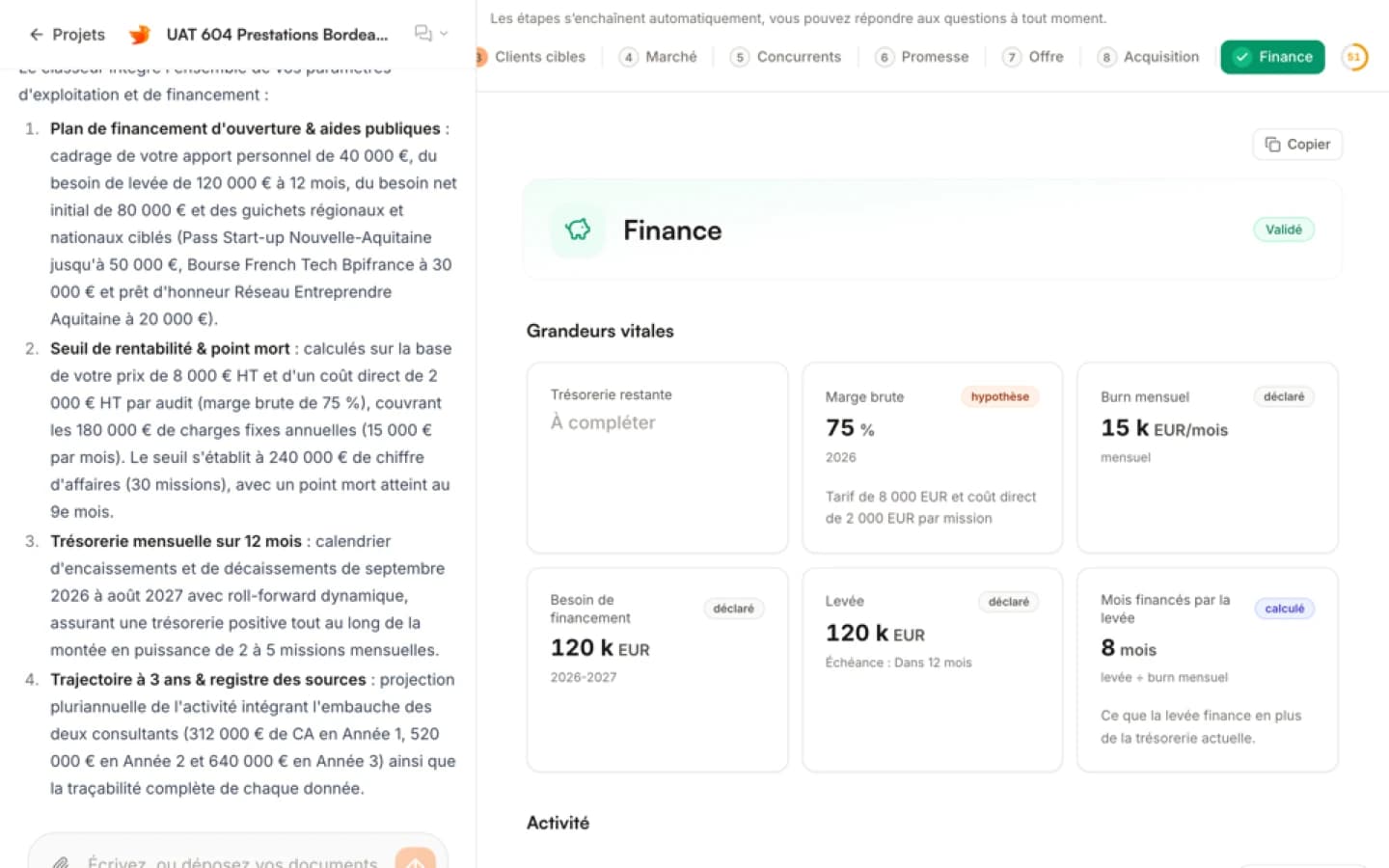
Building an organized, defensible company narrative requires connecting strategic assumptions directly to verified documentation. Within Ember, the Fund Your Growth workspace provides an architecture where founders structure their project hypotheses, legal baselines, and financial plans in one unified context. With organized data rooms and clear documentary verification, teams arrive at investor discussions fully prepared, ensuring that shifting administrative burdens never derail strategic execution.
Sources
- Beneficial Ownership Information Reporting
- FinCEN Permanently Ends Beneficial Ownership ...
- Beneficial Ownership Information Reporting Requirement ...
- FinCEN, FinCEN Permanently Ends Beneficial Ownership Reporting Requirements for Millions of Small Business Owners : source S1
- Ember Finance ta croissance, stratégie de financement
FAQ
Fund Your Growth
Connect strategy, proof and funding
Turn project assumptions into defensible decisions and next actions.