
Definition
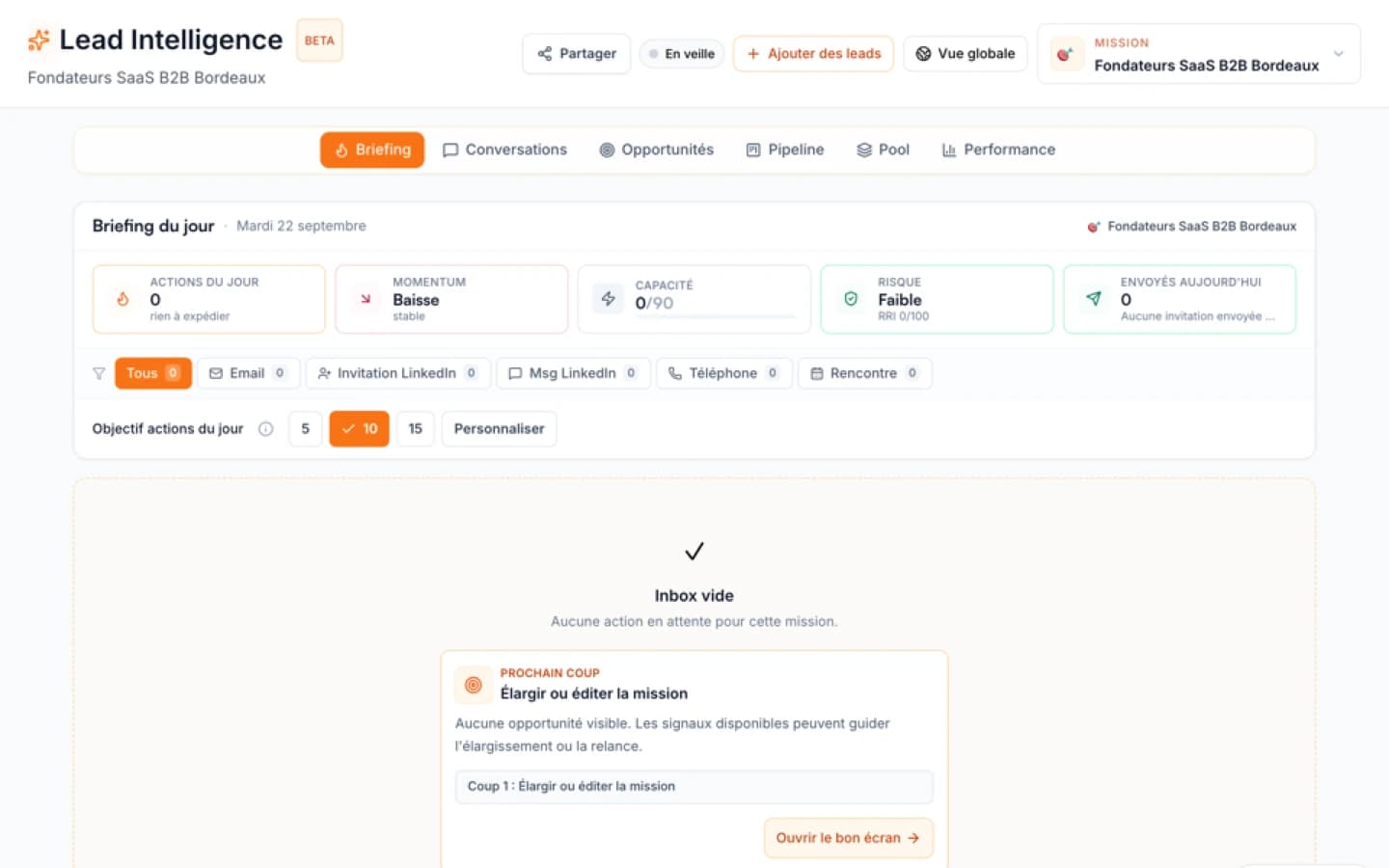
In the modern Business-to-Business (B2B) sales landscape, static lead scoring models are no longer sufficient. Traditional scoring rubrics often fail because they assign arbitrary weights to channels rather than evaluating actual buying intent. According to an analysis of modern sales strategies by Monday, the multi-channel reality of LinkedIn interactions, email replies, event scans, and product usage means sales teams must look for evidence that actually predicts a closed-won deal rather than simply tracking activity volume. For sales teams and early-stage companies, this complexity raises critical operational questions. How does a founder qualify B2B leads without a sales team? Without a dedicated army of Sales Development Representatives (SDRs) to manually filter through databases, founders must rely on intelligent systems that evaluate opportunity readiness automatically. When considering who should an early-stage founder contact first, the answer lies in identifying accounts that exhibit both a tight fit with the Ideal Customer Profile (ICP) and active external signals, rather than blindly building a prospect list from scratch. Many traditional outbound sales for startups rely on legacy platforms designed for sheer volume. For example, Apollo reached 150 million dollars in annual recurring revenue, demonstrating how heavily the market has relied on volume-oriented prospecting, as reported by Apollo. However, as highlighted by Factors.ai, credit-based pricing models turn every action into a metered decision, where wasted exports and bounced emails compound costs as teams scale. To achieve effective lead qualification without the overhead of complex Customer Relationship Management (CRM) setups, teams need a system that makes priority explainable. This is where Lead Intelligence by Ember changes the approach. Instead of forcing teams to manage complex scoring rubrics, Lead Intelligence finds accounts from the mission ICP and signals, then verifies useful sources to make priority explainable from context, signals, and opportunity readiness, as detailed on the Lead Intelligence page. For teams working with existing databases, the platform prepares and imports up to 3,500 valid contacts from Excel or CSV files into the Pool, allowing users to review file readiness with search and pagination by 50 before enriching up to 200 contacts in a single wave, showing progress. This ensures that outbound sales efforts are directed only at the conversations that deserve attention right now.
To place this decision in context, the Knowledge guides for sales brings together deeper guidance on the same field.
Why this category exists
The traditional Business-to-Business (B2B) prospecting playbook is facing a fundamental crisis of noise. For years, outbound sales for startups and established enterprises alike relied on a simple formula: buy a massive database, extract thousands of records, and load them into a Customer Relationship Management (CRM) system to run automated email sequences. This volume-first approach has historically been dominated by platforms like Apollo, which reached 150 million dollars in annual recurring revenue by making outbound activity highly efficient, according to Apollo. However, this model introduces significant friction for modern sales teams. Credit-based pricing structures turn every step of lead qualification into a metered transaction. As highlighted by industry analyses of Apollo alternatives on Factors.ai and Coldreach, the compounding costs of exporting, enriching, and re-verifying stale data can quickly drain budgets, especially when scaling from a single user to a larger team. When a sales pipeline is flooded with unverified contacts, Sales Development Representatives (SDRs) spend more time managing bounced emails and cleaning databases than having actual conversations. This environment of high noise and metered data is why a new category of context-driven prioritization has become essential. Early-stage companies cannot afford to waste resources building a prospect list from scratch using outdated, static criteria. When considering how does a founder qualify B2B leads without a sales team, the solution is not to buy more contact credits, but to deploy intelligent systems that evaluate actual buying signals and opportunity readiness. For founders wondering who should an early-stage founder contact first, the priority should always be accounts that exhibit active, verifiable intent. Instead of guessing which channels matter most, modern platforms analyze multi-channel signals to make the priority behind every sales decision fully explainable. For example, Ember's Lead Intelligence capability allows teams to import up to 3,500 valid contacts from a spreadsheet, evaluate the readiness of the file locally with pagination by 50 and enrich up to 200 contacts in a single wave that shows progress. By shifting the focus from raw volume to explainable priority, founders and sales teams can protect their budgets and focus their energy exclusively on the conversations that are ready to move forward.
How it works
To successfully execute outbound sales for startups and scale B2B prospecting without a massive army of Sales Development Representatives (SDRs), modern sales teams must shift from volume-based blasting to intent-driven prioritisation. Traditional outbound playbooks often treat lead qualification as a game of sheer numbers. For example, Apollo reached 150 million dollars in annual recurring revenue, by helping teams scale their outbound activity efficiently, as reported by Apollo. However, this high-volume approach comes with significant trade-offs. Credit-based pricing models turn every single action into a metered decision, meaning that exporting contacts, enriching records, and verifying emails each consume credits, compounding costs as teams scale, according to analyses of Apollo alternatives by Factors.ai and Coldreach. When buying signals span across multiple channels, a modern sales pipeline requires a smarter way to qualify B2B leads early. How does a founder qualify B2B leads without a sales team? The answer lies in replacing arbitrary channel-weighting rubrics with a system that evaluates actual buying intent and opportunity readiness. Instead of spending hours manually filtering databases, founders can leverage agentic workflows to automatically connect business context with market signals. This is where Lead Intelligence from Ember transforms the process of building a prospect list from scratch. The workflow begins by reusing your existing Business Plan, Ideal Customer Profile (ICP), offer, and strategy to establish a deep, shared context for your sales mission. Ember then discovers accounts that match this specific ICP and active signals, verifying useful sources to ensure high-quality targeting. You can prepare and import up to 3,500 valid contacts from an Excel or Comma-Separated Values (CSV) file directly into the workspace, where a local score measures file readiness with pagination by 50 and one wave can enrich up to 200 contacts with visible progress. Once the data is in place, the system classifies these accounts into clearly explained opportunities to watch, act on, or set aside. This makes the priority of every lead fully explainable based on context, signals, and opportunity readiness. For an early-stage founder wondering who to contact first, the system removes the guesswork by proposing the exact next action, the most logical channel, and the right messaging angle for each lead. This ensures that cold outreach is always grounded in context, allowing small teams to achieve the precision of an enterprise sales operation without the overhead.
To explore this point further, Full-Cycle Sales Calendar: Serve Buyers and Refill Pipeline details a step directly related to this decision.
Difference from the classic approach
The classic approach to B2B prospecting relies heavily on raw volume and database filtering. Platforms like Apollo operate as traditional sales engagement systems where teams define an ideal customer profile (ICP), build lists from a massive contact database, and sequence outreach across multiple channels. This model has clear strengths for established teams that know their ICP cold. Indeed, Apollo reached 150 million dollars in annual recurring revenue, by making outbound activity highly efficient Apollo. However, the major tradeoff is that credit-based pricing turns every action into a metered decision where exporting, enriching, and verifying contacts each consume credits, causing costs to climb with usage https://www.factors.ai/blog/top-apollo-io-alternatives-for-b2b-sales-teams.
For early-stage companies, this volume-first method creates significant friction. When considering how to qualify B2B leads early, founders often ask: how does a founder qualify B2B leads without a sales team? In the classic setup, building a prospect list from scratch and running lead scoring requires dedicated Sales Development Representatives (SDR) to clean up the noise. Without an SDR team, a founder attempting cold outreach is forced to spend hours manually validating contacts in their Customer Relationship Management (CRM) system. When deciding who should an early-stage founder contact first, relying on generic channel-based scoring often leads to wasted effort because traditional rubrics weight the channel itself rather than actual buying intent https://monday.com/blog/crm-and-sales/b2b-sales-lead-generation/.
Lead Intelligence shifts the focus from credit-metered volume to contextual relevance. Instead of forcing teams to pay for blind exports, it finds accounts based on the specific mission ICP and signals, and then verifies useful sources to ensure accuracy https://ember.do/en/ai-lead-intelligence. This approach makes priority explainable from context, signals, and opportunity readiness, allowing sales teams to understand exactly why a lead is prioritized before they reach out https://ember.do/en/ai-lead-intelligence. To streamline the transition from legacy files, Lead Intelligence prepares and imports up to 3,500 valid contacts from Excel or CSV into the Pool, where a local score measures file readiness with pagination by 50, and can enrich up to 200 contacts in a single wave with visible progress. This ensures that the sales pipeline is built on verified intent rather than unguided volume.
Concrete example
To understand how this works in practice, consider a Business-to-Business (B2B) sales team trying to navigate the noise of modern multi-channel signals. In traditional outbound sales for startups, teams often rely on volume-heavy platforms. For instance, Apollo has built a highly efficient outbound engine, reaching $150 million in annual recurring revenue, according to financial data published by Apollo. However, the tradeoff is that credit-based pricing turns every action into a metered decision where exporting contacts, enriching records, and verifying emails each consume credits, compounding costs as usage grows, as described by Factors.ai. This volume-centric approach often forces teams to assign arbitrary weights to channels rather than evaluating actual buying intent.
When looking at how to qualify B2B leads early, a more effective approach focuses on context and opportunity readiness. How does a founder qualify B2B leads without a sales team? Instead of hiring multiple Sales Development Representatives (SDRs) to manually filter databases, a founder can rely on intelligent automation that connects the dots between disparate signals. Who should an early-stage founder contact first? The answer is not simply the largest accounts in a database, but the specific prospects whose current business changes match your solution.
For teams building a prospect list from scratch, Lead Intelligence prepares and imports up to 3,500 valid contacts from Excel or Comma-Separated Values (CSV) files into the Pool, where a local score measures the readiness of the complete file before import, utilizing pagination by 50 and individual selection. One wave can enrich up to 200 contacts and shows progress. Instead of leaving sales teams to guess why a lead was scored a certain way, this system finds accounts from the mission Ideal Customer Profile (ICP) and signals, verifies useful sources, and makes the priority explainable from context, signals, and opportunity readiness (Ember). This ensures that cold outreach is guided by real relevance rather than raw database volume.
This approach also connects with No Marketing Ops: Build a Four-State B2B Lead Queue, which clarifies the next choice.
Limits
While modern Business-to-Business (B2B) prospecting relies heavily on multi-channel signals, every lead scoring and qualification system has structural limits. Traditional sales engagement platforms are highly effective at generating raw volume. For example, according to financial data from Apollo, Apollo reached 150 million dollars in annual recurring revenue, by making outbound activity highly efficient. However, this volume-first approach introduces significant friction for growing teams. As highlighted by industry analyses on Factors.ai, as usage grows, credit-based pricing models turn every export, enrichment, and verification into a metered decision where costs compound rapidly. This model often forces Sales Development Representatives (SDRs) to worry more about credit budgets than actual relationship building. When considering how does a founder qualify B2B leads without a sales team, relying solely on massive, unverified databases often leads to wasted effort and damaged domain reputation. For an early-stage founder deciding who should an early-stage founder contact first, the priority must be high-intent accounts matching their Ideal Customer Profile (ICP) rather than thousands of cold records. To address these challenges, modern platforms focus on intent-driven prioritization, though they also operate within clear technical boundaries. For instance, Lead Intelligence helps sales teams move away from blind cold outreach by focusing on opportunity readiness. The system prepares and imports up to 3,500 valid contacts from an Excel or Comma-Separated Values (CSV) file, supports pagination by 50 for precise selection, and can enrich up to 200 contacts in a single wave while showing progress. However, sales teams must understand the current limits of this technology. Ember does not automatically synchronise every CRM. Finally, the platform does not invent success metrics. Its performance proof only reports actual, persisted mission results, meaning it will honestly show when no signal was found rather than generating false positives. Successful lead qualification in 2026 requires balancing these automated insights with human judgment to keep the sales pipeline clean.
When to use it
Modern sales teams should implement advanced scoring and prioritisation at three critical inflection points in their sales pipeline.
The first scenario occurs when multi-channel signals become too noisy to manage manually. When buying signals come from LinkedIn, email replies, event scans, and product usage, traditional lead scoring rubrics often fail because they weight channels rather than actual buying intent, a common pitfall highlighted in Monday's guide on B2B sales lead generation. Instead of guessing which channel matters most, Business-to-Business (B2B) teams need a system that evaluates the underlying evidence of opportunity readiness to guide their cold outreach.
The second scenario is during outbound sales for startups, particularly when building a prospect list from scratch. When asking how does a founder qualify B2B leads without a sales team, the answer lies in leveraging intelligent systems that replace manual Customer Relationship Management (CRM) data entry and tedious list cleaning. For an early-stage founder wondering who to contact first, the priority must be accounts that match a highly defined Ideal Customer Profile (ICP) and display active signals, rather than a generic database export.
This is where Lead Intelligence by Ember becomes essential for B2B prospecting. The system finds accounts from your mission ICP and signals, then verifies useful sources to ensure your outreach is grounded in reality. To streamline lead qualification, the platform prepares and imports up to 3,500 valid contacts from Excel or Comma-Separated Values (CSV) files into your pool, offering pagination by 50 for easy selection, and enriches up to 200 contacts per wave, with visible progress. This approach makes priority explainable from context, signals, and opportunity readiness, allowing lean teams to focus their energy on conversations that are actually ready to convert.
In practice, One Qualification Contract Across Every B2B Channel completes this framework with another angle on the same topic.
When not to use it
An advanced, context-driven approach to lead qualification and scoring is not always the right choice for every business stage or sales strategy. First, if your primary objective is raw outbound volume rather than precision, traditional sales engagement platforms are often sufficient. For companies that already know their Ideal Customer Profile (ICP) cold and want to execute massive, linear cold outreach campaigns, standard database tools work well. For instance, Apollo reached 150 million dollars in annual recurring revenue, by making high-volume outbound activity highly efficient, as documented by Apollo. If your sales pipeline relies entirely on sending thousands of emails a day without needing to interpret complex buying signals, you do not need to invest in multi-channel scoring. However, sales teams must consider that credit-based pricing models turn every single export and enrichment into a metered decision, which can quickly compound costs as teams scale, according to practitioner insights on Factors.ai. Second, if you are in the ultra-early stages of building a prospect list from scratch, automated scoring systems can introduce premature complexity. Founders often ask: How does a founder qualify Business-to-Business (B2B) leads without a sales team? The answer lies in manual, unscalable conversations rather than automated software. At this point, the critical question of who should an early-stage founder contact first is best answered by targeting warm personal connections, former colleagues, or a small, hand-picked list of high-intent accounts. Trying to implement a multi-channel lead scoring rubric when you have no historical sales data or active marketing channels will only result in arbitrary weighting. As highlighted in a guide on B2B prospecting by monday.com, many traditional scoring rubrics end up weighting channels rather than actual buying intent, which creates noise instead of clarity for a small team. Finally, context-driven prioritisation is ineffective if you do not have basic contact data to feed into the system. Lead Intelligence lets you prepare and import up to 3,500 valid contacts from an Excel or comma-separated values (CSV) file, measure file readiness with a local score, and enrich up to 200 contacts per wave with visible progress, but this workflow requires you to have a starting list or a clear definition of your target market. If you have not yet validated your value proposition or collected any initial customer data, you should focus on basic market research and manual customer discovery before attempting to score or prioritise opportunities.
Honest relationship to Ember
How does a founder qualify B2B leads without a sales team? When an early-stage company lacks a dedicated Sales Development Representative (SDR) or a complex Customer Relationship Management (CRM) setup, the burden of lead qualification falls entirely on the builders. Instead of manually parsing fragmented signals across LinkedIn, email replies, and event scans, modern teams use Ember to automate the heavy lifting of b2b prospecting. Most traditional scoring rubrics weight channels rather than actual buying intent, as highlighted in a guide on Monday.com, which makes outbound sales for startups highly inefficient.
Ember addresses this challenge directly through its Lead Intelligence capability. The platform finds accounts from your mission Ideal Customer Profile (ICP) and signals, then verifies useful sources to ensure your outbound sales efforts are grounded in reality (Lead Intelligence). By monitoring signals about people and companies to keep your context current, it prioritises opportunities from the available context rather than relying on static, outdated lists (Lead Intelligence). This context-driven approach makes the priority of each lead explainable from context, signals, and overall opportunity readiness (Lead Intelligence).
For teams building a prospect list from scratch, Lead Intelligence prepares and imports up to 3,500 valid contacts from Excel or CSV files into the Pool. Before you commit to an import, a local score measures the readiness of the complete file, allowing you to search, paginate by 50, and make individual selections. A single wave can enrich up to 200 contacts and shows progress. If you prefer to source prospects directly from social networks, you can also search and import profiles through LinkedIn or Sales Navigator from a connected account (Lead Intelligence).
This workflow is designed to deliver rapid, observable value to your sales pipeline. With usable targeting context, the first prioritized leads can appear in about 30 minutes. After the mission concludes, the system makes the first value actually produced by the mission visible by showing the contacts analysed, signals detected, and priority actions actually recorded by Ember (Lead Intelligence). This transparency ensures that founders and sales teams know exactly who to contact first without wasting time on cold outreach to cold accounts.
Before deciding, Manual Lead Scoring With Overrides for Small B2B Teams helps connect this method with adjacent priorities.
Sources and methodology
To understand how a founder can qualify Business-to-Business (B2B) leads without a sales team, our methodology examines the transition from manual, volume-heavy outbound sales for startups to context-driven lead qualification. When determining who to contact first as a founder to build a healthy sales pipeline without a complex Customer Relationship Management (CRM) setup or a dedicated Sales Development Representative (SDR), traditional lead scoring systems often fall short because they rely on static lists rather than current buying signals. According to an analysis of B2B sales lead generation strategies on Monday.com, traditional scoring rubrics often weight channels rather than actual buying signals, which fails to reflect a multi-channel reality where signals span LinkedIn, email replies, event scans, and product usage. For teams focused on raw volume when building a prospect list from scratch, traditional platforms offer immediate scale. For example, Apollo reached 150 million dollars in annual recurring revenue, by helping teams build lists and sequence outreach according to data published on Apollo. However, as documented by industry analyses on Factors.ai, credit-based pricing models turn every export, enrichment, and verification into a metered decision, which can raise costs as usage grows. Our evaluation of modern B2B prospecting tools focuses on how platforms resolve this tension between volume and precision, moving away from generic cold outreach. For instance, Ember designed its Lead Intelligence capability to help founders and sales teams prioritize conversations based on explainable opportunity readiness rather than arbitrary channel weights. The platform allows sales teams to prepare and import up to 3,500 valid contacts from Excel or Comma-Separated Values (CSV) files into a central pool, where a local score measures the readiness of the file with search and pagination by 50 contacts, before enriching up to 200 contacts in a single wave that exposes its progress. By analyzing the Ideal Customer Profile (ICP) and active signals to verify useful sources, this methodology ensures that priority remains explainable from context, signals, and opportunity readiness.
Sources
FAQ
Free diagnostic
Test your sales file
Drop an Excel or CSV and check its readiness without sending its rows to Ember.