
Acquiring commercial contact databases does not transfer regulatory accountability to the vendor. Under European data protection standards, an enterprise that acquires or licenses third-party prospect data remains directly liable for the validity of the underlying consent and the lawfulness of the data collection. When a vendor relies on misleading opt-in forms or unverified collection chains, the purchasing organization faces regulatory enforcement for deploying those contacts in its campaigns.
Organizations building outbound pipelines often assume that contractual representations from data brokers shield them from downstream enforcement. Recent enforcement actions by data protection authorities confirm the opposite. Due diligence on data provenance is an operational necessity, not an optional safeguard.
The Solocal Injunction: Why Buyer Liability Cannot Be Contracted Away
On September 24, 2026, the French Data Protection Authority (CNIL) published its closure of the injunction against Solocal Marketing Services, based on deliberation SAN-2026-012 adopted on September 17, 2026, on the official CNIL enforcement portal. That decision followed a fine of 900,000 euros issued in May 2025 for failures surrounding the collection and demonstration of consent for individuals targeted by commercial prospecting campaigns, as detailed in the CNIL Solocal proceedings record.
Solocal acquired prospect data from third-party data brokers and publishers of contest and product-testing websites, known as initial collectors, and used those records to run prospecting operations on behalf of advertiser clients. The regulatory authority determined that misleading form layouts deployed by these data brokers prevented users from giving free and unambiguous consent.
To resolve the injunction, Solocal established an internal verification system combining automated analysis of partner collection forms with human review. While the CNIL closed the injunction after finding these procedural improvements satisfactory when scrupulously applied, the regulator explicitly reiterated a fundamental principle: the acquiring company remains fully responsible for the validity of consents collected on its behalf by external partners. If an invalid or deceptive collection form bypasses internal controls, the liability rests squarely on the enterprise utilizing the records.
This regulatory stance dismantles the assumption that a vendor indemnification clause protects an outbound marketing campaign. For any buyer acquiring contact databases, partner negligence becomes the buyer's direct compliance exposure.
Indirect Collection Rules: The Thirty-Day Transparency Mandate
When prospect data is not collected directly from the individual, organizations operate under the strict regime of indirect collection. Under guidelines issued on July 29, 2019, on CNIL guidance for informing individuals and ensuring transparency, data controllers acquiring records through partners, data brokers, or publicly accessible sources must inform the individual as soon as possible. This notification must occur at the latest during the first communication, and no later than one month after obtaining the data.
This indirect collection notice must supply several specific details:
- The identity and contact details of the data controller.
- The precise purposes and legal basis of the processing.
- The categories of personal data processed and their retention period.
- The specific source of the data, explicitly stating whether it originated from publicly accessible sources.
- Instructions on how the recipient can exercise their rights to access, rectification, and objection.
Additionally, under the CNIL guidance dated December 5, 2022, regarding the sale of customer prospect files, the transparency notice must specifically state the exact commercial name of the company that sold or transferred the contact file. Every outbound message, regardless of channel, must provide an uncomplicated, direct mechanism for the individual to refuse further communications.
While business-to-business (B2B) outreach across parts of Europe can rely on the legitimate interest legal ground under Article 6(1)(f) of the General Data Protection Regulation (GDPR) rather than strict prior opt-in consent, that flexibility applies only when the communication relates directly to the recipient's professional role. It does not waive the transparency mandate: the first touchpoint must still disclose where the professional email or telephone number was sourced and offer an immediate right of objection.
Auditing the Partner Data Supply Chain
Evaluating an external data vendor requires examining the exact mechanics of their collection practices rather than accepting general marketing claims. Outbound sales leaders working with the frameworks outlined in the Knowledge guides for sales must subject prospective data suppliers to verifiable technical and procedural criteria.
| Due Diligence Area | Verification Requirement | Compliance Indicator |
|---|---|---|
| Initial Collection Formats | Direct inspection of publisher forms and interface flows | Unambiguous checkboxes, absence of pre-ticked selections, clear partner listings |
| Source Traceability | Granular metadata for every exported lead | Documented origin timestamp, domain source, and explicit collection method |
| B2B Role Relevance | Verification of corporate domains and professional titles | Data restricted to professional context, excluding personal email domains |
| Suppression Handling | Synchronization with global do-not-contact registries | Active exclusion of opted-out profiles and automated removal requests |
When acquiring cold lists, the safest operational posture assumes that vendor compliance documentation may fail an external audit. If the provider cannot furnish sample screenshots of active capture interfaces, clear logs of consent timestamps, or verified public sources for professional addresses, incorporating those files into an active CRM creates immediate operational risk.
Operationalizing Responsible Data Ingestion
Acquiring lists is only the first half of the exposure chain; the second half occurs when those contacts enter active outbound workflows. Sales operations teams that import external spreadsheets often spread unvetted records across automated sequences, triggering deliverability crashes and regulatory complaints.
Teams executing targeted outreach must enforce strict technical constraints on their acquisition workflows:
- Verify provenance before import: When importing CSV or Excel files from external directories, verify that the source attribute is preserved at the contact level. If an address originates from an exported company registry, that specific registry should be named in the first outreach email.
- Centralize global suppression: Opt-out requests must apply permanently across every channel. When a contact requests removal, suppression should bar that email address, root domain, and social profile from future campaigns.
- Audit data age and relevance: Maintaining inactive, unresponsive contact data across years introduces regulatory liabilities without commercial upside. Retention schedules should systematically identify and surface dormant records for review.
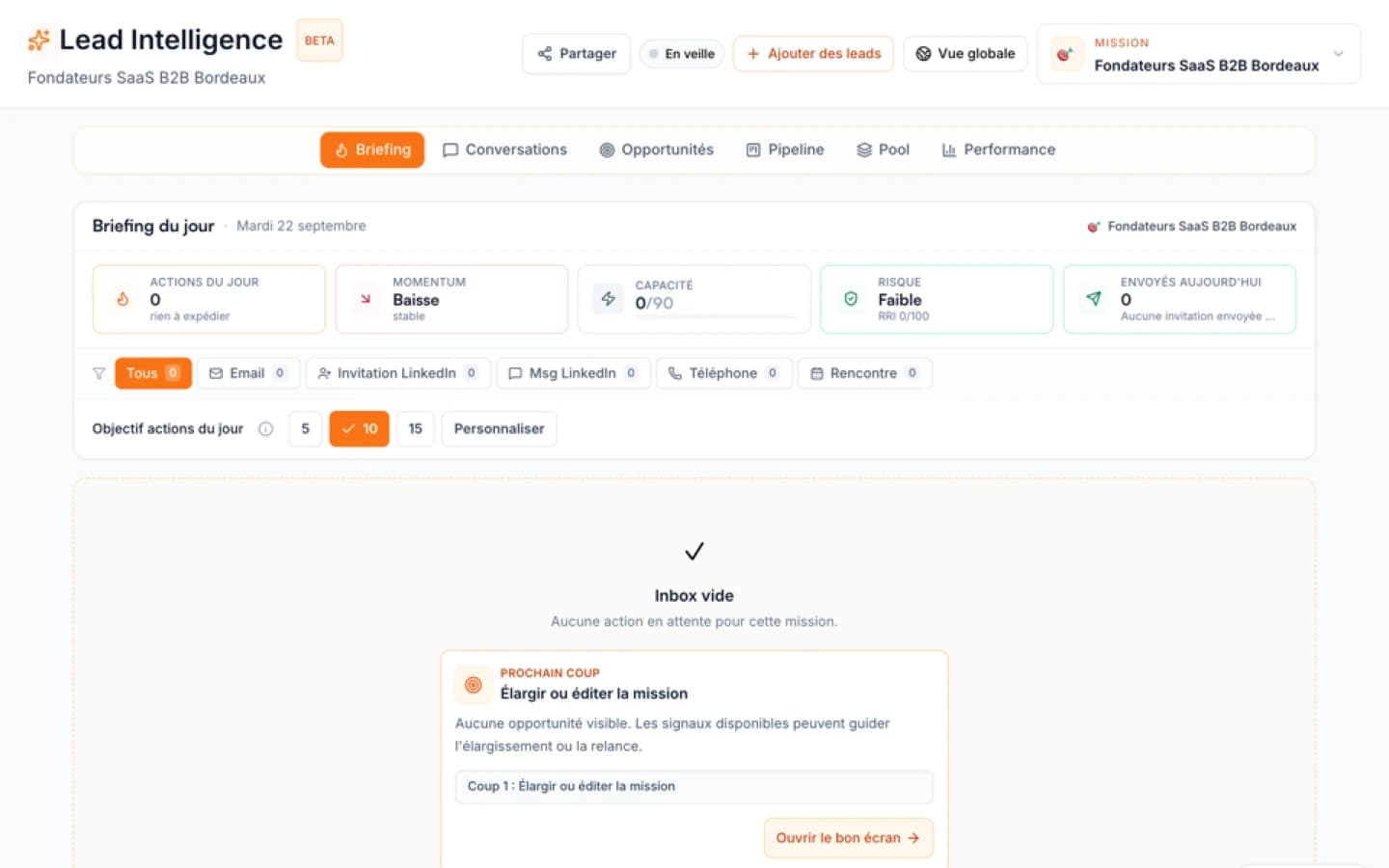
In Ember, list management and acquisition intelligence reflect this division of responsibility. According to the Ember Lead Intelligence prospect data terms updated October 26, 2026, client users act as the independent data controllers who configure their missions, select their targets, and determine message channels under legitimate interest.
Teams importing external files into Ember can upload CSV or Excel lists of up to 3,500 rows, 10 megabytes, and 200 columns, processed in batches of 500 contacts. Rather than triggering unmonitored automations, outreach messages require manual confirmation and scheduling by design, with a ten-second cancellation window before transmission.
When a prospect is added to the do-not-contact list within Ember, pending actions and follow-ups are cancelled, monitoring pauses, and future deliveries to that email address, domain, or LinkedIn profile are blocked. Data is retained for the active life of the mission, supported by an internal daily audit check that alerts team administrators to prospect records that have had no contact for more than three years.
Purchasing prospect lists is fundamentally a supply chain decision. High-performing outbound operations treat data brokers not as legal shields, but as suppliers whose collection practices directly dictate the company's regulatory standing. Verifying source provenance and maintaining transparent disclosure at first contact remains the only defensible strategy for scaling outbound conversations.
Sources
- CNIL, clôture de l'injonction Solocal Marketing Services (septembre 2026) : l'acheteur de données reste responsable du consentement recueilli par ses partenaires: source S1
- CNIL, informer les personnes et assurer la transparence: source S1
- CNIL, vente de fichiers clients : les règles: source S2
- Page publique Lead Intelligence : reçu S8
- Page juridique données prospects : reçu S9
FAQ
Free diagnostic
Test your sales file
Drop an Excel or CSV and check its readiness without sending its rows to Ember.