
Choosing between Hunter and Zeliq comes down to your outbound channel strategy and how each platform charges for contact data. If your team relies primarily on email outreach at scale and needs domain searches with list cleaning, Hunter provides high monthly credit volumes with shared workspace access across all subscription tiers. If your go-to-market motion relies on cold calling alongside email, Zeliq bundles mobile phone discovery into a unified credit wallet and sequence workflow.
The decision is not just about price. It is about how each vendor prices different data types, how credits expire, and whether you pay per seat or per credit pool.
Core Differences: Email Focus vs Multichannel Discovery
Hunter focuses on finding and verifying professional email addresses tied to corporate domain names. Its engine is designed to map company structures, discover email patterns, and verify deliverability before your outreach begins. You can review how email deliverability intersects with international outreach regulations in our overview of UK PECR Rules for B2B Cold Email and Outbound Sales. Hunter also supports basic outbound sending sequences, but its core technical value remains the accuracy of email discovery and verification.
Zeliq approaches prospecting as an all in one outbound workspace. It integrates lead discovery, email lookup, mobile phone enrichment, and multichannel outreach sequences into a single workflow. Instead of buying an email finder and pairing it with a separate phone enrichment tool, sales teams can source both data types from one interface. However, mobile phone enrichment consumes credits at a significantly higher rate than email, which changes how quickly a team burns through its monthly allowance.
Understanding the Credit Economics: Hunter vs Zeliq
Credit models can obscure the real cost of contact data. Hunter separates discovery from verification, while Zeliq weights credits based on whether you request an email or a direct dial.
According to the official Hunter pricing page, finding an email costs 1 credit, while verifying an existing address costs 0.5 credit. Hunter offers a Free plan with 50 credits per month. Paid monthly plans start with Starter at 49 euros per month for 2,000 credits, Growth at 149 euros per month for 10,000 credits, and Scale at 299 euros per month for 25,000 credits. On annual billing, Hunter discounts rates by roughly 30 percent, charging 34 euros per month for Starter (408 euros billed yearly), 104 euros per month for Growth (1,248 euros billed yearly), and 209 euros per month for Scale (2,508 euros billed yearly). Hunter also grants all annual credits upfront for the entire year, providing 24,000 credits on Starter, 120,000 on Growth, and 300,000 on Scale.
By contrast, the Zeliq pricing page structures its credit wallet around multichannel enrichment. Enriching a mobile phone number costs 10 credits per lead, whereas enriching an email costs 1 credit. Zeliq provides a Basic plan at $0 that lets users add credits as they go. Its Starter tier costs $59 per user per month (or $47.2 per user per month billed annually with a 20 percent savings) and includes 750 credits per month. That monthly allocation translates to either 750 emails or 75 phone numbers per user. For larger organizations, Zeliq offers a Custom plan starting at $1.5k per user per year.
| Evaluation Metric | Hunter | Zeliq |
|---|---|---|
| Primary focus | Domain search and email verification | Multichannel enrichment and sequences |
| Entry paid price | 49 euros per month or 34 euros per month billed annually | $59 per user per month or $47.2 per user per month billed annually |
| Free entry option | Free tier with 50 credits per month | Basic tier at $0 with add on credits |
| Credit consumption | 1 credit per email found, 0.5 credit per verification | 1 credit per email, 10 credits per mobile phone |
| Expiration rule | Monthly credits reset and do not roll over; annual credits upfront | Credits never expire and roll over |
| Team seat structure | Unlimited users on all plans | Per user per month billing |
Hunter pricing details originate from the Hunter pricing page, while Zeliq pricing details are sourced from the Zeliq pricing page.
Operational Tradeoffs: Team Seats, Rollover, and Outreach Limits
Beyond raw unit pricing, three operational mechanics dictate which tool fits your daily prospecting rhythm:
Seat Licensing vs Shared Workspaces
Hunter includes unlimited users across all subscription plans, as confirmed on the Hunter pricing page. A growth team with several sales development representatives and account executives can share a single Starter or Growth subscription without paying additional seat licenses.
Zeliq charges per seat. On its Starter tier, each user requires a separate license at $59 per month (or $47.2 per user per month on annual billing), according to the Zeliq pricing page. This model aligns costs with headcount. If you run a larger outbound team where every representative needs independent sequence management and dedicated quota, per seat pricing is standard. If you only need a shared data utility to enrich lists before importing them into your customer relationship management platform, per seat fees multiply quickly.
Credit Rollover and Expiration
Credit waste is an overlooked cost in outbound sales. On Hunter monthly subscriptions, credits reset at the end of each billing cycle and do not roll over. If you do not exhaust your monthly pool, the remaining balance disappears. However, if you purchase an annual Hunter plan, all credits are delivered upfront for the entire twelve month period, allowing sales teams to absorb seasonal spikes without losing unused allocation.
Zeliq takes a different approach. As stated on the Zeliq pricing page, Zeliq credits never expire and roll over from month to month. This offers significant peace of mind for founders or lean teams who prospect in sprints rather than steady, daily volumes.
Dialing vs Inboxing
If your sales strategy requires cold calling, Hunter will not meet your needs on its own. Hunter does not provide direct mobile phone numbers; it is purely an email discovery and validation utility.
Zeliq is specifically architected for multichannel sales reps who want to alternate between emails and phone touches. However, because each phone lookup costs 10 credits according to the Zeliq pricing page, cold calling teams will burn through a 750 credit Starter plan in exactly 75 phone lookups if no additional credits are bought. Teams choosing Zeliq for phone data must budget for additional credit consumption. For teams evaluating broader pipeline operations, exploring the Knowledge guides for sales can help clarify where multichannel touches generate the highest return.
Which Tool Fits Your Sales Motion?
Choose Hunter If:
- Your pipeline generation relies predominantly on cold email, domain level prospecting, and newsletters.
- You have multiple team members who need access to email enrichment without paying individual seat licenses.
- You already possess a dedicated dialer or sales engagement platform and simply require high volume, dependable email verification data.
- You prefer paying annually to receive large upfront credit allocations that cover seasonal campaign pushes.
Choose Zeliq If:
- Your outbound playbook combines direct phone outreach with email sequences inside one tool.
- You want the safety net of permanent credit rollover so that quiet months do not waste your software investment.
- You prefer an intuitive, modern interface that integrates search, enrichment, and multichannel execution without stitching multiple software subscriptions together.
- You operate as an individual founder or a small team where per seat pricing remains manageable.
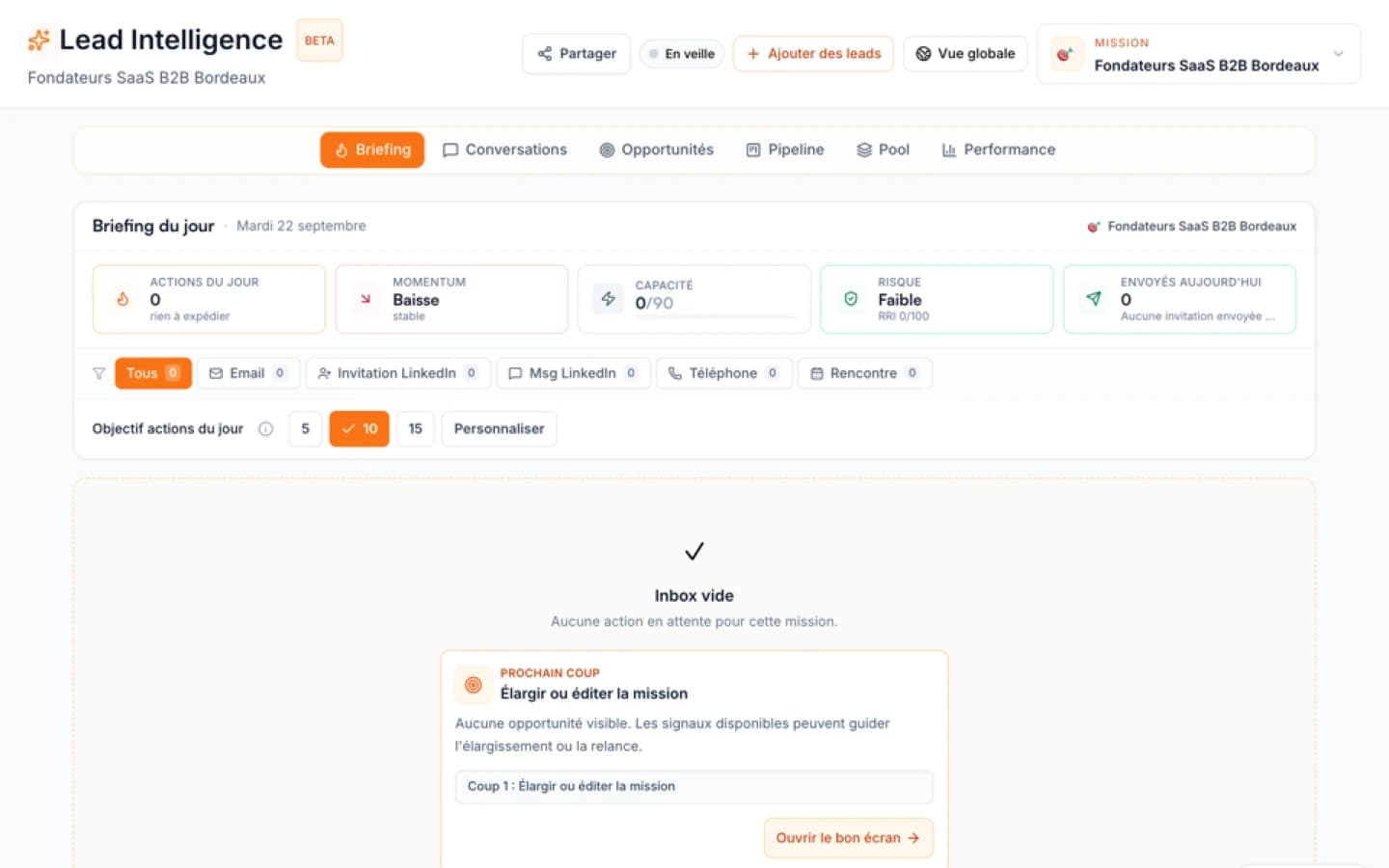
When prioritizing outbound accounts, data enrichment is only the first step. Knowing who to reach is useless if your team lacks clarity on whether an account has active buying intent. Modern go-to-market teams increasingly pair enrichment credits with contextual buyer intelligence. Solutions like Ember Lead Intelligence address this by identifying verified decision makers alongside timing signals, so you reach the right accounts before spending your enrichment credits.
Sources
FAQ
Free diagnostic
Test your sales file
Drop an Excel or CSV and check its readiness without sending its rows to Ember.