
Signal of the week
A failed first call costs twice: the time lost, and a prospect who will not book again any time soon. Yet it is often prepared in a few minutes, by rereading the prospect's website just before joining.
Gong analysed 519,000 recorded discovery calls to understand what goes with a good outcome. Two benchmarks come out of this analysis, published in July 2017 and updated in March 2026: the most effective calls uncover between three and four business problems, and asking between 11 and 14 questions over the call correlates with the greatest success. A second analysis by the same vendor, focused on calls with executives, finds that asking too many questions harms the sale when selling to the C-suite.
These numbers do not tell you what to ask. They mainly remind you that a good call is prepared around the prospect's problems.
Before the call: three checks
Why this account? Write in one sentence what links this prospect to your ideal customer: their business, their size, the situation that makes your offer useful. If you cannot, the call will feel like a random outreach.
Why now? Note the event that justifies the call: a hire, a tool change, an inbound request, a referral. Separate what you observed publicly from what the prospect told you. A public signal stays a hypothesis until it is confirmed during the call.
Who will be there? Check the person's role and what they can decide. With an executive, prepare fewer questions and get to the main problem faster, as Gong's analysis of C-suite calls suggests.
If one of the three answers is missing, there are two honest options: find the information before the call, or make it the first question of the call.
During the call: a three-step plan
- Problems before your offer. Have the prospect describe how they handle the situation today and what it costs them. Y Combinator gives the same advice for user interviews: do not introduce your idea too early, because it biases the answers, and listen rather than talk.
- Questions spread out. Prepare about a dozen questions, but ask them as the conversation unfolds rather than in a burst at the start. Keep two or three to check urgency and how the decision gets made.
- A dated next step. End with a precise action, with a date and an owner on each side: a second meeting with the right person, a document to send, a trial to scope.
Right after the call, write down what the prospect said in their own words, separate from your interpretations. That note prepares the second call.
The limits of these benchmarks
Gong's numbers come from a vendor that sells a call analysis tool. They describe a correlation between behaviours and outcomes on calls recorded by its customers, without a controlled experiment. Use them to review your own calls.
With Ember
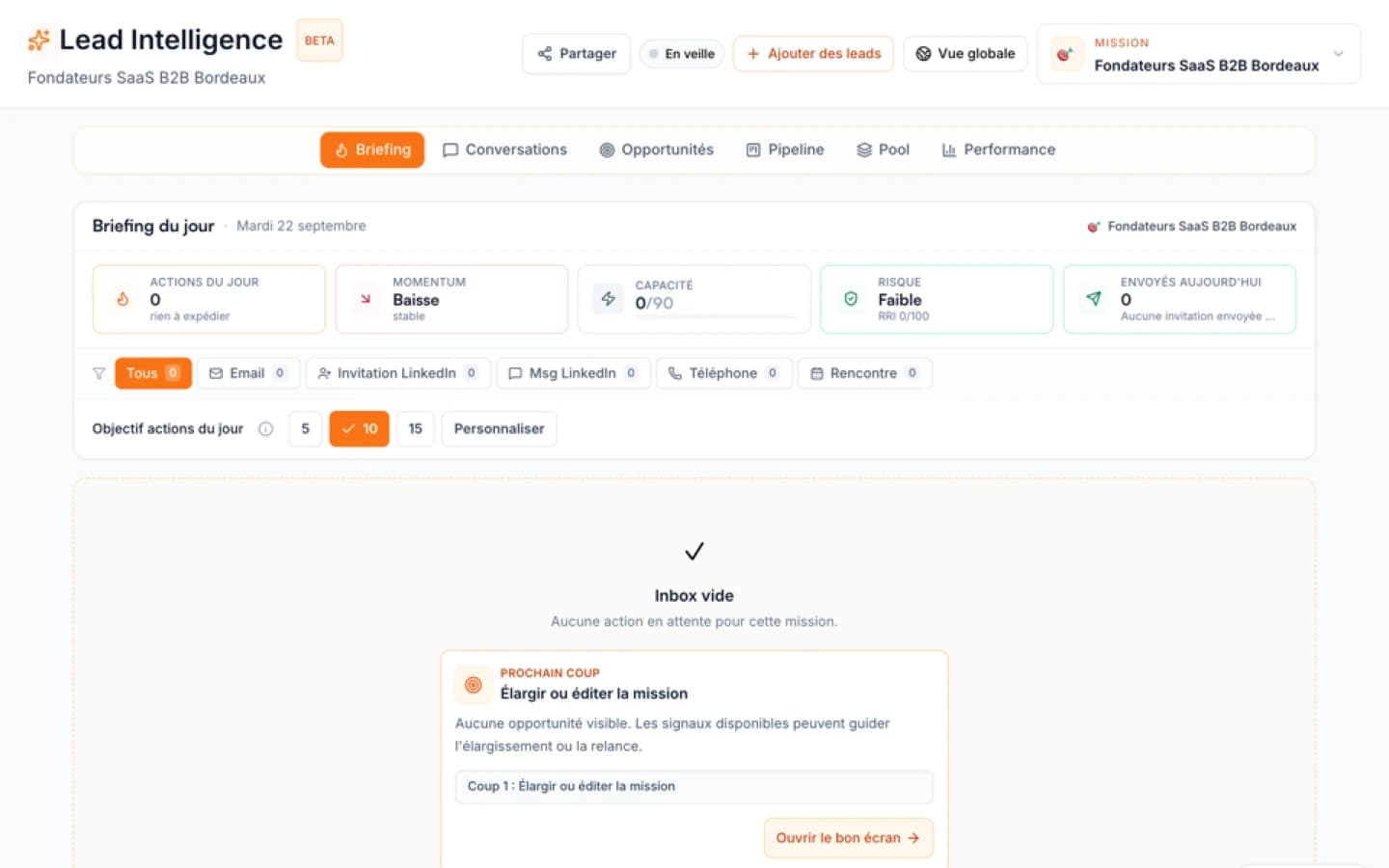
Lead Intelligence helps decide who to contact, why now and with which angle: the material of the first two checks. The Second Brain can prepare a meeting in a conversation, from the context you give it. The Meetings module, in beta and being finalised, prepares meetings and drafts the summary from the transcript of the meetings you record.
Further reading
- Qualify a B2B prospect without a score helps decide whether the prospect deserves the call.
- How to Structure B2B Customer Discovery Records? extends the post-call note.
- How to Run Effective Pre-Product Customer Discovery? details the interview method.
Sources
- Gong, "Mastering discovery calls to close deals effectively", Chris Orlob, published July 5, 2017, last modified March 4, 2026, accessed November 13, 2026: https://www.gong.io/blog/deal-closing-discovery-call
- Y Combinator, "How to talk to users", Gustaf Alströmer, no visible date, accessed November 13, 2026: https://www.ycombinator.com/library/Iq-how-to-talk-to-users
Sources
FAQ
Free diagnostic
Test your sales file
Drop an Excel or CSV and check its readiness without sending its rows to Ember.