
Traditional email marketing platforms like Mailchimp and Brevo are built for opt-in audience nurturing, not business-to-business (B2B) cold outreach. Importing an uncontacted prospect list into these services frequently triggers immediate account suspension, domain reputation damage, and disrupted marketing operations.
Cold outreach requires a fundamentally different technical architecture, legal posture, and messaging workflow than subscriber newsletter delivery. Understanding why legacy email service providers enforce strict bans on outbound prospect lists is the first step toward building an effective, compliant outbound acquisition stack.
Why Traditional Email Platforms Ban Cold Lists
Marketing email platforms operate primarily on shared delivery infrastructure. When an email service provider (ESP) sends campaigns for thousands of businesses through the same IP addresses, a spike in spam complaints or high bounce rates from one sender directly degrades inbox placement for every other company sharing that infrastructure.
Because unsolicited cold emails inherently generate higher bounce and complaint rates than opted-in newsletters, marketing platforms actively police contact sources.
The Contractual Reality: Brevo
Brevo explicitly details this restriction in its documentation. According to Brevo's Anti-spam Policy, lists of contacts that have been scraped on the internet, acquired, or purchased from a third party are strictly prohibited. Brevo enforces a zero-tolerance policy toward spam, justifying immediate account suspension as a necessary measure to protect shared IP addresses and domain reputations.
Furthermore, Brevo mandates that subscriber consent must be active and explicit, requiring an unchecked box that the contact manually checks, along with verifiable proof of opt-in for every contact on the list. Under Brevo's Terms of Service, versioned October 1, 2025, the sender carries full contractual responsibility for complying with applicable regulations, including CAN-SPAM and data protection standards, while the platform reserves the right to terminate access whenever an account threatens delivery metrics.
The Contractual Reality: Mailchimp
Mailchimp enforces an equally rigid policy. In Mailchimp's Acceptable Use Policy, last updated September 26, 2025, the platform prohibits uploading or sending email campaigns to purchased, rented, third-party, publicly available data, or partner lists of any kind.
Mailchimp relies on automated, dynamic vetting and scoring analysis alongside human review to flag imported lists before or during campaign execution. If automated abuse prevention systems detect patterns characteristic of cold prospect databases, such as unverified role-based emails or lack of prior engagement history, the platform routinely freezes the account.
Technical Architecture: Bulk Relays vs Individual Inboxes
The operational difference between newsletter delivery and cold prospecting is mechanical. Using the wrong tool produces poor deliverability and risks your core corporate domain.
Newsletter Architecture (Mailchimp / Brevo):
One Sender -> Marketing Platform Engine -> High-Volume Shared/Dedicated SMTP Relay -> Thousands of Recipients at Once

Outbound Prospecting Architecture:
One Sender -> Individual Business Inbox (Google Workspace / Microsoft 365) -> Native MX/SMTP Relay -> 1-to-1 Staggered Sending
Newsletter platforms route high-volume batches through mass Simple Mail Transfer Protocol (SMTP) relays. These emails carry marketing headers, list-unsubscribe headers, and tracking pixels designed for bulk communications. Receiving mail servers at companies like Google and Microsoft inspect these headers and immediately classify the messages as promotional mail or bulk newsletters, diverting them away from the primary inbox.
In contrast, legitimate B2B cold outreach relies on peer-to-peer delivery. Outbound messages must originate from an individual corporate mailbox (such as Google Workspace or Microsoft 365) via native account credentials. Messages must be staggered naturally over time rather than blasted concurrently, mirroring genuine human business correspondence.
When teams attempt to bridge this divide, they often turn to specialized outbound sales software. Readers evaluating dedicated sequencing tools can explore our breakdown of Lemlist vs Smartlead: Cold Email or Multichannel to see how modern deliverability engines operate.
Evaluating Alternatives: From Mass Blasts to Intelligence
Replacing newsletter platforms for cold acquisition is not simply a matter of finding a tool that allows raw contact uploads. Teams must balance contact verification, sending architecture, compliance safeguards, and conversation relevance.
| Approach | Typical Tooling | Best Use Case | Primary Operational Tradeoff |
|---|---|---|---|
| Inbound Email Marketing | Brevo, Mailchimp | Opt-in newsletters, product updates, transactional alerts | Strictly requires explicit prior opt-in; cold lists trigger account bans |
| Cold Sales Sequencers | Lemlist, Smartlead | High-volume cadence automation across secondary mailboxes | Risk of burning sender domains; high manual effort to personalize |
| Prospecting Intelligence | Ember Lead Intelligence | Account prioritization, timing signals, guided multi-channel outreach | Requires clear ideal customer profile; built for relevance rather than unvetted volume |
Traditional marketing tools like Brevo or Mailchimp remain the correct, cost-effective choice for customer onboarding, lifecycle marketing, and audience newsletters where explicit permission already exists. Admitting this distinction saves teams from misallocating software budgets.
However, when the objective is to start net-new conversations to Land Your First 10 Enterprise Customers, outbound teams require dedicated solutions built around individual mailboxes and verified business data.
Structuring Compliant B2B Prospecting
Modern outbound demands a disciplined operational framework that respects data protection laws and mailbox hygiene:
1. Separate Inbound Newsletters from Outbound Conversations
Never mix opt-in newsletter distribution with outbound sales efforts on the same subdomains. Maintain dedicated sending identities for cold outreach so that fluctuations in outbound spam rates never jeopardize vital transactional receipts, password resets, or subscriber newsletters.
2. Verify Every Record Before Sending
High bounce rates are the fastest trigger for automated platform flags. Run prospect lists through verification tools to confirm deliverability before loading them into any sending cadence.
3. Establish a Legal Grounding for Outreach
Under international regulations such as the General Data Protection Regulation (GDPR), business prospecting often relies on legitimate interest (Article 6(1)(f)) rather than explicit prior consent, provided the communication is strictly relevant to the recipient's professional role and an effortless opt-out mechanism is honored. Document your targeting criteria and maintain a rigorous, universal do-not-contact repository.
4. Prioritize Context and Timing Over Volume
Spam filters and business prospects both penalize generic, high-volume blasts. High-performing outbound teams replace generic email templates with contextual timing signals, engaging prospects when an executive hire, tech stack change, or strategic milestone justifies the conversation.
Moving Toward Signal-Led Outreach with Ember
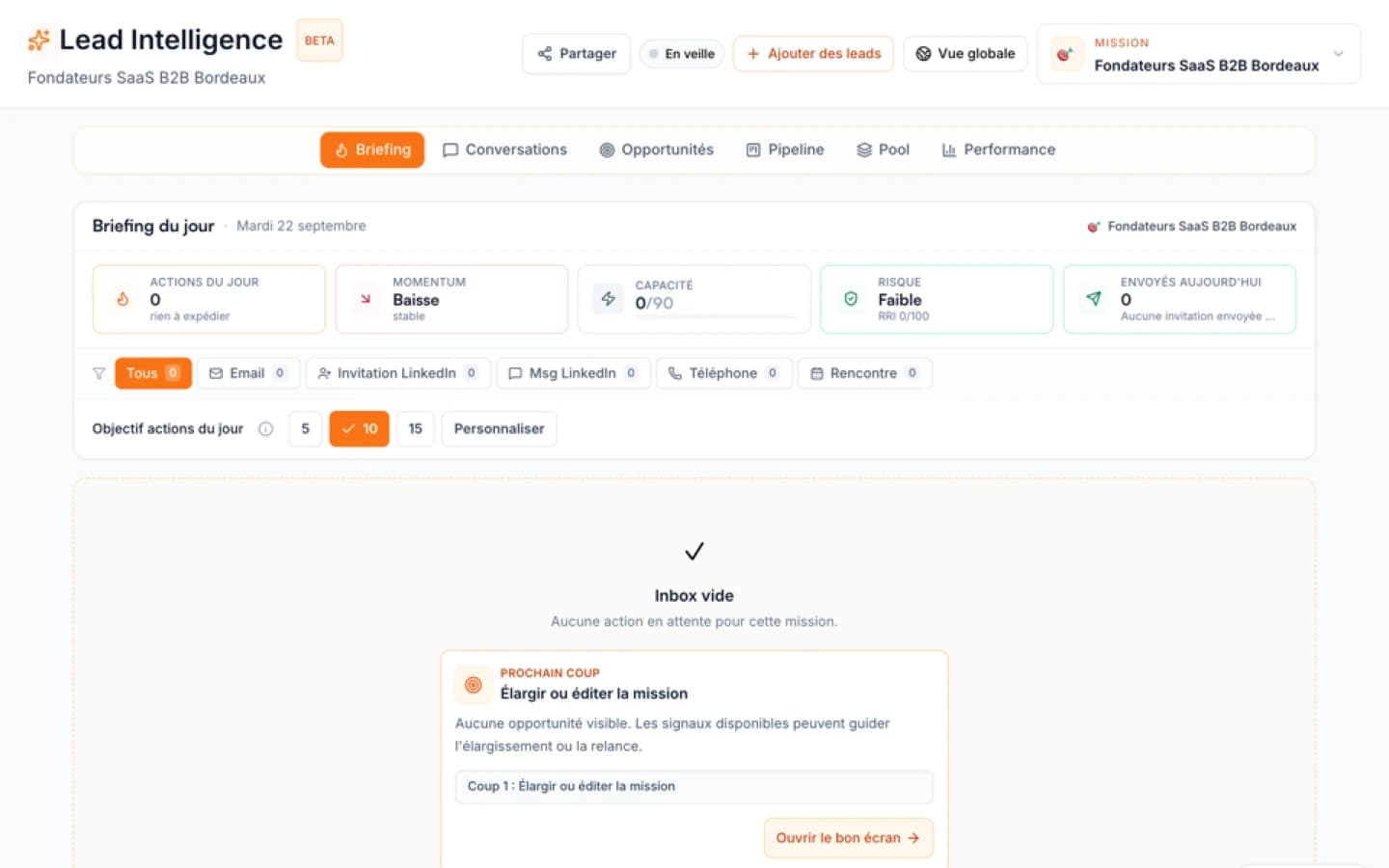
Rather than cycling through disconnected scrapers and cold email blasters, teams can run structured acquisition missions with Ember Lead Intelligence.
Ember anchors outbound discovery directly to your ideal customer profile, strategy, and business plan. Instead of encouraging indiscriminate mass volume, the platform identifies high-fit accounts, monitors public timing signals, and prioritizes when and how to engage.
To maintain compliance and deliverability:
- Native Mailbox Integration: Outbound emails route through your connected Gmail or Outlook accounts rather than shared bulk marketing relays.
- Human-in-the-Loop Sending: Ember prepares prioritized drafts and scheduled cadences, but sends are approved by the user, providing a 10-second cancellation window before transmission.
- Strict Opt-Out Handling: Adding a prospect to your do-not-contact list immediately cancels pending actions, halts automated follow-ups, pauses monitoring, and blocks future outreach across email, domains, and LinkedIn profiles, in alignment with Ember's prospect data rights framework.
By aligning acquisition with real business context rather than mass-blast mechanics, you protect your sender reputation while turning genuine market timing into meaningful customer meetings.
Sources
- Politique d'utilisation acceptable
- Politique Anti-Spam | Brevo
- Legal Information
- Brevo's Anti-spam Policy, consent and list-sourcing rules
- Brevo's Terms of Service, sender compliance obligations
- Mailchimp's Acceptable Use Policy, what senders may not do
- Page publique Lead Intelligence : reçu S8
- Page juridique données prospects : reçu S9
FAQ
Free diagnostic
Test your sales file
Drop an Excel or CSV and check its readiness without sending its rows to Ember.