
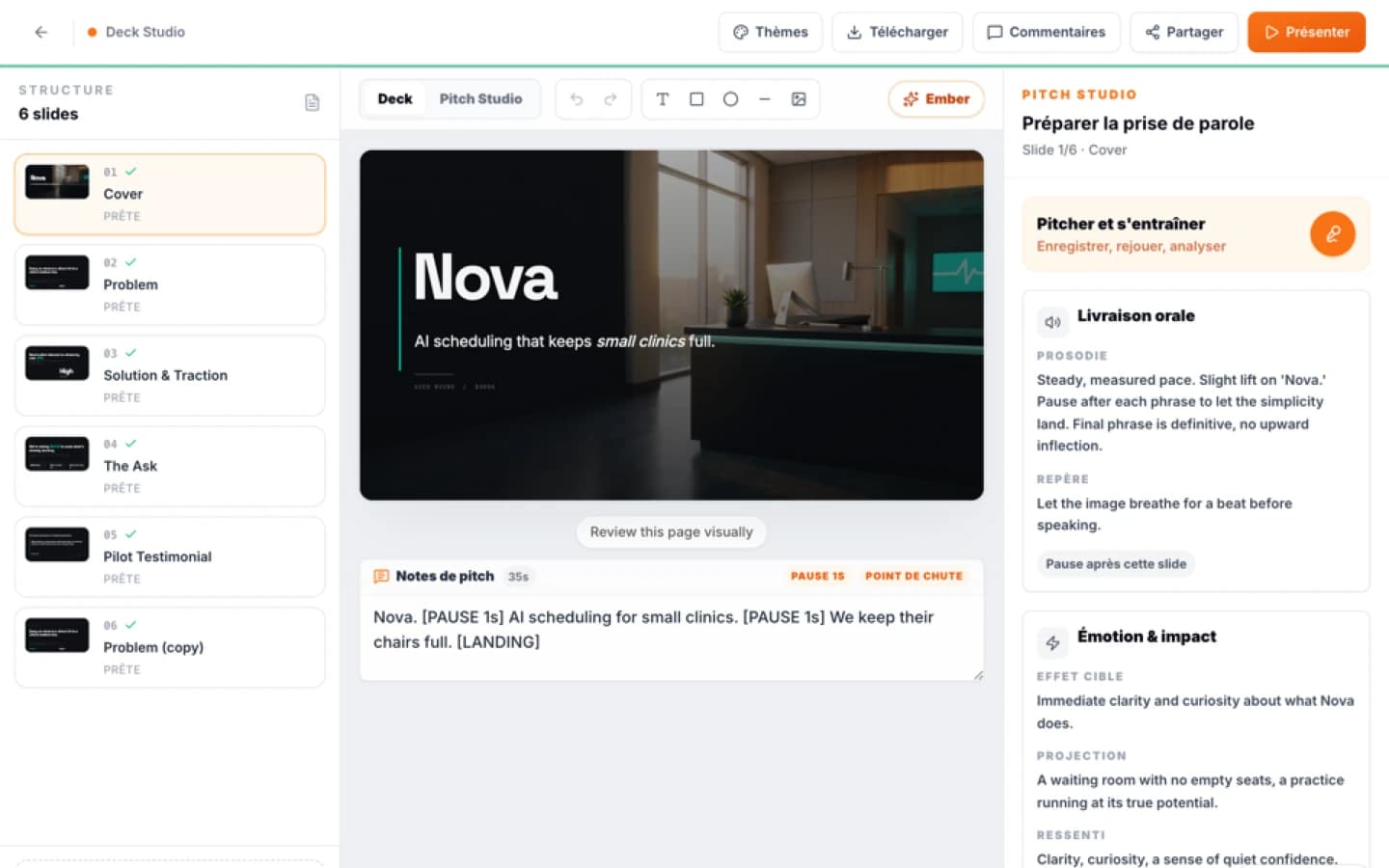
Choosing between Decktopus and Gamma for business-to-business (B2B) presentations comes down to a fundamental operational trade-off: rigid slide automation with structured oral practice versus flexible, responsive web canvases designed for interactive reading. Both platforms rely on artificial intelligence (AI) to eliminate blank-page friction, yet they operate on distinct credit currencies, layout philosophies, and export pipelines.
When delivering high-stakes stakeholder decks, understanding how each tool manages generation quotas, slide mechanics, and Microsoft PowerPoint export fidelity is essential before committing team budgets.
AI Credit Economics and Usage Limits
AI presentation makers manage server compute through credit allowances, but their replenishment mechanics differ substantially between one-time starter allotments and monthly subscription pools.
According to the official Gamma Pricing page, Gamma provides a Free tier with 400 starter credits that do not refill, limiting prompts to a maximum of 10 slides each. For ongoing work, Gamma structures its paid subscriptions around monthly recurring allowances: the Plus plan provides 1,000 monthly credits for 8 euros per seat monthly when billed annually at 96 euros per year, or 10 euros per month on monthly billing, allowing up to 100 slides per prompt Gamma Pricing. The Pro plan costs 18 euros per seat monthly when billed annually at 216 euros, or 24 euros on monthly billing, and grants 4,000 monthly credits along with custom branding and access to application programming interfaces (APIs) Gamma Pricing. Teams needing heavy compute can select the Ultra tier, which delivers 20,000 monthly credits for 77.33 euros per seat monthly on annual billing or 86 euros monthly Gamma Pricing.
Decktopus structures its credit economy around presentation batches rather than raw token usage. On its public Decktopus Pricing tier, the Pro plan offers 750 AI credits per month, estimated by the vendor to cover approximately 150 slides, priced at 9.99 dollars per month when billed annually at 119.88 dollars, 19.99 dollars per month billed quarterly at 59.97 dollars for 3 months, or 24.99 dollars billed monthly. Decktopus allows paid accounts to purchase top-up credit packs that never expire and stack directly on top of monthly quotas Decktopus Pricing. For collaborative teams, the Business plan increases capacity to 1,000 AI credits per seat monthly, costing 19.99 dollars per seat monthly billed annually at 239.88 dollars per seat, 39.99 dollars monthly on quarterly billing, or 44.99 dollars on monthly billing Decktopus Pricing.
For business teams with unpredictable deck production spikes, Decktopus offers non-expiring credit add-ons that protect against sudden quota exhaustion. Gamma, by contrast, scales its recurring monthly limits higher on upper tiers, making Pro or Ultra more practical for teams embedding AI document creation across continuous publishing pipelines.
Card-Based Layouts versus Constrained Slide Forms
The canvas model dictates how much control authors retain over typography, white space, and visual density.
Gamma operates around fluid, scrollable cards. As documented in the Gamma Help Center, slides serve as the fundamental building blocks of presentations, documents, or web pages, with each slide functioning as a flexible canvas section. This modular design makes Gamma decks behave like living documents or micro-websites, adapting cleanly to mobile screens and vertical scrolling when shared via a live link. However, this flexibility can frustrate corporate presenters who require fixed aspect ratios and strict grid boundaries for executive reviews.
Decktopus approaches design from the opposite direction by removing layout decisions entirely. It asks users to supply an outline, document, or prompt, and then places content into predetermined design containers Decktopus. According to an independent Deckary Review, this automated templating enables non-designers to produce routine status updates in under 2 minutes, but the resulting templates frequently lack visual differentiation and do not support complex consulting visuals such as Gantt or Waterfall charts.
Where Decktopus stands apart from Gamma is oral delivery preparation. Decktopus includes an integrated rehearsal feature named Loop, which allows presenters to practice their verbal delivery and simulate prospective audience questions directly within the software Decktopus Pricing. Teams presenting live updates benefit from this rehearsal scaffolding, whereas Gamma focuses primarily on visual consumption and asynchronous reading.
PowerPoint Export Fidelity and Corporate Deliverables
For consulting leaders and enterprise teams, a presentation tool is only as viable as the files it leaves behind. If an external client demands an editable presentation file (.pptx), export fidelity determines whether an AI generator saves time or creates corrective rework.
Gamma supports exports to PDF, PNG, Google Slides, and editable PPTX format across plans Gamma Pricing. However, workspaces on the Free plan receive a "Made by Gamma" watermark badge on PDF and PPTX downloads, which requires an active paid subscription to remove Gamma Help Center. More importantly, Gamma does not preserve PowerPoint master slide layouts, custom template designs, or background images when importing existing corporate decks Gamma Help Center. Because Gamma uses an independent structural engine, its PPTX export can require manual refactoring when inserted into strict corporate slide masters.
Decktopus provides export capabilities to PDF, PPT, and PNG formats directly from its editor and dashboard on paid tiers Decktopus Help Center. Yet practical delivery challenges persist. An analysis in the Deckary Review notes that complex layouts exported from Decktopus to PowerPoint frequently suffer from formatting losses, and the platform intentionally omits entrance or emphasis animations, causing all slide elements to render simultaneously.
If your primary objective is assembling client-ready deliverables that match enterprise standards, analyzing how AI workflows interact with traditional office suites remains critical. You can explore broader comparisons in our evaluation of PowerPoint Copilot vs Claude for Presentation Decks.
Qualitative Feature Comparison
The following matrix contrasts how Decktopus and Gamma approach layout mechanics, credit allocation, and final file outputs.
| Decision Criteria | Decktopus | Gamma |
|---|---|---|
| Primary Canvas Format | Structured slide templates | Flexible responsive web canvas |
| Credit Allotment Model | Monthly slide estimates with non-expiring top-ups | Recurring monthly credits based on subscription tier |
| Slide Rehearsal Scaffolding | Integrated verbal delivery practice module | Focus on asynchronous visual reading and sharing |
| PPTX Export Status | Available on paid tiers with layout adjustments | Available across plans with watermark removal on paid tiers |
| Master Slide Preservation | Fixed templates without corporate master alignment | Master layouts and custom designs not preserved |
| Best Operational Use Case | Fast internal updates and rehearsed pitches | Asynchronous documentation and interactive web briefings |
Detailed pricing structures, credit refresh schedules, and import caveats for each tool are documented in adjacent sections and verified against the official Decktopus Pricing overview and Gamma Help Center.
Choosing the Right Presentation Engine
Determining whether Decktopus or Gamma fits your team depends on how your audience consumes information.
Gamma is the superior platform when your presentations function primarily as modern web documents. If you share work through browser links, require responsive layouts that reflow cleanly on mobile devices, or want an interactive alternative to traditional executive memos, Gamma provides an exceptional authoring environment. Its higher credit caps on paid tiers also accommodate frequent iterations and generative rewrites.
Decktopus is more effective when you need rapid slide construction without design deliberations and want structured support for live speaking. If your priority is generating quick status briefings and using automated rehearsal prompts to refine your verbal delivery before entering a meeting room, Decktopus streamlines the path from raw notes to speaking readiness.
For teams whose core deliverable is high-impact client collateral, specialized visual platforms provide a distinct path forward. Reviewing Five Creation Use Cases for Consulting Practice Leaders illustrates how practitioners manage high-stakes narrative structures without sacrificing visual precision. When your presentation demands grounded business context rather than generic templates, building with Creation on Ember enables you to create cohesive, presentation-ready decks rooted directly in your commercial data.
Sources
- Decktopus AI | AI Presentation Maker, Coach & Analytics
- How to Download and Export a Presentation in Decktopus AI
- Decktopus Review 2026: AI Features, Pricing & PowerPoint Comparison
- Decktopus : plan Pro à 24,99 dollars par mois ou 9,99 dollars en annuel, 750 crédits d'IA, export PDF, PPT et PNG, entraînement avec Loop : source S1
- Gamma : plans Free, Plus, Pro et Ultra, prix en euros par siège, crédits et limites de génération, en annuel et en mensuel : source S1
- Gamma: Free exports carry a Gamma watermark; paid removes it
- Gamma: Slides (anciennement cards) : le bloc flexible de Gamma
- Gamma import, editing and PowerPoint layout tradeoffs
FAQ
Mini audit
Test your Pitch Deck
Get an initial diagnosis of substance, form and impact.