
Many business-to-business (B2B) sales leaders operate under the assumption that federal telemarketing restrictions stop at the corporate boundary. When sales development representatives purchase mobile enrichment data and dial prospective executives directly, that assumption collapses. Calling an executive on a personal mobile number that appears on the National Do Not Call (DNC) Registry can trigger regulatory liability under federal law, regardless of whether your pitch involves enterprise software or business consulting.
With the Federal Trade Commission (FTC) issuing increased access fees for the National DNC Registry, outbound sales teams must re-examine where consumer protection law intersects with commercial prospecting.
The FY 2027 Fee Update and the National DNC Registry
On August 26, 2026, the FTC announced updated annual fee structures for telemarketers accessing the National DNC Registry, effective October 1, 2026, as detailed in the FTC press release on FY 2027 telemarketer fees. Under the new schedule, the fee to access records for a single area code is $85 in FY 2027, representing a $3 increase from FY 2026 according to the FTC press release on FY 2027 telemarketer fees.
The full fee structure reflects steady upward adjustments:
- Access to the first five area codes remains free of charge under the FTC press release on FY 2027 telemarketer fees.
- The maximum nationwide charge for accessing all area codes is $23,425 in FY 2027, up from $22,626 in FY 2026, as documented in the FTC press release on FY 2027 telemarketer fees.
- Additional area code access requested during the second half of the fiscal year increases to $43 from $41 in FY 2026, as confirmed by the FTC press release on FY 2027 telemarketer fees.
While these fees formally apply to entities dialing residential and personal numbers, the shift matters directly to outbound B2B teams because of how executive phone numbers are acquired and classified.
Why Personal Mobile Numbers Strip Away the B2B Shield
The standard defense in corporate sales is the B2B exemption. Under the Telemarketing Sales Rule (TSR) codified at 16 CFR 310.6(b)(7), telephone calls between a telemarketer and any business to induce the purchase of goods or services by the business are generally exempt from many TSR restrictions. However, that defense assumes the call is made to a business line.
According to official FTC National Do Not Call Registry FAQs, the registry is explicitly reserved for personal phone numbers, while business phone numbers and dedicated fax lines are not covered. When professionals register their personal mobile devices on the DNC Registry, those lines remain personal consumer numbers in the eyes of federal regulators.
The statutory exposure expands under Federal Communications Commission (FCC) regulations. Under 47 CFR 64.1200(c)(2), telephone solicitations to residential subscribers registered on the National DNC Registry are forbidden. Critically, 47 CFR 64.1200(e) explicitly extends these solicitation restrictions to wireless numbers.
When a modern data enrichment provider scrapes a founder or executive cell phone, that number is frequently a personal line paid on a personal cellular plan. Calling that personal mobile number to pitch enterprise software strips away the blanket presumption of a purely corporate interaction. If that mobile number sits on the National DNC Registry and your organization has not scrubbed against the registry or secured prior express written consent, you face potential regulatory exposure.
The Limits of the TSR B2B Exemption
Even when calls target corporate lines, the B2B carve out is neither absolute nor unconditional. B2B revenue teams often overlook that the TSR retains explicit jurisdiction over commercial calls under specific statutory provisions.
Under 16 CFR 310.6(b)(7), the B2B exemption expressly excludes:
- Sales calls to induce the retail purchase of nondurable office or cleaning supplies.
- The overarching anti-fraud standards outlined in 16 CFR 310.3(a)(2), which prohibits misrepresenting material information such as total costs, quantity, restrictions, or performance efficacy.
- The provisions of 16 CFR 310.3(a)(4), which forbids making false or misleading statements to induce payment.
As outlined in FTC Business Guidance on Complying with the Telemarketing Sales Rule, the FTC maintains oversight over deceptive telemarketing practices across industries. Furthermore, the agency has heightened its pursuit of statutory enforcement. According to an analysis of regulatory priorities by Arnall Golden Gregory LLP, FTC civil penalties currently stand at $53,088 per violation per day. Misrepresenting product capabilities, software ROI metrics, or contract terms during an outbound sales call creates direct liability that the B2B exemption does not shield.
Operational Tradeoffs: Data Providers vs Multichannel Orchestration
Outbound teams relying heavily on mass dialing face escalating friction. As mobile contact databases decay and regulatory scrutiny mounts, organizations must decide between cold mobile volume and verified multi-touch engagement.
| Outreach Vector | Primary Legal Baseline | Regulatory Friction | Data Hygiene Dependency |
|---|---|---|---|
| Direct Mobile Cold Calling | TCPA and DNC Registry rules | High risk if line is personal | Requires ongoing DNC scrubbing and line verification |
| Corporate PBX Switchboards | TSR B2B Exemption | Low risk for general pitching | Dependent on gatekeepers and corporate routing |
| Verified Professional Inboxes | CAN-SPAM and Commercial Standards | Predictable compliance framework | Requires valid business email validation |
| Professional Networks | Platform Terms and B2B Rules | Low statutory telephone risk | Requires organic profile relevance and active accounts |
When comparing data solutions like Apollo vs Clay: Which Outbound Tool Fits Your Sales Team? or evaluating enrichment engines such as Hunter vs Zeliq: How to Choose for B2B Outbound Sales, sales leaders must evaluate how their contact records are sourced. Incumbent scrapers frequently blend personal mobile lines with corporate contact records. If your reps dial enriched personal cell phones without verifying whether the line is residential or listed on the DNC Registry, your business inherits unmitigated compliance debt.
Building a Defensible Outbound Workflow
To navigate tightening enforcement and rising registry fees, revenue operations teams should institute strict controls across their prospecting stack:
1. Differentiate Corporate Switchboards from Personal Devices
Audit your customer relationship management (CRM) records to separate direct mobile numbers from corporate headquarters lines. If an executive phone number cannot be verified as an employer-owned corporate line, treat it as a personal device subject to TCPA and DNC rules.
2. Implement Do-Not-Contact Governance
Every outbound engine must maintain a centralized, immediate suppression mechanism. Under federal rules, if an executive requests not to be contacted on their phone, the business must honor that request immediately. Modern acquisition platforms should automatically enforce opt-outs across all outreach channels.
3. Transition Toward Contextual Timing and Verified Channels
High-velocity cold calling against uncertain phone numbers yields diminishing returns. Outreach strategies convert far more effectively when anchored around verified business channels, including verified corporate email and structured professional networking.
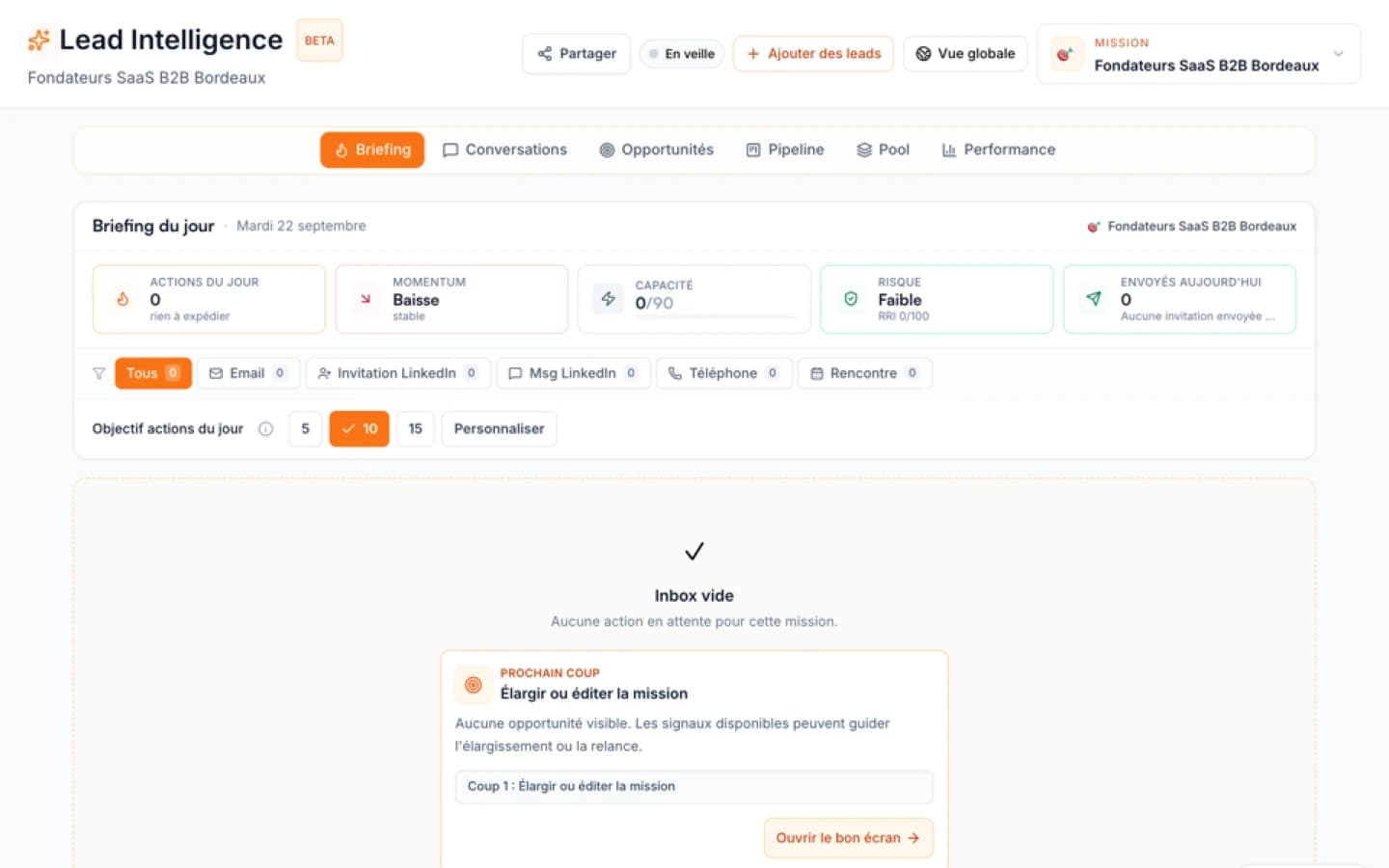
This is where Ember Lead Intelligence restructures the outbound motion. Instead of encouraging indiscriminate cold dialing across unverified numbers, Ember analyzes timing signals, public professional activity, and strategic relevance to determine exactly who to contact, why now, and through which approved channel. By keeping human approval at the center of each sequence and strictly isolating unverified contact data, revenue teams can scale qualified pipeline while keeping their outbound practices fully accountable and defensible.
Sources
- Complying with the Telemarketing Sales Rule
- Press Releases
- FTC Enforcement Priorities: What the Agency's Actions ...
- FTC : tarifs d'accès au registre national Do Not Call pour l'exercice 2027, 85 dollars par indicatif (annonce du 26 août 2026) : source S1
- Registre national Do Not Call : les numéros professionnels ne sont pas couverts, mais le mobile personnel l'est : source S1
- Registre national Do Not Call : les numéros professionnels ne sont pas couverts, mais le mobile personnel l'est : source S2
- Telemarketing Sales Rule : l'exemption des appels entre entreprises et ses exceptions (16 CFR 310.6(b)(7)) : source S1
- Telemarketing Sales Rule : l'exemption des appels entre entreprises et ses exceptions (16 CFR 310.6(b)(7)) : source S2
- Page publique Lead Intelligence : reçu S8
- Page juridique données prospects : reçu S9
FAQ
Free diagnostic
Test your sales file
Drop an Excel or CSV and check its readiness without sending its rows to Ember.