
B2B sales teams running outbound prospecting sequences targeting recipients in France can no longer treat individual email open tracking as a standard background feature. Under the enforcement guidance detailed in the CNIL FAQ recommendation on email pixels published on July 22, 2026, by the Commission Nationale de l'Informatique et des Libertés (CNIL), silent tracking pixels inserted into outbound sales messages require prior consent unless they meet strict, technical deliverability exemptions that standard prospecting sequences fail to satisfy.
For sales leaders, revenue operations managers, and business development representatives, this regulatory boundary invalidates the common practice of firing automatic follow-up tasks when a recipient opens an email. Auditing your outreach stack requires identifying where tracking pixels are embedded, assessing your legal basis, and decoupling outbound workflows from individual open surveillance.
The Scope of the CNIL Guidance on B2B Cold Outreach
A persistent myth in sales operations was that B2B communications benefited from blanket immunity from tracker consent rules. The CNIL explicitly refuted this interpretation in its clarifications on email tracking pixels. The recommendation applies to every tracker embedded in email messages, irrespective of the nature of the sending organization or whether the recipient is a client, an employee, or a prospective business buyer.
Outbound prospecting frequently relies on the statutory exception for similar products or services defined under article 34-5 of the French Postal and Electronic Communications Code, known locally as the Code des postes et des communications électroniques (CPCE). While article 34-5 of the CPCE permits sending relevant B2B promotional messages without prior consent under specific conditions, the CNIL affirmed that such prospecting emails cannot be classified as a service requested by the user. Consequently, the commercial exception governing the email transmission does not extend to the invisible trackers loaded inside the message.
While sales teams navigating other jurisdictions must balance regional frameworks like the UK PECR Rules for B2B Cold Email and Outbound Sales, the French framework treats the reading device as private terminal equipment protected under article 82 of the French Data Protection Act (loi Informatique et Libertés). Placing a single-pixel graphic to detect whether, when, and on what device an email was viewed requires prior consent if it serves individual commercial profiling.
The Deliverability Exemption and Why Cold Sequences Fail It
Sales engagement software providers often argue that open tracking is necessary to maintain domain reputation and clean bounce rates. The CNIL established a narrow deliverability exemption, but its practical boundaries exclude standard outbound sequences.
According to the CNIL FAQ recommendation on email pixels, using a tracker without consent to monitor deliverability is allowed only to identify inactive recipients so they can be removed from mailing lists. Even under that narrow defense:
- In principle, the only data point strictly necessary for deliverability is the date of the last email open, unless the sender can formally document a specific operational requirement to retain additional fields.
- Collecting open timestamps down to the second, geographic location inferred from an IP address, or user device characteristics immediately exceeds the exemption.
- Qualifying an individual as an active buyer based on email opens is not permissible under the deliverability exemption. The CNIL notes that identifying an active user in this context relates purely to technical deliverability rather than commercial readiness.
- An email open does not count as a prospect contact under commercial management standards, meaning an automated open signal cannot be used to restart or extend the standard three-year prospect retention period.
When modern sales teams compare outreach infrastructure, such as when evaluating Apollo vs Clay: Which Outbound Tool Fits Your Sales Team? or reviewing setups like Hunter vs Zeliq: How to Choose for B2B Outbound Sales, their default configurations usually inject trackers that record full timestamps and individual identities. Under the July 2026 guidance, running those default configurations on French B2B prospects without consent creates non-compliance.
The July 14, 2026 Deadline for Existing Contact Databases
The formal recommendation on email pixels was published in the Journal officiel on April 14, 2026. Senders with pre-existing contact databases were given a three-month transitional grace period to notify recipients and provide a direct opportunity to object.
That transition window expired on July 14, 2026, as confirmed by the CNIL FAQ recommendation on email pixels. If an organization failed to dispatch an informational email enabling objection before July 14, 2026, standard consent requirements took full effect, covering historical contact records just like newly sourced records.
A sender can extend this timeframe only when facing objectively documented and justified technical impediments. For the vast majority of commercial teams, this means unconsented pixel tracking on lists assembled before mid-2026 can no longer continue under the cover of transition arrangements.
Conducting a Five-Step Sales Stack Pixel Audit
Auditing your sales engagement stack requires cross-functional coordination between sales leadership, revenue operations, and legal counsel. You can execute this audit across five practical steps:
1. Catalog Tracker Injection Points
Inspect every tool that sends outbound messages to prospective clients. This includes sequence automations, CRM email extensions used by account executives, customer success onboarding sequences, and marketing automation platforms. Determine whether each tool injects a web beacon, transparent GIF, or CSS background call into outgoing HTML bodies.
2. Disable Individual Pixel Tracking in Outreach Tools
Most modern sales platforms allow administrators to turn off open tracking globally or at the team level. Disabling this setting removes the auto-generated pixel from outgoing HTML templates. While this eliminates individual open reports inside your rep dashboards, it eliminates non-compliant surveillance at the source.
3. Review Link Rewriting and Tracking Domains
Tracking links that redirect prospects through an intermediate domain to record clicks are governed by article 82 of the Data Protection Act according to their specific purpose. Review your custom tracking domains to confirm whether click redirection is being used for technical routing or individual behavioral profiling.
4. Adjust Automated Sequence Triggers
Many outbound cadences feature automated forks: if a prospect opens an email twice, the platform schedules a high-priority call task or moves the lead to a hot cadence. Because tracking individual opens without prior consent is no longer viable in this context, these automated triggers must be dismantled. Shift trigger logic to explicit prospect actions such as direct email replies or calendar bookings.
5. Document Deliverability and Aggregation Methods
If marketing operations requires aggregate metrics to assess domain deliverability, review whether the platform can calculate anonymous open figures without persisting individual user logs. The CNIL FAQ recommendation on email pixels acknowledges that aggregated statistics stripped of individual identifiers avoid the risks of individual profiling, but individual sales rep alerts cannot be derived from them.
Shifting Sales Performance from Vanity Opens to Direct Qualification
Losing individual open tracking often creates initial anxiety among sales teams. However, experienced outbound leaders recognize that email open metrics have been distorted for years by automated security scanners, corporate spam firewalls, and server-side image caching. An open has never equaled genuine interest or purchase authority.
Sales organizations that mature past open metrics build their pipeline measurement around verified qualification frameworks. Auditing qualification criteria, such as comparing BANT vs MEDDPICC: How to Audit Early Deal Qualification, shifts the representative's attention toward genuine commercial qualification rather than speculative clicks.
The primary indicators of outbound performance remain clear and resilient:
- Direct reply rates and substantive email responses
- Positive sentiment and interest confirmation in replies
- Meetings booked and attended
- Pipeline opportunities created and advanced
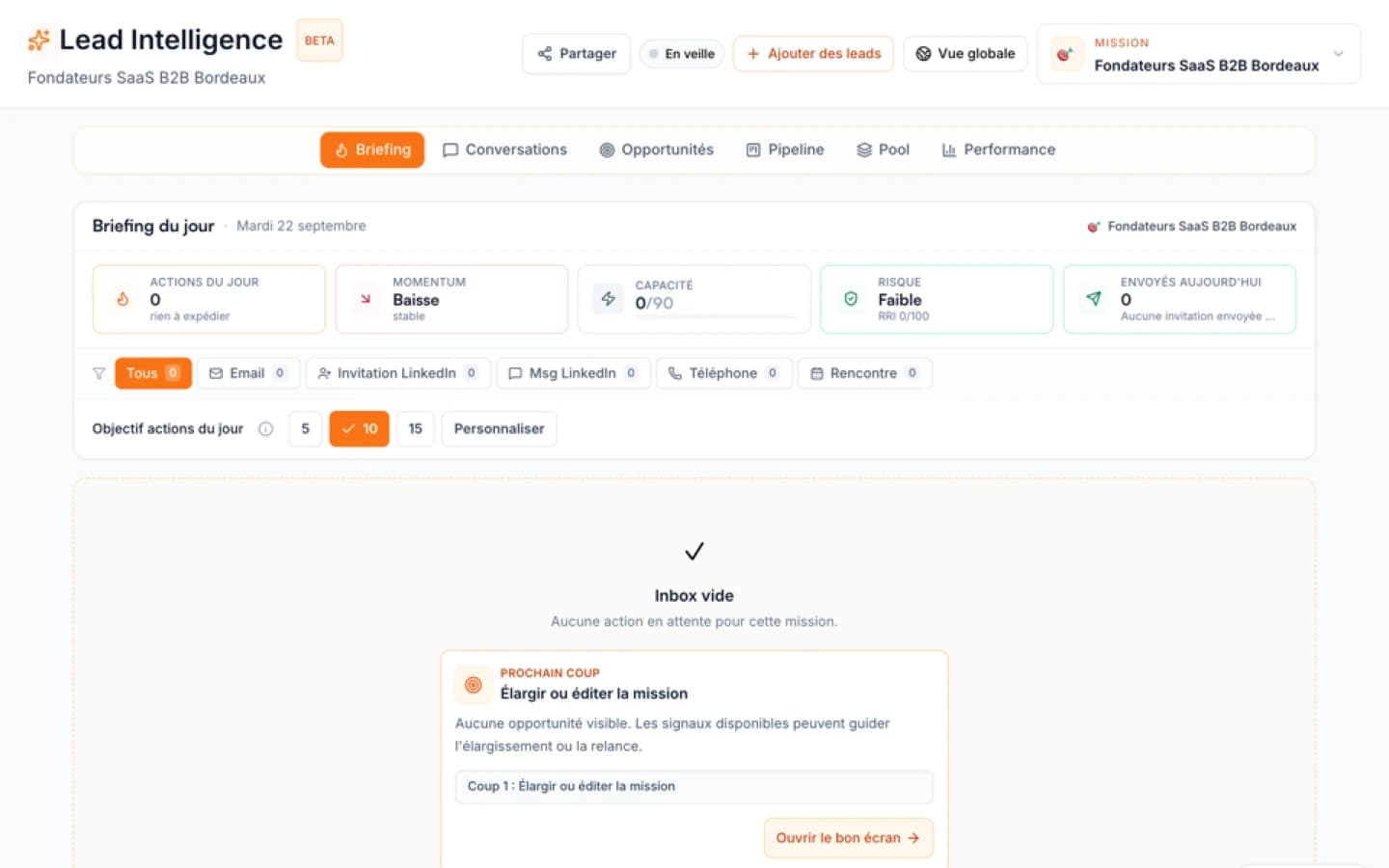
Replacing speculative open tracking with deeper account understanding leads to higher-quality outbound prospecting. By using Ember to uncover verified account signals, sales teams can review business intelligence on prospects before reaching out, enabling meaningful conversations without relying on background surveillance pixels. You can explore compliant outbound workflows in the Knowledge guides for founders or evaluate your lead enrichment process using Ember Lead Intelligence.
Sources
FAQ
Free diagnostic
Test your sales file
Drop an Excel or CSV and check its readiness without sending its rows to Ember.