
The Hidden Contraction Behind Rising Check Sizes
A rising average check size does not mean early-stage fundraising has become easier. While top-line figures suggest pre-seed rounds are expanding, aggregate transaction volumes tell a different story. In reports published on August 13, 2026, Carta documented that the average Simple Agreement for Future Equity (SAFE) and convertible note size reached $276,000 in Q2 2026, representing a 27% increase year over year from Q2 2025 and setting a record high over the past four-plus years.
That figure creates the impression of an abundant funding environment. However, the underlying deal count shows an active contraction. Startups on the Carta platform raised $3.19 billion across more than 11,500 instruments in Q2 2026, compared to $3.22 billion across 14,825 instruments in Q2 2025 (Carta).
Total capital committed remained roughly flat, but it was distributed across thousands fewer checks. The apparent growth in check size is mathematical: dividing comparable total capital by a significantly smaller pool of funded instruments pushes the mathematical average upward. For founders entering the market, this means competition for individual checks is sharper, even if successful founders secure larger commitments.
Why Mean Averages Mislead Early-Stage Founders
Planning a pre-seed round around the headline average can lead to miscalibrated expectations. The $276,000 figure is an arithmetic mean, calculated by dividing total capital by instrument count, rather than a median check size (Carta). In early-stage venture funding, arithmetic means are easily skewed by large transactions.
According to Carta, few pre-seed deals exceed $2.5 million, and the transactions that cross this threshold typically involve ten or more instruments stacked together. When multi-million-dollar pre-seed syndicates bundle larger institutional checks, they pull the arithmetic average up for everyone else.
For an early-stage B2B founder, this creates two distinct fundraising realities:
- Individual angel tickets often land well below the headline average. Assuming every prospective angel will write a $276,000 check can disqualify realistic supporters early in the process.
- Large pre-seed totals are rarely single checks. Reaching targets between $1 million and $2.5 million requires managing multiple sequential instruments rather than closing one uniform agreement.
Sector Concentration and the AI Funding Split
The contraction in funded instruments is compounded by vertical concentration. Capital has not flowed evenly across all business models.
According to Carta, artificial intelligence companies captured 49% of all pre-seed funding dollars in H1 2026, closely matching the 50% recorded across full-year 2025.
With half of all pre-seed funding flowing toward AI startups, the remaining half is shared among enterprise software, vertical SaaS, fintech, marketplaces, and hardware. Investors evaluating non-AI software companies have become more selective, demanding clearer operational signals, documented customer demand, and stricter capital efficiency before committing funds.
Dilution Risks When Stacking SAFEs
To reach target round sizes in a selective market, founders frequently issue multiple notes over several months. Stacking instruments without a unified structure introduces dilution risks that only become visible upon equity conversion.
Under standard frameworks published in the Y Combinator Post-Money SAFE guide, a SAFE converts automatically into preferred stock when a startup raises a priced equity round. On a Post-Money Valuation Cap SAFE, investor ownership sold equals the investment amount divided by the Post-Money Valuation Cap (Y Combinator).
When founders stack several SAFEs at varying caps to keep momentum alive, cumulative dilution compounds rapidly. Raising capital via Most Favored Nation (MFN) provisions also requires precision. As detailed by Y Combinator, an MFN SAFE carries no initial valuation cap or discount rate, but grants the holder the right to amend the agreement to adopt more advantageous terms issued in subsequent instruments. Issuing an MFN instrument to an early angel and later conceding a lower cap to close an institutional check resets the early investor's terms automatically.
How B2B Founders Should Navigate the Pre-Seed Market
Navigating a market with fewer funded deals and concentrated capital requires disciplined execution. Early-stage teams can maintain leverage by focusing on four operational steps:
1. Build Syndicates Across Realistic Tiers
Rather than anchoring on high headline check sizes, structure rounds around tiered participation. Securing smaller checks from strategic angels builds early momentum, while preserving larger instrument allocations for institutional leads. Founders can streamline this outreach by reviewing criteria for Qualifying Angel Investors Through Professional Credentials.
2. Model Cap Table Conversion Scenarios
Before issuing rolling notes, model how each instrument converts in a priced Series Seed. Account for the mathematical impact of post-money valuation caps, discount clauses, and MFN amendments. Transparent financial foundations clarify how much equity is genuinely left for employee option pools and future funding rounds.
3. Maintain Continuous Regulatory Compliance
Fundraising velocity should never outpace governance. Track exempt offering filings methodically, referencing guides such as the SEC Form D Deadline and Filing Guide for Startups to ensure federal and state notice obligations remain fully compliant.
4. Ground Your Raise in Verifiable Unit Economics
When capital is concentrated, investors reward operational clarity over speculative milestones. Founders who show coherent pricing models, controlled burn rates, and distinct distribution channels stand out against broader market headwinds. To explore practical financial modeling frameworks and runway planning, review the Knowledge guides for finance.
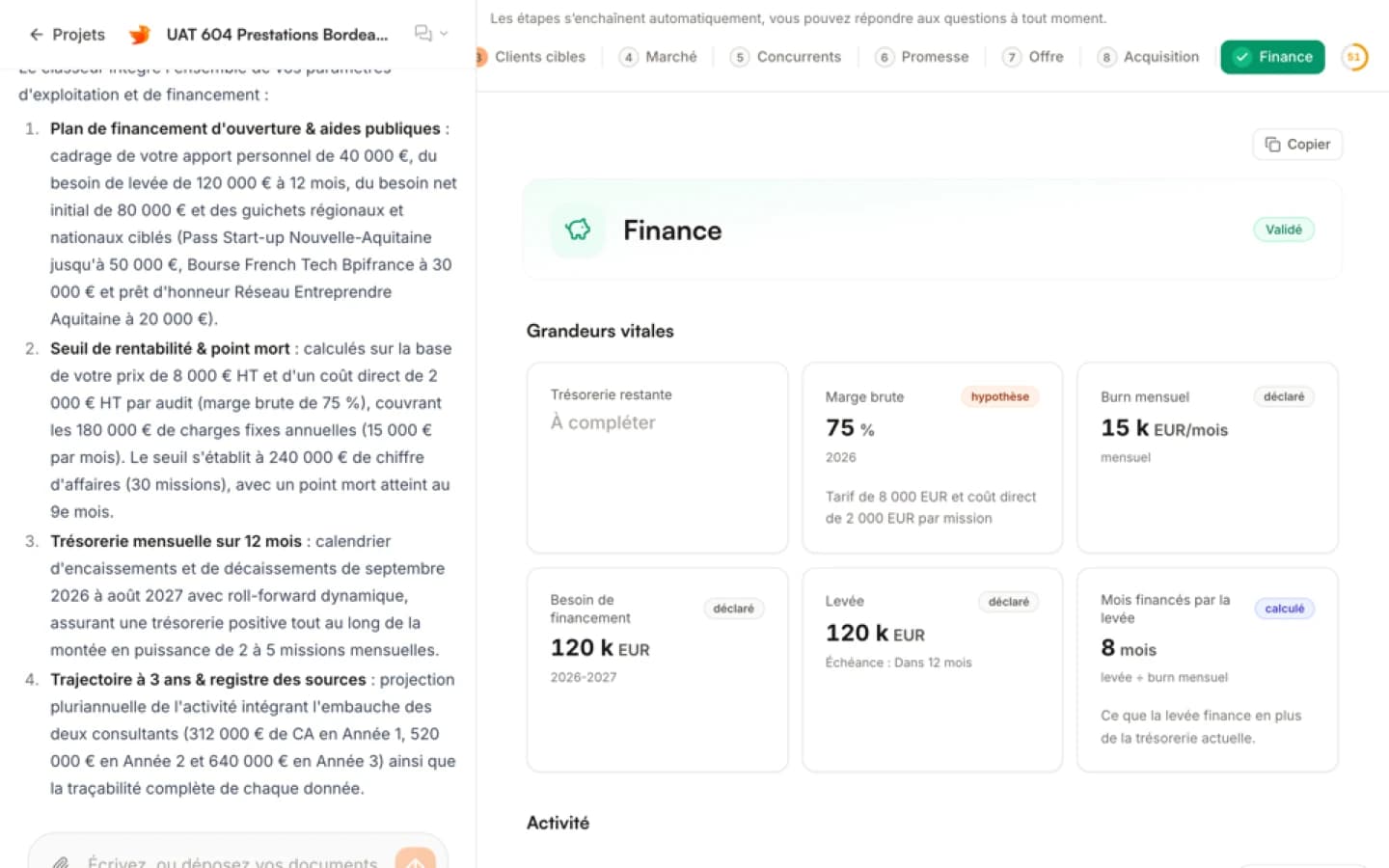
Testing your assumptions with Ember gives you a coherent view of runway and working capital before negotiating caps with investors, ensuring your funding targets reflect real operating milestones rather than market averages.
Sources
FAQ
Mini audit
Test your Business Plan
Identify strengths, missing proof and the next priority.