
Outbound revenue teams dialing prospects across the United States face updated regulatory compliance costs under the Federal Trade Commission (FTC) fee schedule for Fiscal Year 2027. On August 26, 2026, the Federal Trade Commission released its official fee adjustments in an FTC press release on FY 2027 telemarketer fees, setting new rates for organizations accessing the National Do Not Call (DNC) Registry. These adjustments took effect on October 1, 2026, marking an incremental increase in access expenses for teams engaged in cold calling campaigns.
Budgeting for telephone outreach requires an understanding of exact subscription costs, regulatory definitions of protected lines, and the operational boundaries between consumer protection and business-to-business (B2B) communications.
The FY 2027 Fee Schedule and Budget Planning
Under federal law, telemarketers calling consumers in the United States must download and cross-reference numbers on the National DNC Registry to avoid dialing registered individuals. Telemarketers must renew their subscriptions annually. As detailed in the legal review published by Troutman Pepper Locke on FY 2027 DNC fees, access charges are calculated based on the number of area codes an organization intends to dial.
The table below contrasts the fee structure across recent fiscal years.
| Access Type | FY 2026 Rate | FY 2027 Rate | Billing Frequency |
|---|---|---|---|
| First 5 area codes | 0 dollars | 0 dollars | Annual |
| Single area code | 82 dollars | 85 dollars | Annual |
| Additional area code half year | 41 dollars | 43 dollars | Semi-annual |
| Nationwide access cap | 22626 dollars | 23425 dollars | Annual |
According to the FTC announcement on DNC registry access fees, the cost of accessing a single area code is 85 dollars in FY 2027, representing an increase of 3 dollars from 82 dollars in FY 2026. For organizations executing national calling operations, the maximum charge to any single entity for accessing all area codes across the country increased to 23425 dollars in FY 2027 from 22626 dollars in FY 2026, as noted in the Troutman Pepper Locke compliance review. The fee for adding an area code for a half year rose to 43 dollars in FY 2027 from 41 dollars in FY 2026, as documented in the FTC FY 2027 fee schedule.
For early-stage startups and localized businesses, the first 5 area codes remain available at no cost under the FTC telemarketer fee rules. Exempt entities, such as qualifying charitable organizations and political callers, may obtain the entire database for free. Finance leaders modeling outbound expenditure can integrate these figures alongside other operational overhead using resources like the Knowledge guides for finance.
Why B2B Outbound Teams Must Scrutinize the Registry
A frequent misconception among outbound sales leaders is that pure B2B campaigns carry a blanket exemption from the National DNC Registry. While the statutory definitions distinguish commercial transactions from residential solicitations, modern workplace mobile usage complicates this boundary.
Official consumer guidance from the FTC National Do Not Call Registry FAQs clarifies that the registry is designed for personal phone numbers, and business lines as well as fax lines are not covered. However, personal mobile devices can be enrolled on the registry in the same manner as residential landlines. Under federal telecommunications regulations in 47 CFR 64.1200 on telephone solicitation, restrictions protecting residential subscribers are extended to wireless and mobile telephone numbers.
When corporate representatives work remotely or use personal cellular devices for business affairs, a direct call to that mobile number can intersect with residential protections if the executive registered the phone on the national list. Outbound teams acquiring third-party contact lists run considerable operational exposure if mobile numbers are sourced without checking registry status. Revenue teams must balance their data sourcing with regulatory safeguards, a challenge explored in detail in our analysis of Buyer Liability When Purchasing Contact Lists.
Furthermore, the Telemarketing Sales Rule (TSR) provisions set specific guardrails even where business solicitations occur. Under 16 CFR 310.6 on telemarketing exemptions, telephone calls between a telemarketer and any business to induce the purchase of goods or services are exempt from several TSR requirements, but this exemption does not apply to the retail sale of nondurable office or cleaning supplies. Crucially, the exemption also explicitly excludes 16 CFR 310.3 on deceptive practices, meaning commercial outreach remains strictly prohibited from making false or misleading claims or misrepresenting costs, performance, and key software features.
Operationalizing Registry Scrubbing and Suppression Workflows
The consumer footprint on the national database continues to expand. In its FTC Biennial Report to Congress issued on January 6, 2026, the FTC reported that consumers had placed more than 258 million telephone numbers on the registry by the end of fiscal year 2025, which reflected an annual increase of more than 4.8 million numbers. That same report recorded that the agency received more than 2.6 million complaints in fiscal year 2025, underscoring aggressive federal monitoring of unsolicited calling.
To operationalize compliance and avoid costly enforcement actions, outbound organizations should establish four practical controls:
1. Annual Registry Subscription Management
Track the organization's subscription period and calculate area code requirements quarterly. Teams expanding into regional territories must verify whether adding single area codes at 85 dollars each or paying the full nationwide cap of 23425 dollars is more economical, relying on the FTC telemarketer fee schedule.
2. Regular File Scrubbing Intervals
Incorporate the downloaded DNC registry files directly into the customer relationship management (CRM) software or dialing platform. Phone lists should be scrubbed before campaigns launch to ensure newly registered numbers are suppressed before sales representatives initiate outbound calls.
3. Internal Do-Not-Contact Maintenance
Federal regulations mandate that sellers maintain company-specific do-not-contact lists. If a prospect, consumer, or business contact requests to be removed from calling campaigns, organizations must record that request and immediately pause pending automated actions or future rep follow-ups toward that number and domain.
4. Direct Representative Verification
Ensure sales representatives know that dialing direct personal cell lines carries different legal risks than calling central office switches. Outreach sequences should favor verified corporate channels, clear disclosures, and contextual value rather than high-volume cold dialing into unvetted numbers.
Elevating Outbound Beyond Raw Cold Dialing
Managing increasing regulatory costs and registry scrub requirements highlights the inefficiency of indiscriminate outbound calling. Modern acquisition programs focus resources on verified intent, behavioral timing, and multi-channel context rather than high-volume manual dialing.
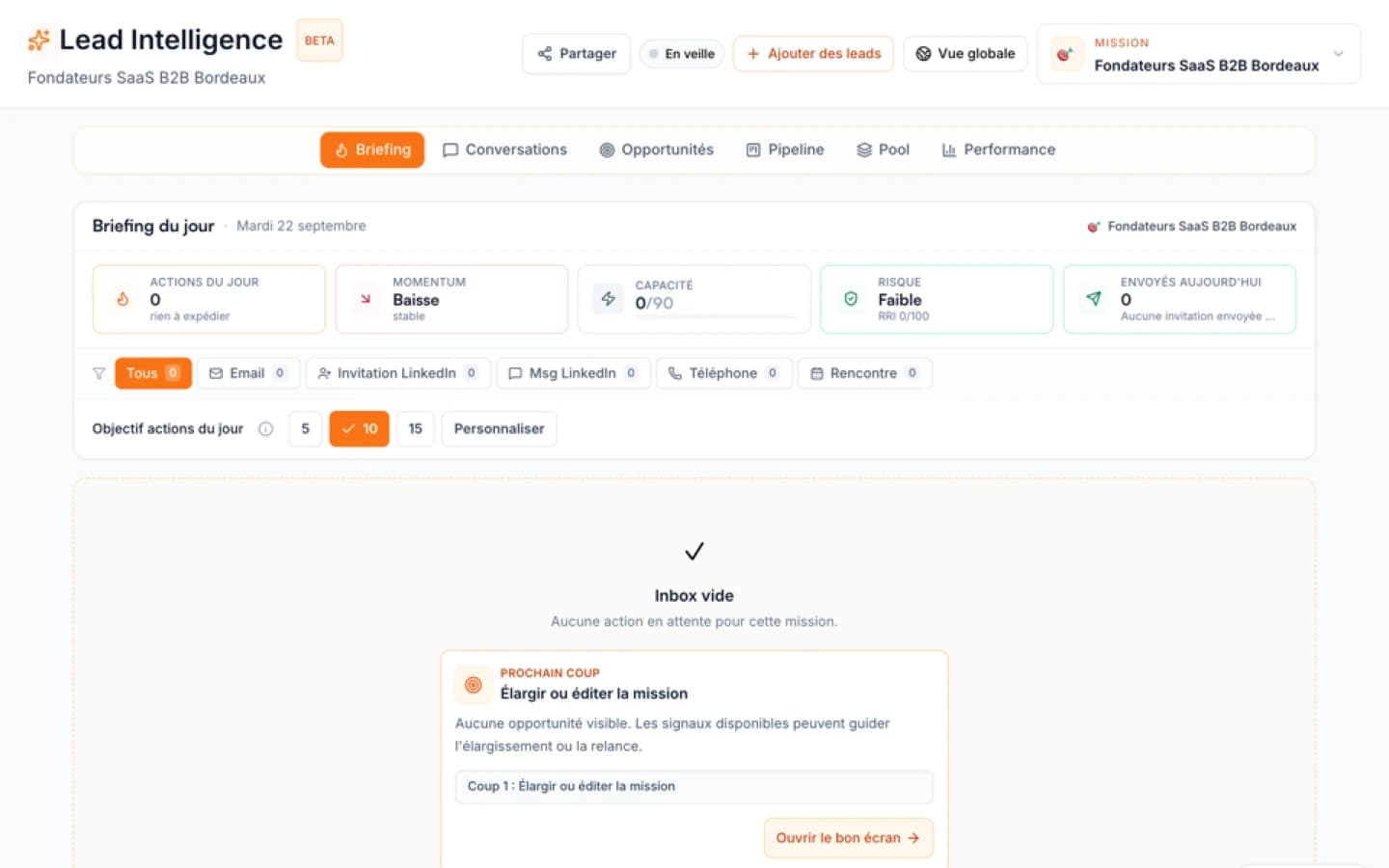
Instead of navigating the operational friction of cold calling unvetted lists, revenue teams can use Ember Lead Intelligence to structure acquisition missions. Ember identifies target accounts matching your ideal customer profile, analyzes public buying signals, and drafts contextualized outreach in the workspace language. With built-in suppression safeguards that pause pending actions when a contact requests not to be contacted, teams maintain disciplined compliance while directing commercial efforts toward prospects ready for substantive conversation.
Sources
- Q&A for Telemarketers & Sellers About DNC Provisions in TSR
- FTC Issues Biennial Report to Congress on the National Do Not Call ...
- FTC Announces Increased Telemarketer Fees to Access the ...
- FTC : tarifs d'accès au registre national Do Not Call pour l'exercice 2027, 85 dollars par indicatif (annonce du 26 août 2026) : source S1
- Registre national Do Not Call : les numéros professionnels ne sont pas couverts, mais le mobile personnel l'est : source S1
- Registre national Do Not Call : les numéros professionnels ne sont pas couverts, mais le mobile personnel l'est : source S2
- Telemarketing Sales Rule : l'exemption des appels entre entreprises et ses exceptions (16 CFR 310.6(b)(7)) : source S1
- Telemarketing Sales Rule : l'exemption des appels entre entreprises et ses exceptions (16 CFR 310.6(b)(7)) : source S2
- Page publique Lead Intelligence : reçu S8
- Page juridique données prospects : reçu S9
FAQ
Free diagnostic
Test your sales file
Drop an Excel or CSV and check its readiness without sending its rows to Ember.