
AI search is changing how enterprise buyers evaluate software before they ever speak with a sales representative. Instead of relying solely on traditional search engine results pages or vendor-provided collateral, buyers increasingly query conversational models to synthesize vendor feature sets, gather peer sentiment, and compare pricing models. For revenue leaders and founders, this shift changes both how purchase intent should be read and how outbound timing is prioritized.
What the Research Shows About AI Search in Software Evaluations
The clearest indicator of how modern software procurement is evolving appears in recent buyer survey data. According to HubSpot research on CRM purchasing behavior, 42% of CRM buyers used AI search during their evaluation, and those buyers were 36% more likely to purchase than those who didn't use AI search.
This correlation highlights a fundamental reality in software evaluation. Prospective customers who use generative engines during discovery are actively working through complex requirements rather than browsing casually. When a prospective buyer inputs specific prompts comparing architectural trade-offs, security compliances, or integration limits, they are typically executing a funded project with clear timelines.
Interpreting the Intent Signal: Correlation versus Causation
While the correlation between AI search adoption and purchase likelihood is notable, commercial teams must interpret the signal accurately:
- A marker of active evaluation, not guaranteed conversion: An evaluation phase that includes AI search indicates research depth. It does not prove that AI search itself creates intent. Teams that are already budgeted and under pressure to deploy a solution explore every accessible channel to accelerate due diligence.
- Context-specific findings: The finding originates from CRM procurement, an established software category with abundant public comparisons, analyst reports, and documentation. For emerging categories or bespoke professional services, public language models often lack sufficient training data to provide detailed comparisons, which alters buyer behavior.
- Information asymmetry is inverted: Buyers who consult AI search arrive at vendor conversations with synthetic summaries of a product's perceived weaknesses, missing features, and alternative options.
Standard discovery templates that walk through generic qualification checklists often fall flat with these buyers. Teams benefit from reviewing practical discovery adjustments, such as those covered in The Ember Brief #18 - Preparing the first call with a B2B prospect, to align conversations with research that prospects have already conducted independently.
How Commercial Teams Should Adapt Outbound Strategy
Understanding that high-intent prospects conduct thorough, automated synthesis before reaching out requires commercial teams to rethink timing and context. Relying on bulk outreach to broad contact lists produces noise and wastes resources on accounts that have no immediate initiative underway.
Instead, modern acquisition models prioritize verifiable market signals that indicate an active internal transition, such as leadership changes, tech stack migrations, or public expansions. When an account displays genuine timing triggers, outreach messaging must acknowledge their specific operational reality. Tailoring outbound positioning around real business outcomes, as discussed in The Ember Brief #16 - B4B vs B2B: reframing your prospecting message, helps cut through generic inbound inquiries.
Turning Signals into Prioritized Action
Recognizing buying readiness is practical only if sales teams can act on those signals systematically without spending hours manually sifting through disparate web sources.
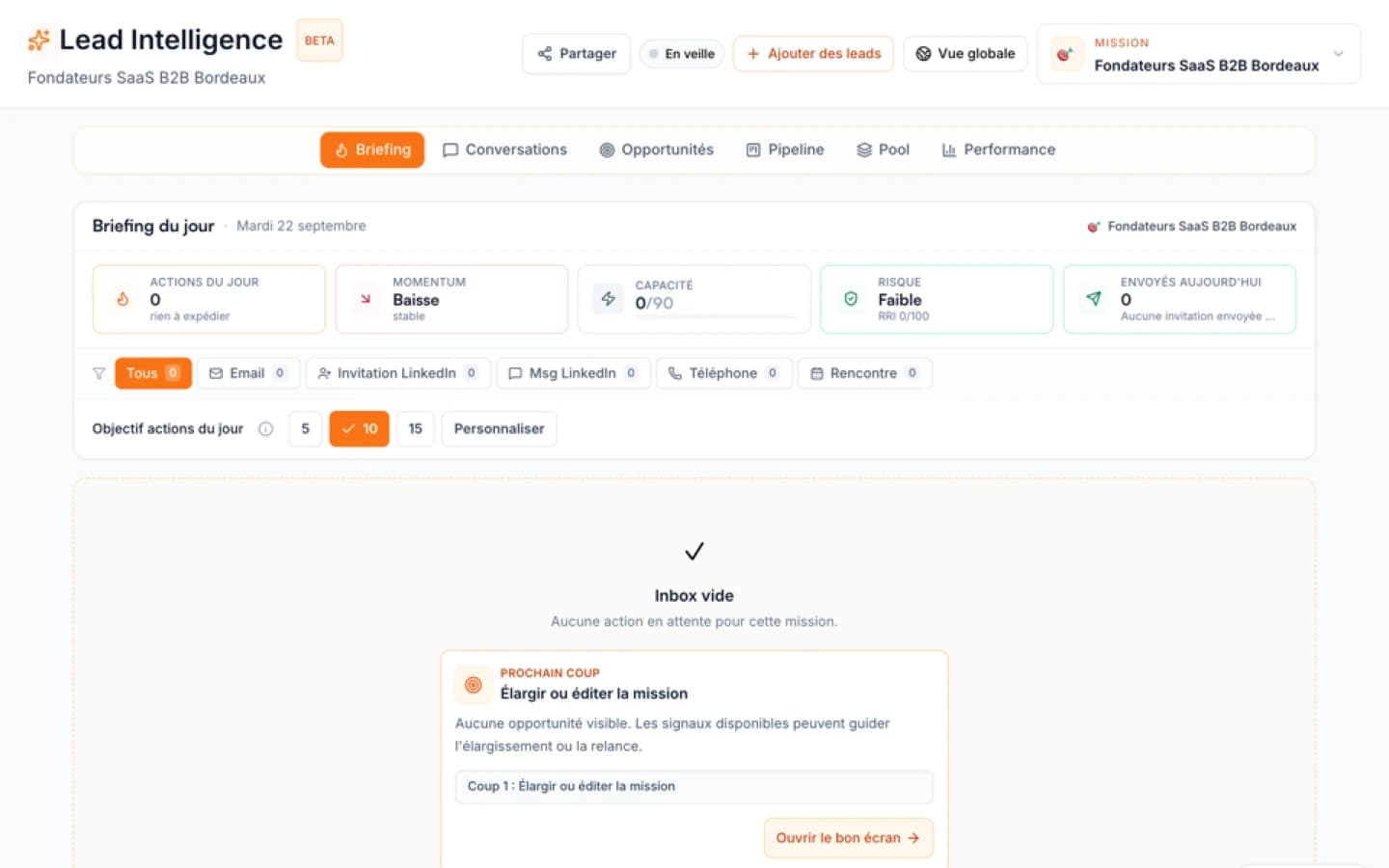
This operational hurdle is what Ember addresses with its Lead Intelligence module. By taking a company's Ideal Customer Profile (ICP), core offer, and strategic positioning, Lead Intelligence monitors public signals and verified sources across the web to identify which accounts to contact, why the timing makes sense, and which angle to take.
Rather than sending unvetted mass sequences, the module emphasizes human review: outreach drafts are queued for approval, giving operators a deliberate window to verify context before any message is dispatched. When buyers do their homework through AI search before purchasing, sales teams must match that standard of preparation before making initial contact.
Sources
FAQ
Free diagnostic
Test your sales file
Drop an Excel or CSV and check its readiness without sending its rows to Ember.