
Why your existing investors come first
When a B2B founder prepares a new round, the first thought goes to the funds they have not met yet. The people who have already invested matter more in the first weeks. They may hold a contractual right to invest again, they know the company better than anyone, and every serious new investor will ask them, directly or through you, what they plan to do.
The usual monthly update answers none of these questions. It reports on the past month. A round needs a different message, shorter, that announces a decision and asks each investor one question.
What your contracts actually say
Before you write, reread what you signed in the previous round. Two standard US documents are useful reference points, because many seed rounds borrow from them.
For a SAFE, Y Combinator describes the right to follow on this way: "Pro rata rights let an investor invest money into your future equity financing". The same page says this right is optional and lives in a separate, standardized side letter rather than in the SAFE itself. A SAFE investor therefore only has this right if that letter was signed. Y Combinator adds that an investor putting in 500,000 dollars has a better case for it than one putting in 10,000 dollars: it is normal that your investors do not all hold the same rights.
For a priced round, the NVCA model Investors' Rights Agreement, updated in October 2025, provides a right of first offer: if the company proposes to offer new securities, it must first offer them to each "Major Investor". The threshold that makes an investor a "Major Investor" is left blank in the model, to be set in negotiation. An optional clause of the same model ends the right of first offer for an investor who does not buy its full pro rata amount in an offering.
If your company is French, have your lawyer reread the articles of association and the shareholders' agreement signed in the previous round. That is where you will find out what you owe each investor before announcing anything.
The signal new investors will read
Your existing investors' answer matters beyond the amount they bring. CRV, in a guide for founders published on February 13, 2026, writes that seeing early backers committed enough to reserve the right to invest more capital validates the company's potential and creates momentum for future rounds. This is the author's view, with no measurement behind it, but it describes what you will hear in meetings: "what are your current investors doing?".
You are better off knowing the answer before your first meeting with a new fund. A clear intention, even a modest one, presents well. A silence discovered mid-process presents badly, because it forces you to improvise an explanation.
The message to send
Send a separate message, without burying it in the month's numbers. Four blocks are enough:
- The decision. You are opening a round, with the target amount, the planned timeline and the milestone this capital must fund.
- Where you stand. Three metrics your investors already know, with their trend. No new dashboard: they must be able to compare with what you usually send.
- Your question to each investor. Do you plan to follow on, and for what share? Can I tell new investors? Who in your network should see the deck?
- A reply date. One or two weeks before your first outside meetings.
An example opening line: "We are opening a [amount] round to fund [milestone] by [date]. Before meeting new funds, I would like to know whether you plan to exercise your right to follow on, and whether I can mention it."
Then call the two or three investors whose answer weighs most. The message prepares the call; it does not replace it.
The tricky cases
An investor will not follow on. Ask for a reason you can restate honestly: a fund at the end of its investment period, a policy of not reinvesting at this stage, a disagreement on price. New investors will ask; a clear reason is better than a dodge.
You need a waiver. Under an optional NVCA model clause, a waiver of the right of first offer for a transaction applies to all investors in the same fashion if its terms say so. But if a waiving "Major Investor" still buys, the waiver only applies to another "Major Investor" if that investor had the opportunity to buy a proportional share. So do not promise anyone special treatment without rereading these clauses with your lawyer.
Your first checks are small. Follow-on rights are optional: some investors may not hold them. Brief every investor anyway: the courtesy costs little and keeps them from hearing about your round from someone else.
Where Ember can help
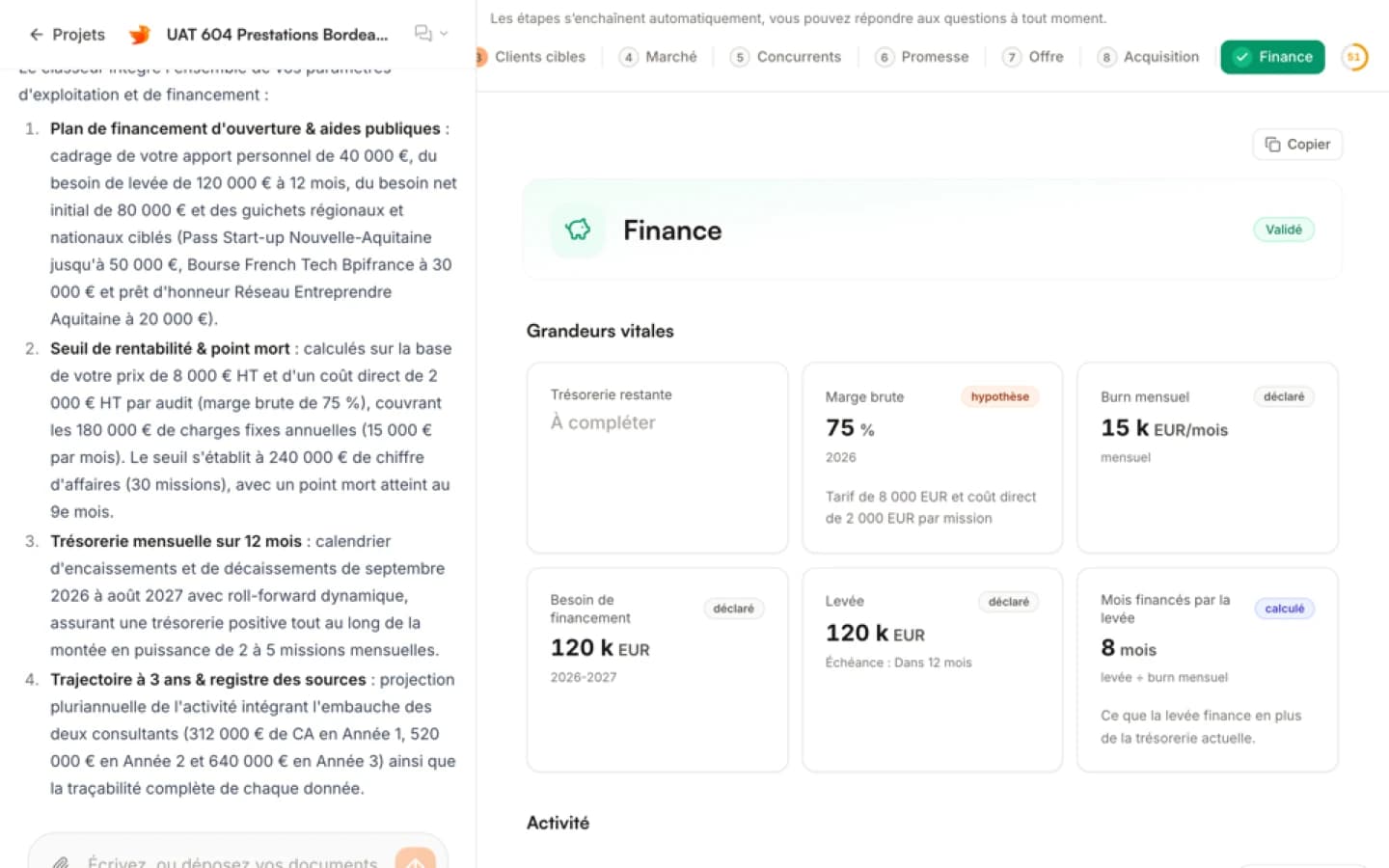
Fund Your Growth structures funding options from your project context and compares scenarios suited to your stage, geography and constraints. It also turns gaps in the file into prioritised next actions, which helps you state the milestone the round must fund. A "Fundraising" mission in Lead Intelligence is then pre-filled from the active Fund Your Growth case to prepare the search for new investors. Ember does not replace your lawyer when it comes to reading your contracts.
Further reading
- Build a 12-Month Investor Update Cadence That Keeps Angels covers the monthly message, which stays useful between rounds.
- NVCA Model Legal Documents Guide for Startup Founders details the documents cited here.
- Post-money SAFE: how much stays fixed until the Series A? helps you work out what your SAFE investors hold before the round.
Sources
- Y Combinator, "The SAFE", standard documents page, no visible date, accessed November 13, 2026: https://www.ycombinator.com/documents
- NVCA, Model Legal Documents page, accessed November 13, 2026: https://nvca.org/model-legal-documents/
- NVCA, model Investors' Rights Agreement, version of October 1, 2025, accessed November 13, 2026: https://nvca.org/wp-content/uploads/2025/10/NVCA-Model-IRA-10-1-2025.docx
- CRV, "What Are Pro Rata Rights? A Guide for Startup Founders", February 13, 2026, accessed November 13, 2026: https://www.crv.com/content/pro-rata-rights
Sources
FAQ
Fund Your Growth
Connect strategy, proof and funding
Turn project assumptions into defensible decisions and next actions.