
Managing outbound sales operations in the United States requires strict alignment with telecommunications privacy law, where the Telephone Consumer Protection Act (TCPA) sets severe parameters. B2B revenue teams often assume telemarketing restrictions only affect consumer marketing, but automated dialing and artificial voice systems targeting wireless numbers carry strict consent requirements across commercial and enterprise accounts. When a prospect or customer revokes consent, handling that opt-out correctly across disconnected systems is now a direct operational mandate rather than an administrative afterthought.
Under federal regulations codified in 47 CFR 64.1200 and verified on the Electronic Code of Federal Regulations as of September 24, 2026, callers initiating telemarketing robocalls or text messages to cellular lines must secure prior express written consent, with no general exemption for business communications. The Federal Communications Commission (FCC) has restructured how callers must process consent revocation, establishing clear demarcations between informational notifications and telemarketing outreach while redefining account-level opt-outs.
The Operational Scope of TCPA Revocation in B2B Outreach
B2B outbound operations frequently combine direct phone calls, short message service (SMS) workflows, email campaigns, and social messaging. While email privacy follows separate statutory regimes like the CAN-SPAM Act, any automated calling or SMS workflow touches TCPA liability immediately. When prospect numbers belong to cellular plans or mobile carriers, the absence of an express B2B carve-out means automated touchpoints must honor explicit opt-outs. Teams managing multitrack outbound should also coordinate these controls with state-level standards, as detailed in our guide on B2B outbound privacy rules for California and Connecticut.
Under the established standard in 47 CFR 64.1200(a)(10), referenced on the Electronic Code of Federal Regulations, callers were required to honor opt-out requests submitted through any reasonable manner within a maximum window of 10 business days, while senders were barred from designating an exclusive opt-out channel.
This open-ended requirement created major operational frictions. A prospect could tell a representative to stop calling during an impromptu call, reply with custom phrases via SMS, or submit a free-form message through a generic support inbox. If marketing, sales development, and account management teams run separate tools, an opt-out recorded in one system rarely cascaded cleanly to secondary dialers.
Prospective Buyer Opt-Out
          │
          ▼
┌────────────────────────────────────────────────────────┐
│ Catchment: Exclusive channel or reasonable method      │
└────────────────────────────────────────────────────────┘
          │
          ├───────────────────────────────┐
          ▼                               ▼
┌──────────────────────────────┐ ┌───────────────────────┐
│ Informational Message        │ │ Telemarketing Message │
│ Opt-out scoped to category   │ │ Account-wide ban on   │
│ unless buyer chooses all     │ │ future robocalls/SMS  │
└──────────────────────────────┘ └───────────────────────┘
The diagram above illustrates the divergence between informational notices and promotional campaigns under recent regulatory updates.
How the Regulatory Framework Shifted
To resolve mounting conflicts over sweeping consent revocation, the FCC revisited its framework through administrative actions and formal orders. Under order DA 26-12 adopted on January 6, 2026, documented by the FCC Consumer and Governmental Affairs Bureau, regulators extended the effective date of the broad informational revocation requirement to January 31, 2027, preventing an immediate compliance shock while the agency reviewed public records.
The formal reform progressed further when the FCC circulated a draft Report and Order on September 9, 2026, ahead of its scheduled open meeting on September 30, 2026, as published in the FCC open meeting docket. The Commission subsequently adopted the new framework on September 30, 2026, setting an effective date of November 25, 2026, as reported by The National Law Review.
Under the updated rules detailed by The National Law Review, callers are permitted to designate 1 or more of 3 approved methods as the exclusive means for prospects to revoke consent:
- An automated voice response or touch-tone key press option during a live telephone call.
- A standard reply keyword such as STOP sent in response to an SMS text message.
- A clearly identified web portal or dedicated telephone number established for revocation processing.
To rely on an exclusive revocation mechanism legally, the caller must disclose that method clearly and conspicuously on every call or text message and publish it on the organization's public website. Where sales operations prefer standard software platforms over custom internal builds, leaders often benchmark automation infrastructure by reviewing tools such as HubSpot Breeze or Clay for Outbound Sales Prospecting.
Informational Messages Versus Telemarketing Outbound
A central feature of the FCC update is the operational distinction between informational touchpoints and telemarketing campaigns. Revenue teams often maintain blended sequences where automated appointment reminders, webinar confirmations, product status alerts, and outbound sales pitches target the same point of contact.
Under the framework taking effect on November 25, 2026, analyzed by The National Law Review, an opt-out received in response to an informational text or call can be treated as applying strictly to that specific category of message. A prospect opting out of automated product uptime alerts does not automatically strip the organization of separate consent to deliver billing updates.
Telemarketing and advertising communications follow a far stricter standard. According to the FCC draft order text published on the Federal Communications Commission document repository, an opt-out submitted in response to an automated call or text message containing an advertisement or constituting telemarketing revokes consent for all future advertising and telemarketing robocalls or automated messages from that caller.
If an outbound business development representative uses an automated dialer to reach a mobile number and the recipient revokes consent, that revocation applies across the entire commercial entity. The enterprise cannot simply switch campaigns, deploy a different sales representative, or transition the contact into an automated SMS sequence for a sister solution.
Upgrading B2B Data Pipelines for Account-Wide Revocation
Because a single marketing opt-out eliminates telemarketing consent across an entire brand, revenue architecture must handle revocation at the unified contact level rather than within individual campaign tools. When organizations scale up outbound teams, leadership must establish structured suppression mechanics, an operational milestone often explored in discussions on When to Transition from Founder Sales to Your First Hire?.
A resilient outbound architecture relies on four specific practices:
1. Centralized Suppression Routing
Avoid isolated opt-out lists inside disparate sales engagement tools. A STOP keyword received in an automated text messaging tool must trigger an instant write event to your primary customer relationship management system. That write event should flag the individual phone number as revoked for all telemarketing dialers, automated sequencing engines, and artificial voice platforms.
2. Disclose the Exclusive Method Systematically
To benefit from the regulatory protection of an exclusive revocation path, verify that outbound templates provide unambiguous instructions. Outbound text messages must include standard opt-out syntax such as "Reply STOP to unsubscribe", and live automated calls must provide clear key-press prompts. Additionally, verify that company websites clearly post these designated opt-out procedures.
3. Decouple Prospect Intelligence from Automated Outreach
TCPA exposure stems specifically from the use of automated dialing systems, artificial voices, prerecorded audio, and automated SMS platforms targeting protected numbers without required consent. Pure intelligence gathering and list research do not trigger automated contact liabilities.
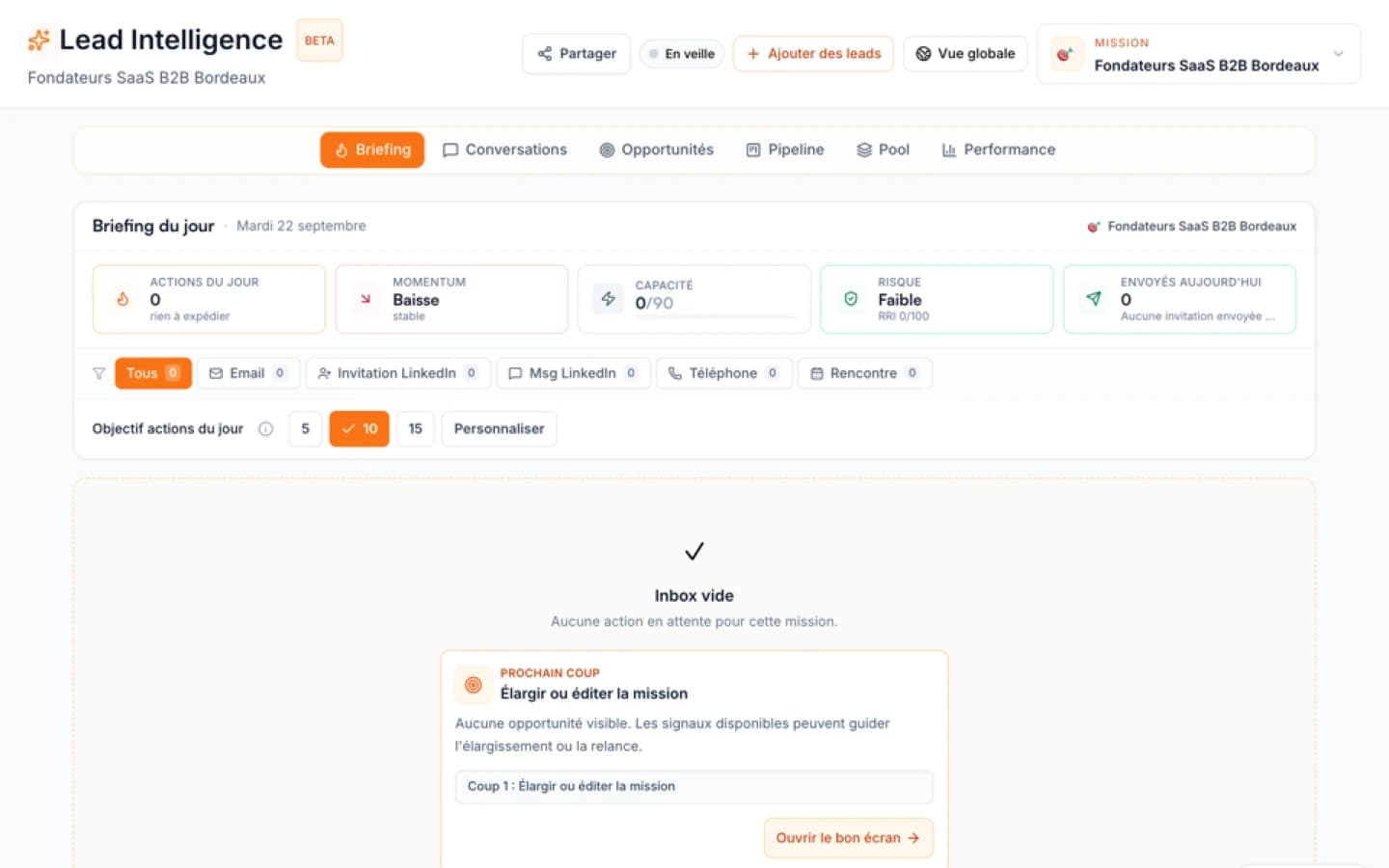
For example, Ember provides a Lead Intelligence module that assists revenue teams in determining who to contact, why the timing is appropriate, and what commercial angle to pursue. The module handles on-demand phone and email discovery without ever transmitting automated messages or placing outbound calls, allowing sales teams to conduct account research safely without activating telecommunications opt-out obligations. Teams seeking deeper operational background can explore the Knowledge guides for sales to refine their qualification strategies.
4. Separate Operational Messaging Sequences
Maintain strict technical segmentation between transactional notifications and sales cadences. If an existing customer requests an automated text alert for security notifications or service dispatch, store that authorization under an informational category tag. Keeping informational consent distinct from promotional campaign tracks ensures that routine service alerts do not compromise promotional suppression logs.
Forthcoming Timelines and Ongoing Policy Questions
Although the primary framework has been established, regulatory conditions continue to develop. Along with its September decision, the FCC released a Further Notice of Proposed Rulemaking (FNPRM) addressing operational aspects of consent management.
According to legal reporting published on October 30, 2026, by The National Law Review, public comments on the FNPRM are scheduled for submission by November 25, 2026, with reply comments due on December 28, 2026.
Within this ongoing inquiry, the Commission is reviewing several key operational issues outlined by The National Law Review:
- Evaluating whether to reduce the mandatory processing timeline to honor consent revocations from 10 to 7 business days.
- Requiring organizations to support two-way text functionality across all outbound SMS streams.
- Conditioning category-specific opt-out treatment on whether callers provide an accessible, single-step "revoke all" choice.
- Determining whether separately branded enterprise affiliates should be classified as distinct callers or treated as a single unified entity.
Revocation compliance requires treating phone-level consent as a shared company-wide asset rather than campaign-level metadata. B2B revenue organizations that audit their suppression architecture now, standardize their exclusive opt-out language, and maintain disciplined boundaries between prospecting intelligence and automated delivery will avoid costly compliance disputes while building more sustainable outbound pipelines.
Sources
- Clock Starts on FCC TCPA Revocation Order
- Effective Date and Comment Deadlines Announced
- FCC : projet de réforme du retrait de consentement TCPA soumis au vote du 30 septembre 2026 : source S1
- FCC : projet de réforme du retrait de consentement TCPA soumis au vote du 30 septembre 2026 : source S2
- TCPA : ce que la règle fédérale exige aujourd'hui pour un appel ou un SMS de prospection automatisé : source S2
FAQ
Free diagnostic
Test your sales file
Drop an Excel or CSV and check its readiness without sending its rows to Ember.