
Symptom or signal
Early-stage founders seeking Product-Market Fit (PMF) frequently find themselves trapped in a cycle of high-volume, low-yield outreach. The core symptom of this struggle is an inability to determine who to contact, why a conversation is urgent right now, and what specific message will resonate. Instead of building momentum, founders face silent inboxes and generic rejections because their initial outreach efforts lack precise timing and context. According to industry insights shared on LinkedIn, achieving PMF is exceptionally challenging because it demands constant adaptation and clear evidence that customers genuinely need a solution, not just that they like it. To gather this evidence, founders must spend significant time engaging in focused conversations with real customers to uncover their deepest pain points. However, when founders rely on generic databases, they end up with a noisy list of cold contacts rather than a prioritized map of active opportunities. This lack of direction is a primary hurdle highlighted in startup frameworks, such as the checklist detailed by M Accelerator, which emphasizes the need for structured customer discovery. Without a clear signal to guide them, founders cannot distinguish between a lead that is ready to talk and one that should be set aside. They waste hours drafting generic emails that try to cover every possible angle, rather than delivering a highly relevant message tailored to the prospect's immediate situation. This noise prevents them from identifying the conversations that actually deserve attention today. To break this deadlock, founders need to transition from raw volume to contextual intelligence. By leveraging Lead Intelligence from Ember, founders can bypass the noise of generic lists. Instead of waiting days for manual research to yield results, having a usable targeting context allows the first prioritized leads to appear in about 30 minutes. This immediate visibility helps founders know exactly who to contact, why now, and which action to take, turning vague outreach into structured, high-conviction conversations.
To place this decision in context, the Knowledge guides for founders brings together deeper guidance on the same field.
What changed
The traditional approach to outbound sales was built for scale, not discovery. For years, the standard playbook for Go-To-Market (GTM) strategies relied on building massive lists and executing high-volume email campaigns. Incumbent database tools are exceptionally good for this type of scaled outreach. For example, established platforms like Apollo are highly effective for mid-market sales teams that already have a validated value proposition, offering accessible entry points like a free plan at $0 with 75 credits per seat per month Apollo Pricing, though even their unlimited plans remain subject to a Fair Use Policy Apollo Pricing. However, for early-stage founders searching for Product-Market Fit (PMF), this volume-first paradigm is fundamentally broken. When you are still validating your value proposition, sending thousands of automated emails only results in high unsubscribe rates and silent rejection. As highlighted in professional discussions on LinkedIn Top Content, achieving PMF requires deep understanding, constant adaptation, and concrete evidence that customers genuinely need your solution rather than just liking the concept. Founders must focus their conversations on engaging deeply with real customers to uncover their exact pain points. This requires a shift from broad targeting to highly intentional, context-driven outreach. The landscape has changed because founders can no longer afford to treat prospecting as a numbers game. Instead of asking how many contacts they can add to a database, they must ask who to contact, why now, and which action to take. Ember addresses this shift directly through Lead Intelligence. Instead of forcing founders to sift through thousands of cold profiles, Lead Intelligence reduces noise by focusing attention on opportunities that deserve action now. By analyzing real-time signals and company context, the platform proposes the next action and channel that fit the lead's actual situation. This allows founders to prioritize the conversations that deserve attention immediately. With usable targeting context, the first prioritized leads can appear in about 30 minutes, turning what used to be days of manual research into a clear, actionable list of who to contact, why the timing is right, and which angle to use.
Facts and sources
Achieving Product-Market Fit (PMF) is an exceptionally difficult milestone because it requires deep understanding, constant adaptation, and concrete evidence that customers genuinely need a solution rather than just liking it. According to expert insights compiled on the Challenges Founders Face in Achieving Product-Market Fit page, founders must spend significant time engaging with real customers to uncover their pain points and needs. However, early-stage founders often struggle to transition from general customer discovery to structured outbound conversations. This difficulty is compounded by the lack of a clear framework, which is why resources like the Product-Market Fit Checklist for Early-Stage Founders emphasize the importance of systematic validation. The primary obstacle preventing founders from knowing who to contact, why to contact them now, and what message to send is the sheer noise of generic data. Traditional sales databases are optimized for high-volume outreach rather than precise discovery. For example, established platforms like Apollo have built massive businesses, achieving an Annual Recurring Revenue (ARR) of 150 million dollars and a valuation of 1.6 billion dollars in 2023 after raising about 250 million dollars, as reported by Apollo (company history and Series D announcement). While these platforms are highly effective for scaled sales teams executing broad campaigns, they often overwhelm early-stage founders with raw lists that lack immediate context or timing signals. This lack of context leaves founders guessing which accounts are actually ready for a conversation. Without real-time signals, outreach becomes generic, conversion rates drop, and valuable founder time is wasted. To solve this, founders need a way to filter out the noise and identify high-priority opportunities. Ember addresses this challenge directly through its Lead Intelligence capability, which reduces noise by focusing attention on opportunities that deserve action now. As detailed in the Ember Lead Intelligence documentation, the system finds accounts based on the mission Ideal Customer Profile (ICP) and real-time signals, then verifies useful sources to ensure data accuracy. This signal-driven approach allows founders to prioritize the conversations that deserve attention now. Instead of spending days parsing spreadsheets, once a usable targeting context is established, the first prioritized leads can appear in about 30 minutes. This capability proposes the next action and channel that fit the lead situation, giving founders a clear next action: who to contact, why now, which channel, and which angle.
To explore this point further, How do solo B2B founders actually get their first 10 customers without an existing list? details a step directly related to this decision.
Why the common explanation is incomplete
The common advice given to early-stage founders is that their outbound prospecting fails because their email copy is weak, their domain setup is incorrect, or their list is simply too small. This explanation is fundamentally incomplete because it treats a qualitative discovery problem as a quantitative volume problem. For a founder seeking Product-Market Fit (PMF), the bottleneck is rarely a lack of contact information. Established database providers make acquiring thousands of records incredibly simple. For instance, Apollo has scaled aggressively to reach an annual recurring revenue of 150 million dollars and a valuation of 1.6 billion dollars in 2023, as reported by Apollo (company history and Series D announcement). Even when utilizing their unlimited plans, which are subject to a Fair Use Policy that limits email credits as outlined on the Apollo Pricing Page, founders can easily accumulate massive lists of potential buyers. Yet, possessing a list of thousands of names does not solve the core challenge of knowing who to contact today, why they would care right now, and what specific angle will spark a conversation. The standard explanation assumes that an Ideal Customer Profile (ICP) is a static set of filters, such as job title and company size, and that any lead matching these filters is ready for a pitch. In reality, early-stage Go-To-Market (GTM) strategies require deep, active discovery rather than static broadcasting. As highlighted in the guide on M Accelerator, building a structured path to market validation is a precise engineering process. When founders rely solely on broad databases, they lack the real-time context needed to identify active pain points. They cannot see the subtle organizational shifts or external signals that make a prospect receptive to a conversation at this exact moment. Without this temporal relevance, outreach becomes noisy and generic, leading to low response rates and exhausted market opportunities before the founder can gather the qualitative feedback necessary to adapt their product.
The real problem
The core obstacle for early-stage founders is not a lack of contacts, but a lack of actionable context. When searching for Product-Market Fit (PMF), the primary objective is to engage in high-quality discovery conversations. However, traditional database tools are designed for high-volume outreach rather than precise, signal-driven engagement. This leaves founders with static lists of names and email addresses, but no understanding of the underlying timing or intent.
According to expert insights on the Challenges Founders Face in Achieving Product-Market Fit, achieving this milestone requires deep understanding, constant adaptation, and concrete evidence that customers genuinely need the solution, rather than just liking it. To gather this evidence, founders must spend significant time engaging with real customers to uncover their pain points and needs. The real problem is that static databases cannot tell a founder why a specific contact is relevant today, or what message will resonate with their current situation.
Without real-time signals, founders are forced to guess. They send generic messages to broad lists, which creates noise and damages their domain reputation. This high-volume approach fails because it treats a qualitative learning process as a quantitative numbers game. As outlined in Product-Market Fit: A Checklist for Early-Stage Founders, navigating this stage successfully requires a structured framework that prioritizes genuine market demand over superficial metrics. When founders cannot identify who is experiencing the problem right now, why their situation makes them receptive to a conversation, and what specific angle to use, they remain stuck in a loop of low-response cold outreach that yields no useful feedback for product development.
This approach also connects with What does a realistic 30-day B2B outbound pipeline look like for a small team with no brand and no list: and which activities actually produce meetings?, which clarifies the next choice.
How the mechanism works
To solve the discovery challenge, founders must transition from high-volume noise to high-signal conversations. Traditional Go-To-Market (GTM) databases are highly effective when a company already has a validated Ideal Customer Profile (ICP) and needs to execute scaled outreach. For example, Apollo, which recorded an Annual Recurring Revenue (ARR) of 150 million dollars and a valuation of 1.6 billion dollars in 2023 according to data from Apollo (company history and Series D announcement), provides massive directory access, though its unlimited plans are governed by a strict fair use policy as detailed on the Apollo Pricing Page. While these platforms are excellent for broad list building, they do not solve the fundamental discovery problem that early-stage founders face when searching for Product-Market Fit (PMF). Achieving market alignment requires deep qualitative understanding and concrete evidence that customers genuinely need a solution rather than just liking it. According to expert resources on the challenges of finding this fit, founders must spend significant time engaging directly with real customers to uncover their exact pain points and needs, as highlighted by LinkedIn Top Content. This requires a mechanism that does not just export thousands of cold contacts, but instead identifies the precise accounts that are ready for a meaningful conversation today. Ember addresses this challenge through its Lead Intelligence capability. Instead of forcing founders to sift through static databases, the mechanism starts with the founder's unique business context, strategy, and offer. It reduces noise by focusing attention on opportunities that deserve action now. Once a usable targeting context is established, the first prioritized leads can appear in about 30 minutes. The system analyzes signals across companies and people to propose the next action and channel that fit the lead situation. This means instead of generic templates, founders receive a clear next action: who to contact, why now, which channel, and which angle. By prioritizing the conversations that deserve attention now, the mechanism allows early-stage founders to gather the qualitative evidence they need to validate their product-market fit checklist, a process crucial for early-stage survival as discussed by M Accelerator.
Concrete examples
To understand how these obstacles manifest in daily operations, consider the typical journey of an early-stage founder trying to establish a repeatable sales motion. In the first scenario, founders often fall into the volume trap by relying on massive databases. For instance, a founder might use a platform like Apollo, which has scaled aggressively to reach 150 million dollars in Annual Recurring Revenue (ARR) and a 1.6 billion dollar valuation in 2023 as documented by Apollo (company history and Series D announcement). While these platforms offer extensive databases, their unlimited email plans remain subject to a fair use policy as detailed on the Apollo pricing page. The real issue for an early-stage company is that exporting thousands of contacts leads to generic, low-response campaigns. Without knowing the specific trigger that makes a prospect receptive today, the founder cannot answer the critical question of why they are reaching out now, resulting in wasted domain reputation and ignored messages. In the second scenario, founders struggle to distinguish between polite interest and genuine commercial need. According to expert insights on the LinkedIn compilation of challenges founders face, achieving Product-Market Fit (PMF) requires deep adaptation and concrete evidence that customers genuinely need a solution rather than just liking it. A founder might spend hours speaking with industry peers who offer encouraging feedback but have no actual intent to purchase. Without a system to monitor real-time organizational changes or pain signals, the founder cannot identify who to contact with a high-priority message, leading to long cycles of unproductive conversations. In the third scenario, the challenge is channel and message misalignment. Even when a founder identifies a relevant company, they often default to sending a generic email because they lack the context to personalize the angle. A checklist for early-stage founders published by M Accelerator emphasizes that structured customer discovery is essential to uncover true pain points. When founders do not know which channel or angle fits the prospect's current situation, they default to spam-like behavior. Ember addresses these exact friction points through Lead Intelligence. By analyzing the available project context, Lead Intelligence reduces noise by focusing attention on opportunities that deserve action now. Instead of forcing founders to manually research hundreds of profiles, the system proposes the next action and channel that fit the lead situation. With usable targeting context, the first prioritized leads can appear in about 30 minutes, allowing founders to know exactly who to contact, why now, and which action to take to accelerate their path to market validation.
When to use this diagnosis
Early-stage founders should use this diagnosis when their Go-To-Market (GTM) efforts feel like shouting into a void rather than building a repeatable sales motion. The primary signal that this analysis is required is when a founder spends more time managing databases than having deep, qualitative conversations with prospects. According to insights shared on LinkedIn Top Content on Product-Market Fit Insights, achieving Product-Market Fit (PMF) requires founders to spend significant time engaging with real customers to uncover their pain points and needs. If a founder is instead stuck in a cycle of sending high-volume, generic emails with low reply rates, they are missing the critical evidence needed to adapt their solution. Another critical moment to apply this diagnosis is when the team cannot answer basic questions for any prospect on their list: who to contact, why now, and what message to send. This challenge is common for early-stage teams trying to navigate the milestones outlined in resources like the M Accelerator PMF Checklist. Without a clear, contextual reason to reach out, outreach becomes noisy and ineffective. This is where a shift in methodology is required. Instead of relying on massive, credit-heavy databases that encourage volume over relevance, founders need to focus on high-signal opportunities. Ember addresses this specific bottleneck through Lead Intelligence, which reduces noise by focusing attention on opportunities that deserve action now. By analyzing the available project context, the platform proposes the next action and channel that fit the lead situation, giving the founder a clear next action on who to contact, why now, which channel, and which angle. When founders have usable targeting context, the first prioritized leads can appear in about 30 minutes, allowing them to pivot from administrative list-building to active, high-value discovery.
In practice, Which reference data helps a pre-seed startup founder decide who to contact, why now, and with what message? completes this framework with another angle on the same topic.
When not to use it
There are specific scenarios where focusing on highly contextual, prioritized lead intelligence is not the right move for early-stage founders. First, if your immediate goal is to execute high-volume, unsegmented cold outreach campaigns to saturate a broad market, this targeted approach is not what you need. When a startup has already validated its Product-Market Fit (PMF) and simply needs to scale a highly repeatable sales formula across thousands of contacts, established database giants are a better fit. For instance, Apollo is a highly successful platform with a 150 million dollar Annual Recurring Revenue (ARR) and a 1.6 billion dollar valuation in 2023, as documented by Apollo (company history and Series D announcement). If you require massive contact lists for broad outreach, platforms like Apollo offer unlimited email credits, though these remain subject to a fair use policy as detailed on the Apollo Pricing page. For founders who want to blast generic messages to a vast audience without filtering for specific timing or signals, relying on these traditional, volume-heavy databases is the logical choice. Second, this approach is ineffective if you have not yet formulated even a basic hypothesis of your target audience or value proposition. To identify who to contact, why now, and with what message, a system requires at least a minimal baseline of targeting context. While Lead Intelligence can surface the first prioritized leads in about 30 minutes once a usable targeting context is provided, it cannot invent a strategy from absolute zero. If you are in the earliest ideation stage and cannot define any parameters of who might benefit from your solution, you should first focus on basic customer discovery interviews to outline your initial assumptions. As highlighted in the challenges of achieving Product-Market Fit on LinkedIn PMF Challenges, founders must spend significant time engaging with real customers to uncover their pain points and needs. Trying to automate or optimize lead selection before you have any directional hypothesis will only result in polished outreach to the wrong people. Finally, you should not adopt this methodology if you are looking for a fully automated system that completely removes the founder from the sales loop. Achieving Product-Market Fit requires deep understanding, constant adaptation, and direct evidence that customers genuinely need your solution, a process described in detail by M Accelerator. While tools like Ember can reduce noise by focusing attention on opportunities that deserve action now, they do not replace the founder's active participation in the conversation. If you expect a platform to handle the entire relationship without your qualitative input, feedback, and strategic adjustments, you will miss the vital market signals needed to refine your product.
Next step
To navigate the complex transition from initial concept to a repeatable sales motion, early-stage founders must systematically address the hurdles of customer discovery. Achieving Product-Market Fit (PMF) is notoriously difficult because it demands deep customer understanding, constant adaptation, and objective evidence that a target market genuinely needs a solution rather than merely liking the idea, as highlighted in expert insights on the challenges founders face in achieving PMF on LinkedIn.
To overcome these barriers, founders must transition from manual, unsegmented outreach to a structured validation process. Utilizing a structured framework, such as the roadmap outlined in the PMF checklist by M Accelerator, allows teams to systematically evaluate customer signals. The immediate next step is to replace the noise of generic prospecting with highly contextual, prioritized engagement.
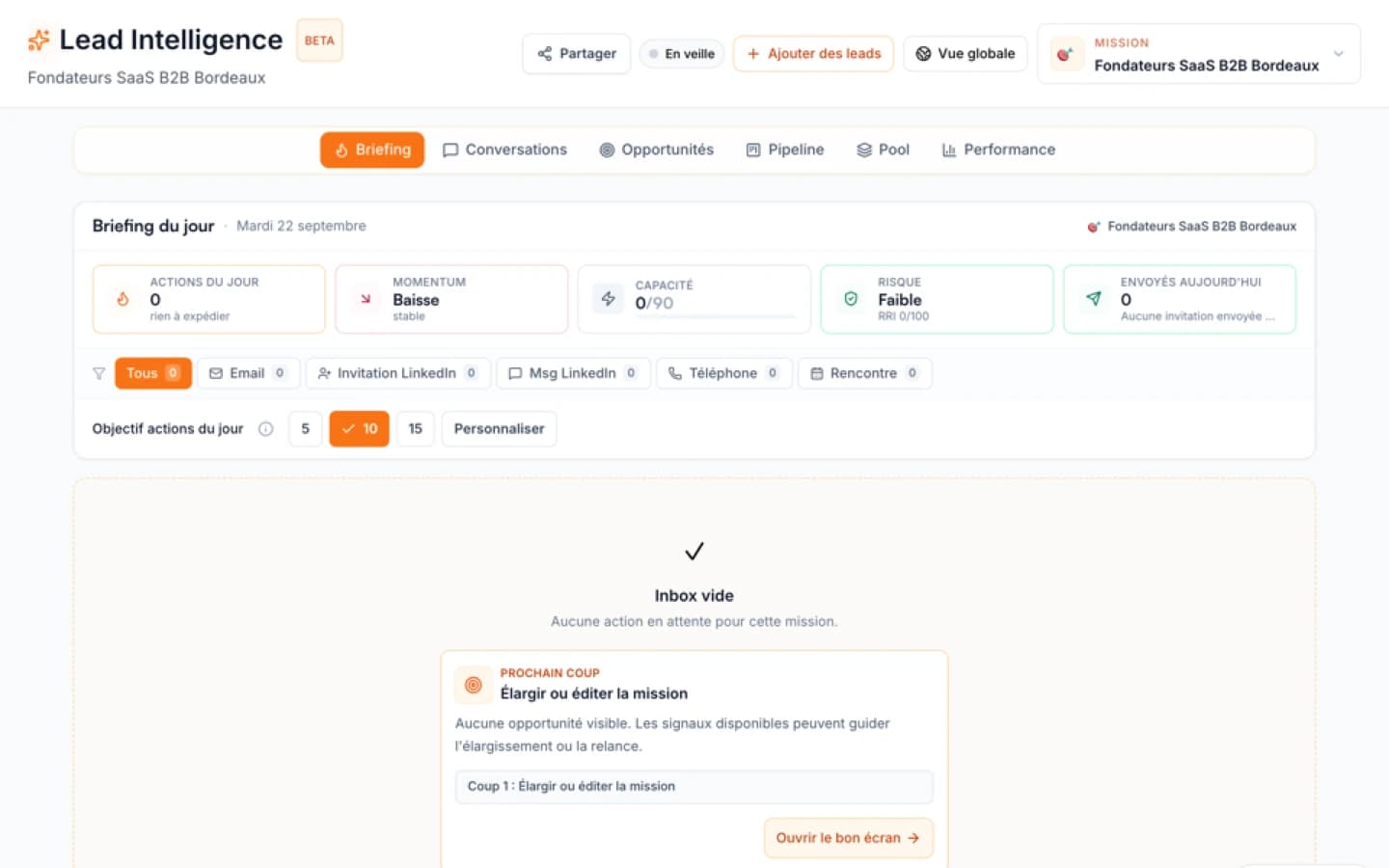
Ember helps understand a changing context, choose the next priority, and take action. By deploying Lead Intelligence, early-stage teams can drastically reduce noise by focusing attention on opportunities that deserve action now. The platform analyzes available signals to provide a clear next action, ensuring you know exactly who to contact, why now, which channel to use, and which angle to take. This targeted approach allows founders to prioritize the conversations that deserve attention now, turning early customer discovery into a predictable path toward market validation.
Before deciding, Which signals should alert a traction-stage startup founder? helps connect this method with adjacent priorities.
Sources and methodology
According to Apollo (company history and Series D announcement), Apollo.io reports 150 million dollars in annual recurring revenue, a valuation of 1.6 billion dollars in 2023, and about 250 million dollars raised. The acronyms are expanded: Product-Market Fit (PMF) and annual recurring revenue (ARR).
Sources
FAQ
Free diagnostic
Test your sales file
Drop an Excel or CSV and check its readiness without sending its rows to Ember.